What Does This Assembly Code Do?
What does this assembly code do? What machine is it?
Some Assembly Required
What does this assembly code do? What machine is it?
The 6502’s “illegal” opcodes were of intense interest to home computer enthusiasts, and analyses were published in various magazines. But one would have never expected a company like Siemens to document illegal opcodes in a programming manual from 1980.
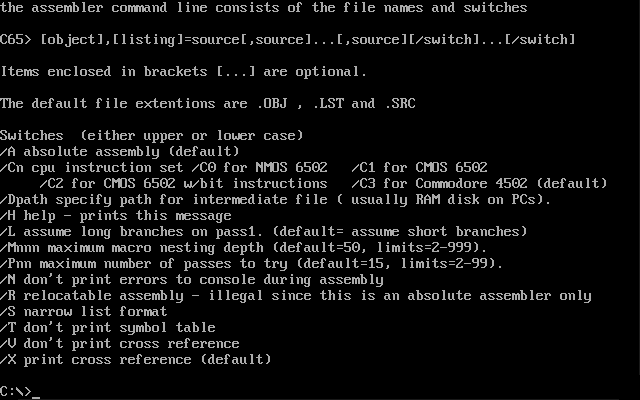
In the series about the assemblers Commodore used for developing the ROMs of their 8-bit computers, this article covers the 1989 “Commodore 6502 Assembler” (6502ASM), a cross-assembler written in C that ran on VAX and PC.
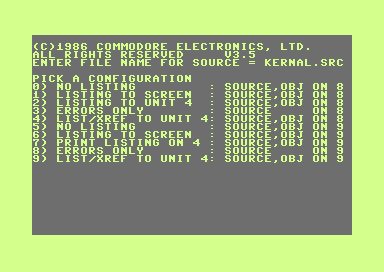
In the series about the assemblers Commodore used for developing the ROMs of their 8-bit computers, this article covers the 1987 “HCD65” assembler that ran on the C128.
In the series about the assemblers Commodore used for developing the ROMs of their 8-bit computers, this article covers the 1984 “Boston Systems Office” (BSO) cross-assembler running on VAX/VMS.
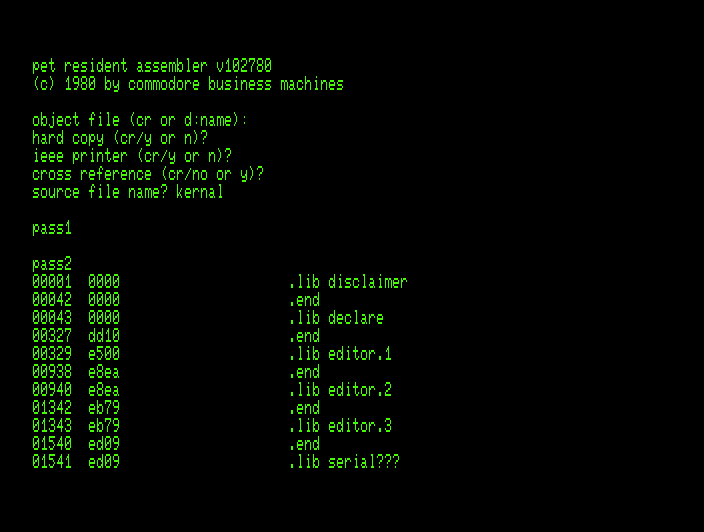
In the series about the assemblers Commodore used for developing the ROMs of their 8-bit computers, this article covers the 1976 “MOS Resident Assembler” that ran on a variety of 6502-based computers.
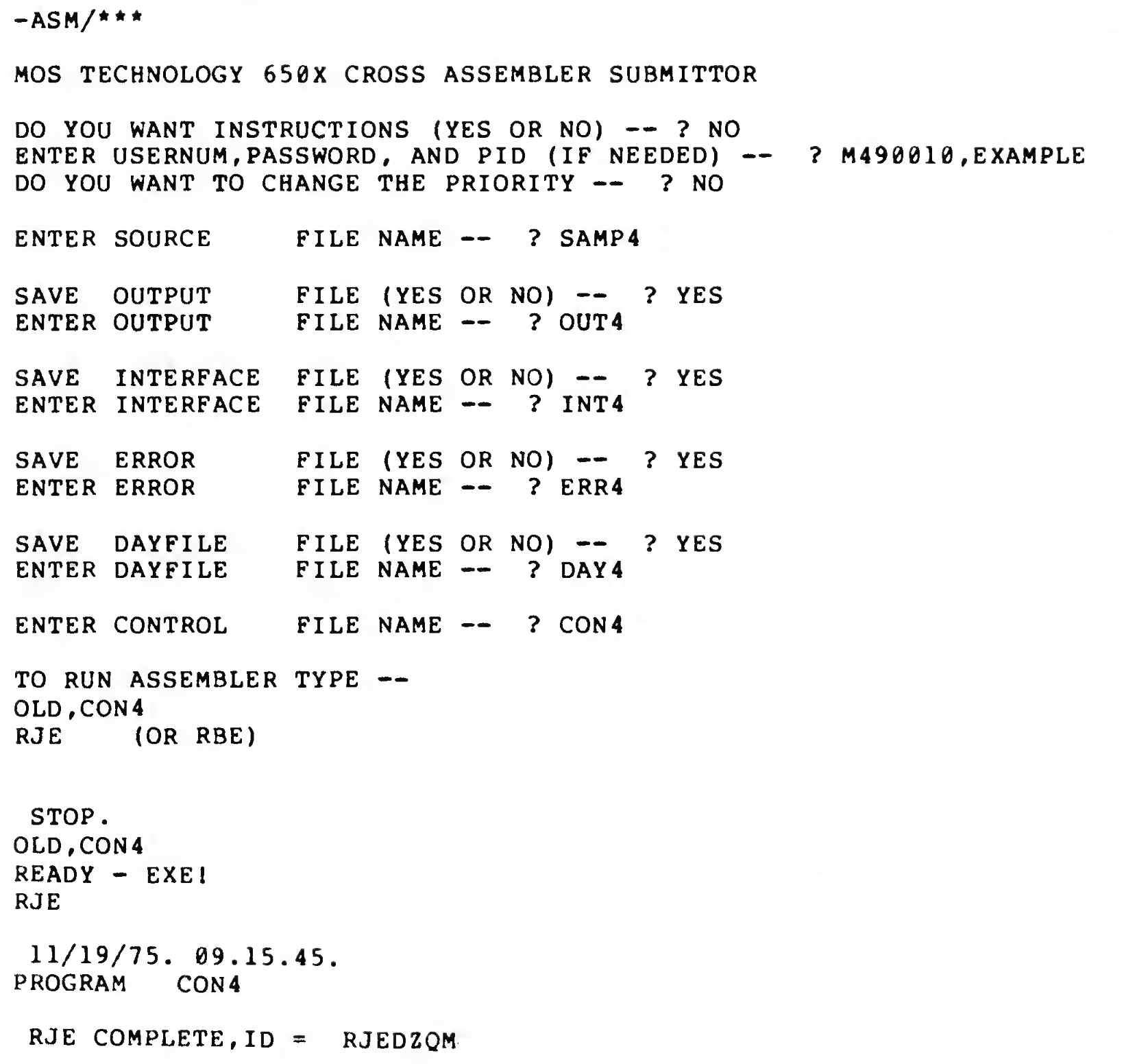
In the series about the assemblers Commodore used for developing the ROMs of their 8-bit computers, this article covers the 1975 “MOS Cross-Assembler”, which was available for various mainfraimes of the era.
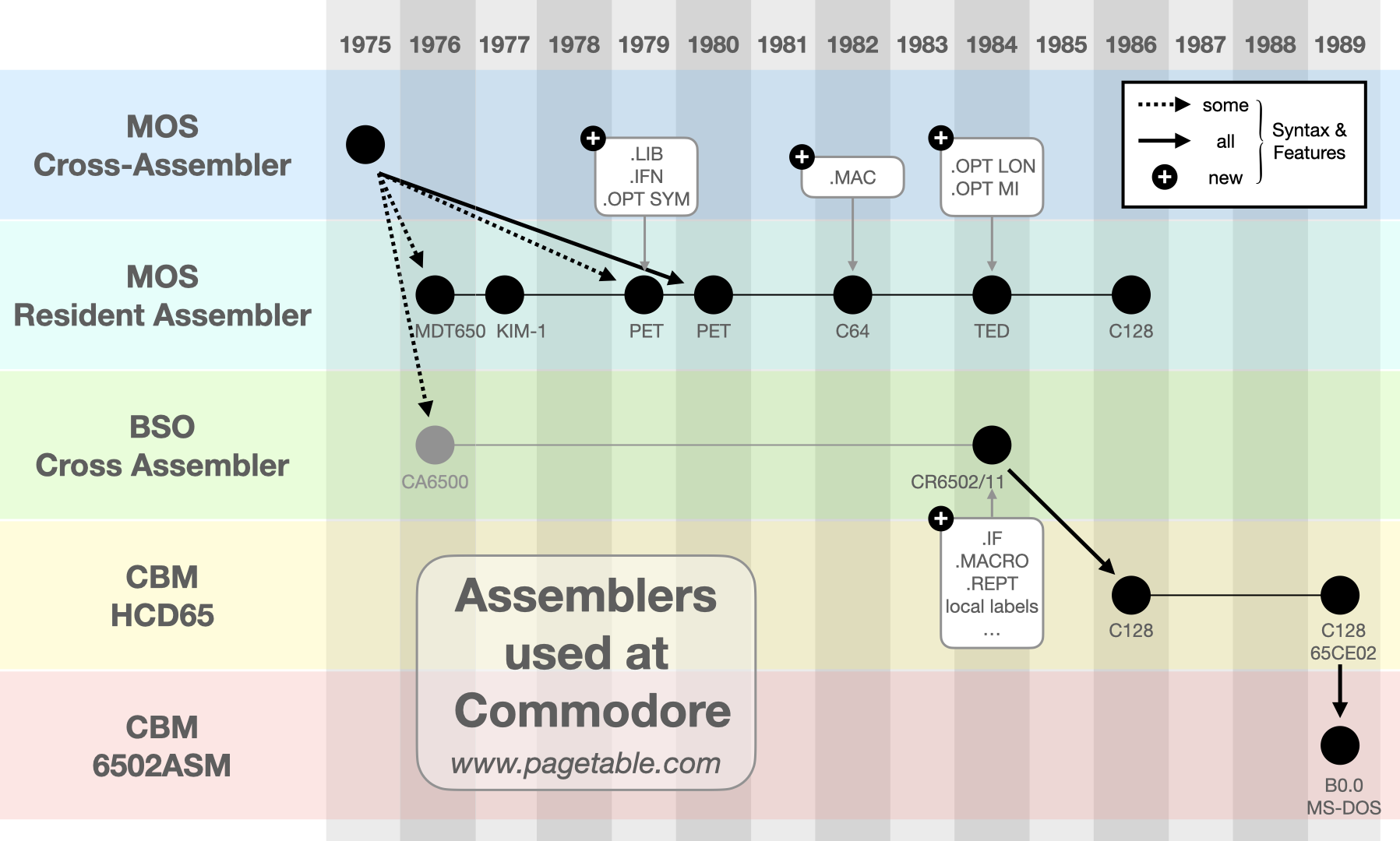
Commodore used 5 different assemblers, most of them in-house tools, to build the ROMs for their Computers like the PET, the C64 and the C128. Nevertheless, all Commodore source files, from 1975 to 1990, share a common format and use the same assembly directives. This series of articles describes each of these assemblers.
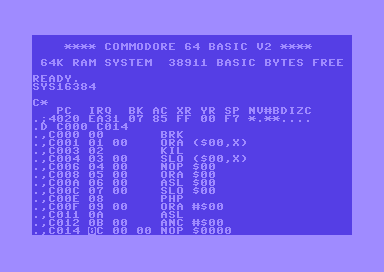
The monitor built into the Final Cartridge III is one of the best ones for the C64. Some of its unique features are:
My side-by-side C64 ROM disassembly/commentary page has been completely redone!
The original Commodore TED (C16, C116, Plus/4) source code has recently appeared on zimmers.net. It is also available in my Commodore Source Code git repository.
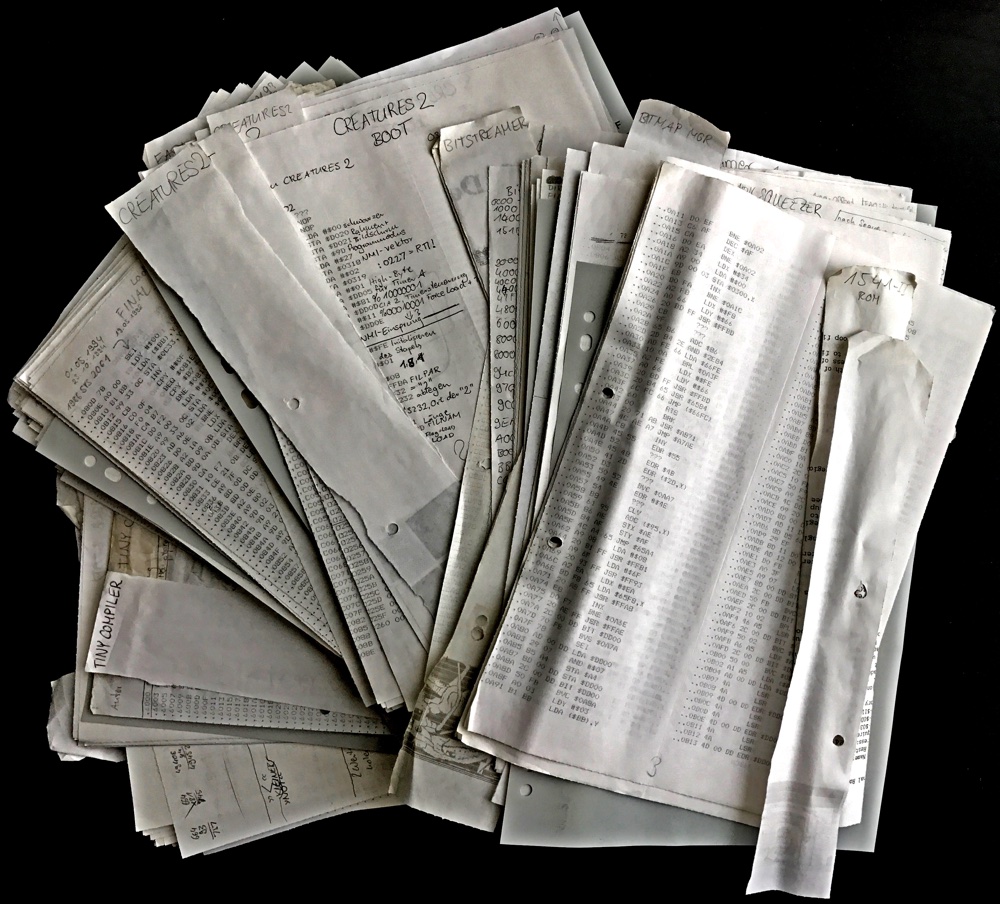
Between 1992 and 1995, I reverse engineered Commodore 64 applications by printing their disassemblies on paper and adding handwritten comments (in German). These are the PDF scans of the 62 applications, which are 552 pages total.
Many reverse-engineered versions of “KERNAL”, the C64’s ROM operating system exist, and some of them even in a form that can be built into the original binary. But how about building the original C64 KERNAL source with the original tools?
There are many MOS 6502 cross-assemblers available. Here’s a new one. Or actually a very old one. “Macross”, a very powerful 6502 macro assembler, which was used to create Habitat, Maniac Mansion and Zak McKracken, was developed between 1984 and 1987 at Lucasfilm Ltd. and is now Open Source (MIT license):
Here’s the challenge: Take code that you wrote some 20 years ago in an obsolete programming language for an obsolete platform, make it run on a modern system (without emulation!)… and actually make it useful!
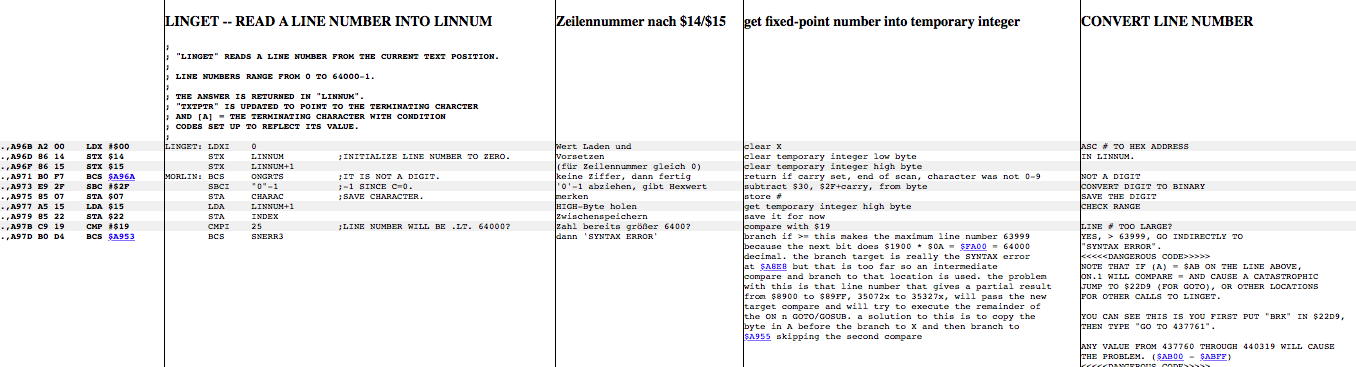
The Commodore 64 ROM has been subject to immense reverse engineering. Many commented disassemblies were published over the decades, scattered over different media such as books, magazines, disks, and later, the internet – and there are even some commentaries that apply to the C64 ROM, but were written with other systems in mind that shared Microsoft’s BASIC interpreter.
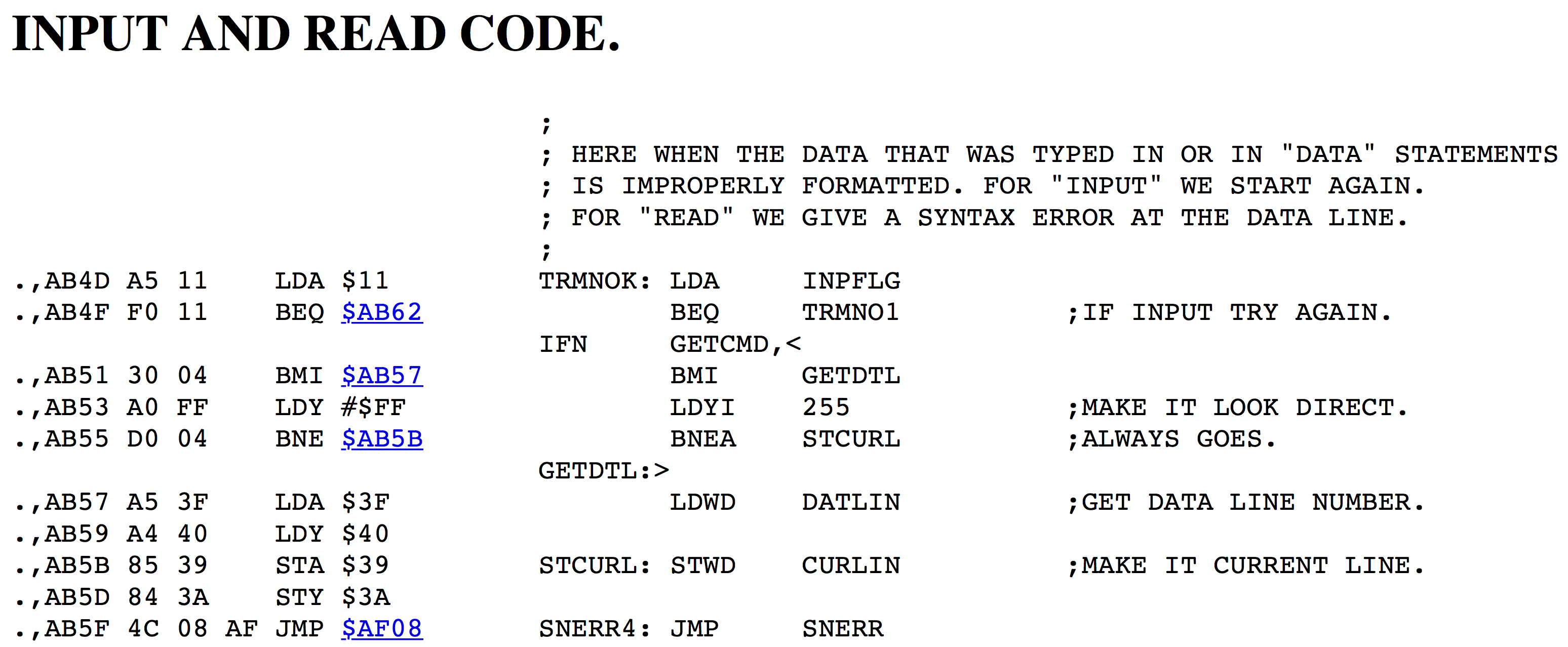
On my quest of collecting as many commentaries on the Commodore 64 ROM at pagetable.com/c64rom, we have gathered Lee Davison’s excellent commentary, the German de facto standard by Data Becker, and an adaptation of Bob Sander-Cederlof’s Apple II ROM commentary, all in the same cross-referenced HTML format.
This is the original 1978 source code of Microsoft BASIC for 6502 with all original comments, documentation and easter eggs:
In our series about C64 ROM commentaries (English version by Lee Davison, German version by Data Becker), I’m now presenting a most unusual C64 ROM commentary – based on a commented disassembly of the Apple II ROM.
After last week’s German C64 ROM disassembly from the “64 intern” book, I have now also converted Lee Davison’s commented disassembly into the same format.