What Does This Assembly Code Do?
What does this assembly code do? What machine is it?
Some Assembly Required
What does this assembly code do? What machine is it?
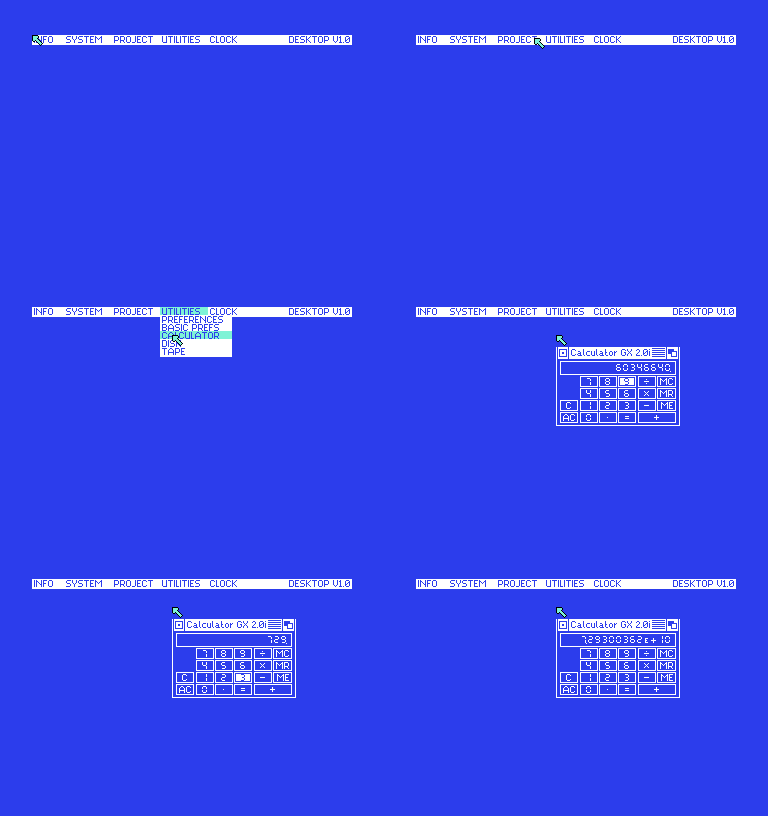
The C64 extension cartridge Final Cartridge III contains a graphical user interface named “Desktop”. There are two easter egg messages hidden in the calculator (from the “Utilities” menu).
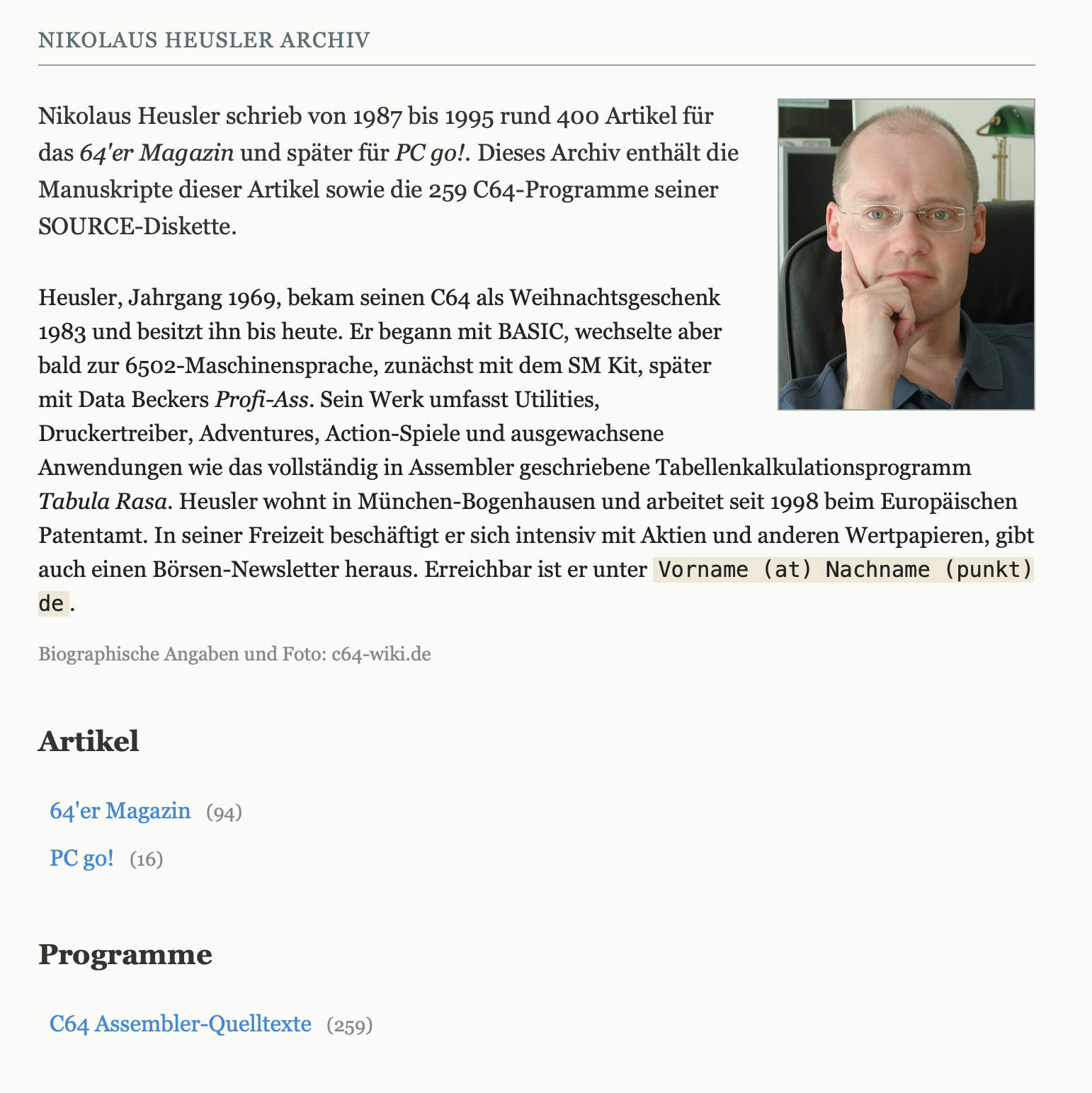
Nikolaus Heusler zählt zu den produktivsten Autoren des 64’er Magazins: hunderte Beiträge zwischen 1987 und 1995. Heusler, Jahrgang 1969, hatte seinen C64 zu Weihnachten 1983 bekommen; heute arbeitet er beim Europäischen Patentamt in München.
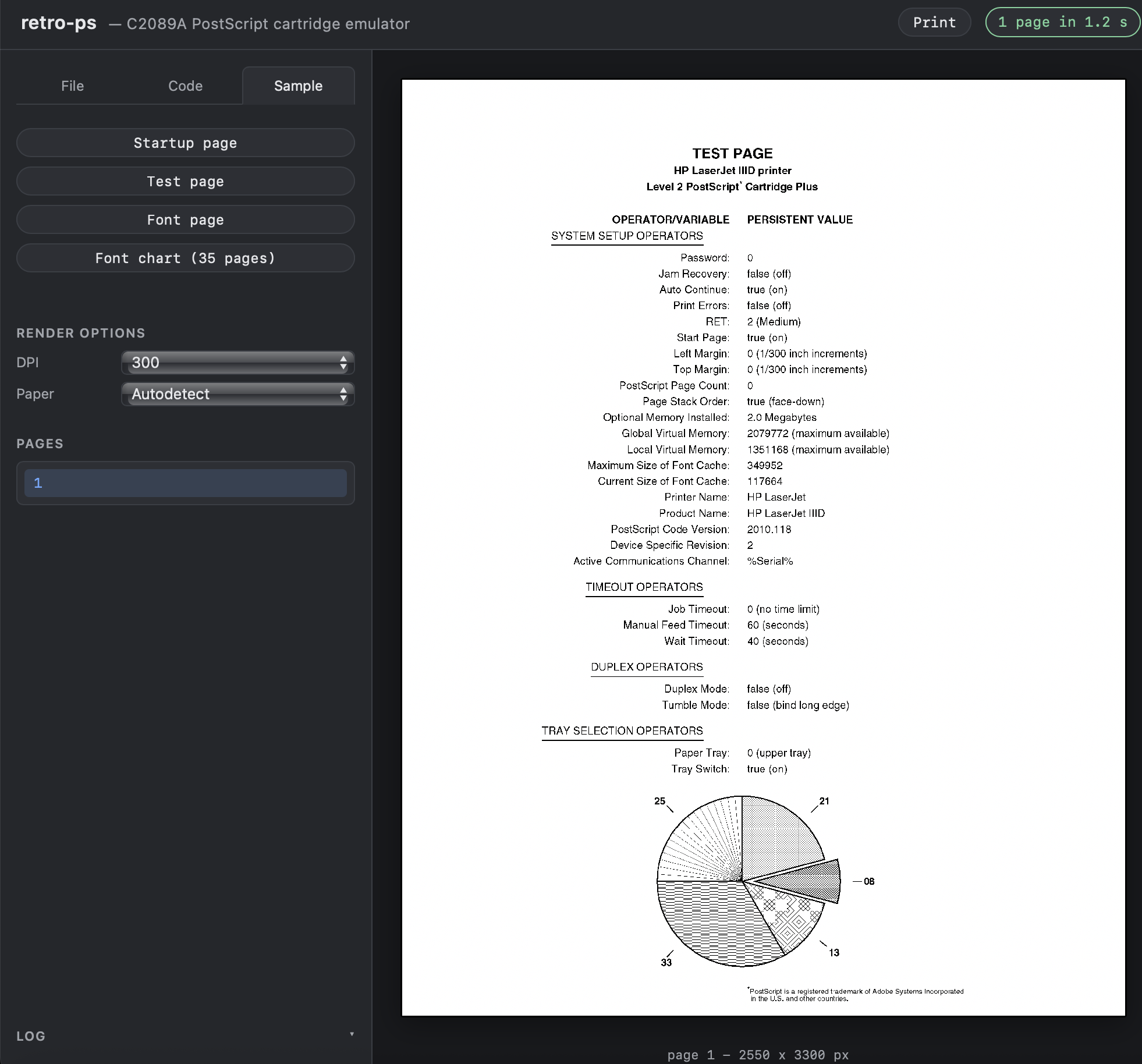
The HP C2089A “PostScript Cartridge Plus”, a 1991 add-on for the LaserJet II/III, adds PostScript Level 2 support through Adobe’s own reference interpreter (version 2010.118) on a 2 MB ROM.
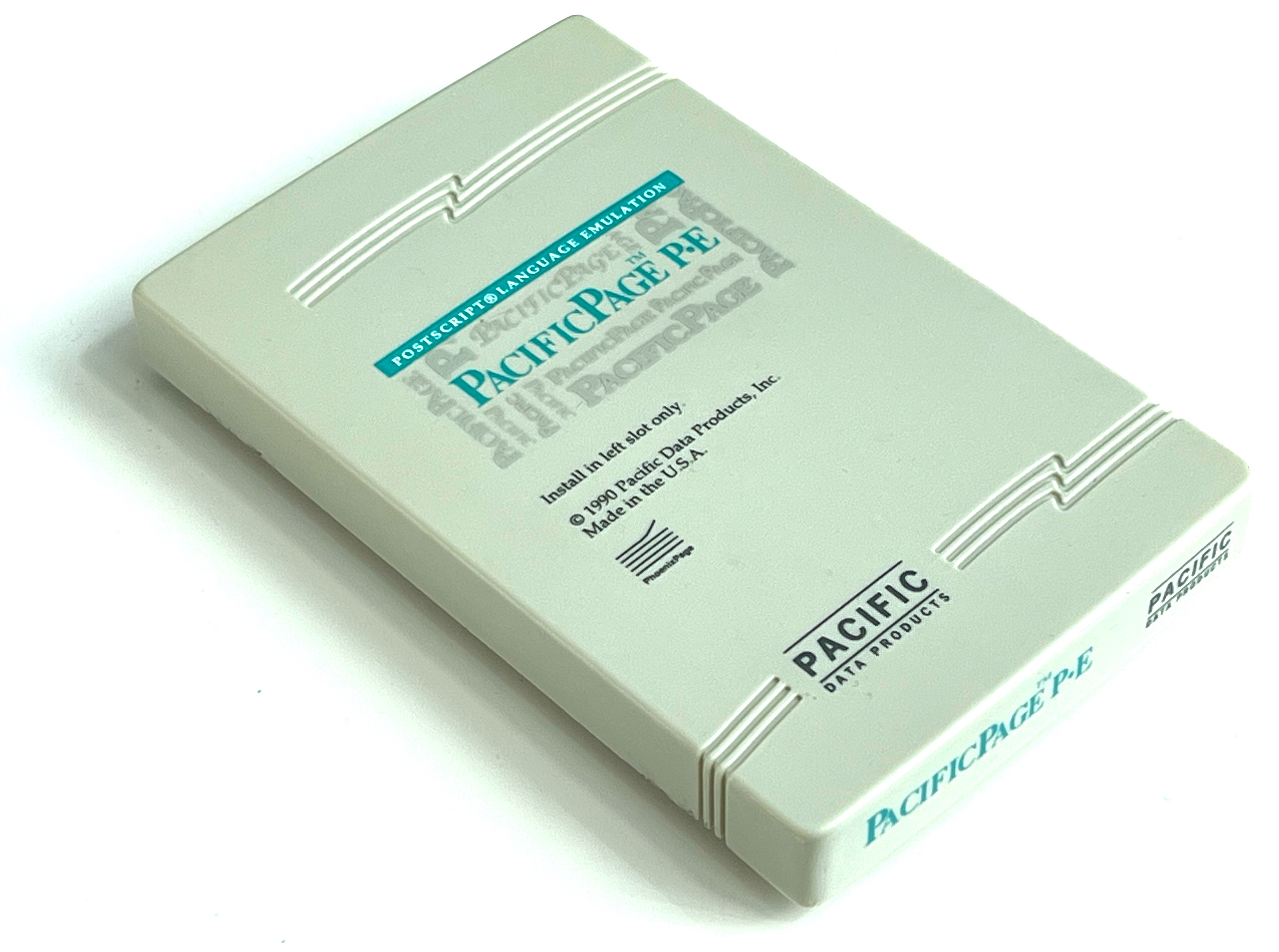
PostScript came to the desktop in 1985 with the Apple LaserWriter, and within a year or two several other companies had joined Adobe’s licensee list. HP was late — its own Adobe PostScript cartridge for the LaserJet II/III family didn’t ship until 1991.
This is a collection of 111 Commodore 64/128 disk images from a box of CMD FD-2000 high-density floppy disks. The disks came from the estate of Klaus Finke (1945–2016), a GEOS community organizer from Suhl, Thuringia.
The 6502’s “illegal” opcodes were of intense interest to home computer enthusiasts, and analyses were published in various magazines. But one would have never expected a company like Siemens to document illegal opcodes in a programming manual from 1980.
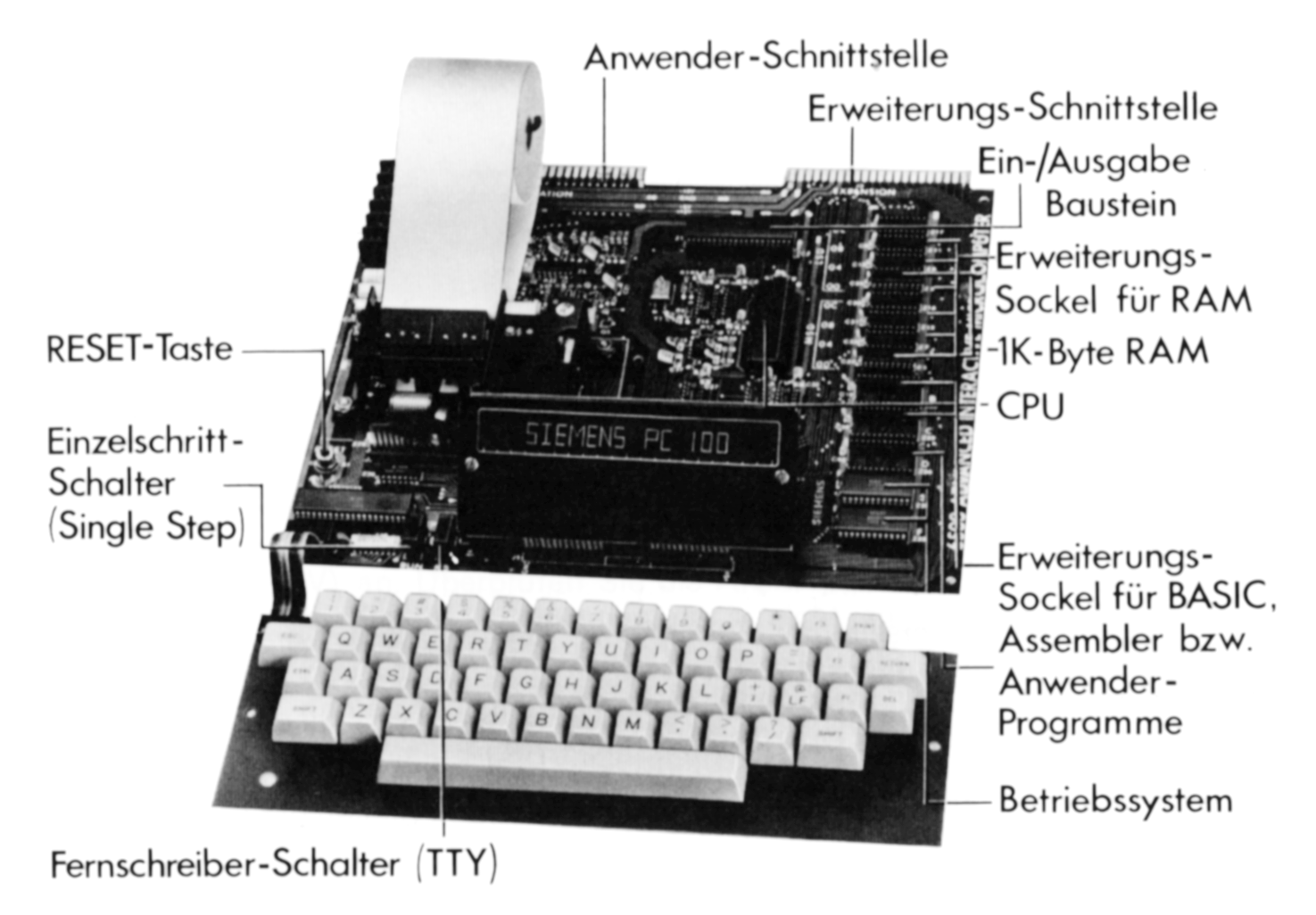
The Siemens PC 100 was a version of the 6502-based “AIM-65” SBC in a case and with slightly modified ROMs. Siemens offered a set of German-language manuals, which included translated Assembler (MOS Resident Assembler) and BASIC (Microsoft BASIC) manuals, but also a general manual (“Bedienungsanleitung”).

Am 25. März 1985 kam das zweite 64’er Sonderheft mit dem Thema Abenteuerspiele raus. Genau 40 Jahre später ist es nun als HTML und PDF online verfügbar – im Kontext des Projekts 64er-magazin.de. Der Drachenreiter auf dem Original-Titelblatt ist der damals 18jährige Boris Schneider-Johne – wer genau schaut, wird auf der Website erkennen, dass wir das Bild aktualisiert haben:
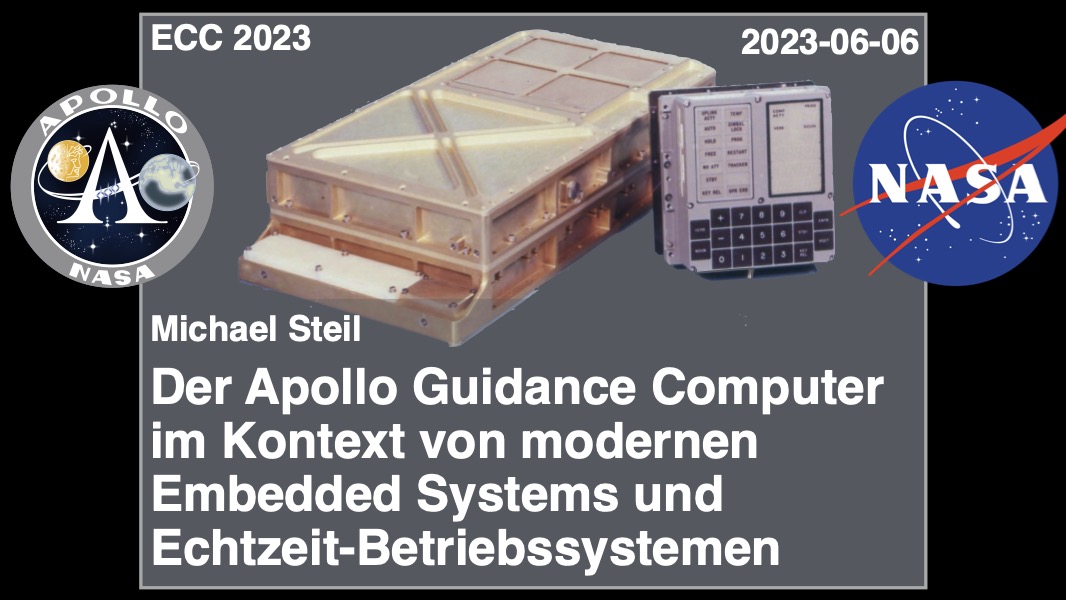
This post is about an upcoming talk in German.
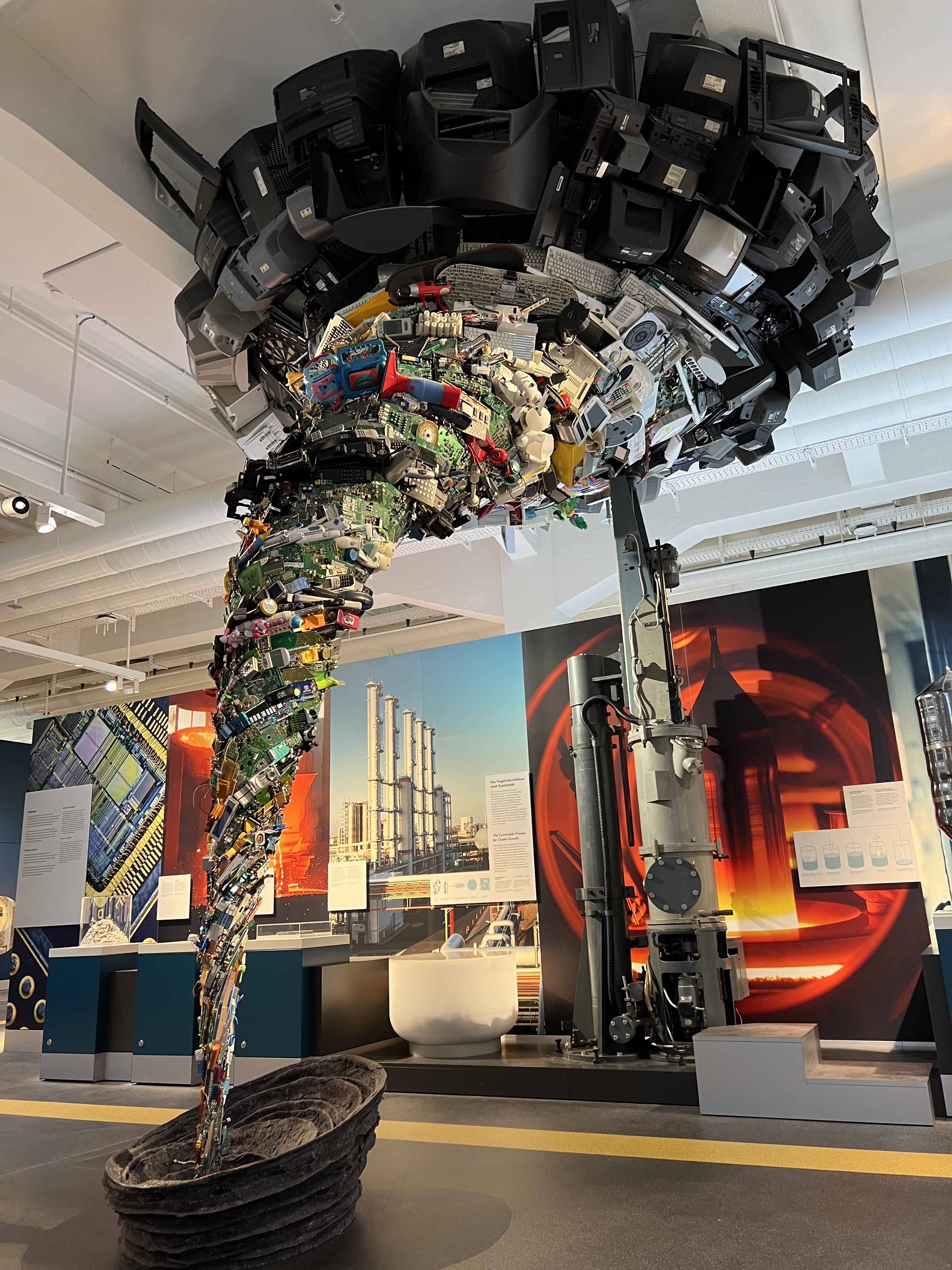
The Deutsches Museum in Munich (Germany) has a new art installation as part of the reopened Electronics exhibition: The “Schrott-Tornado”, a tornado-shaped sculpture made from scrap electronics. There is (at least) one item in it that is most definitely not trash.
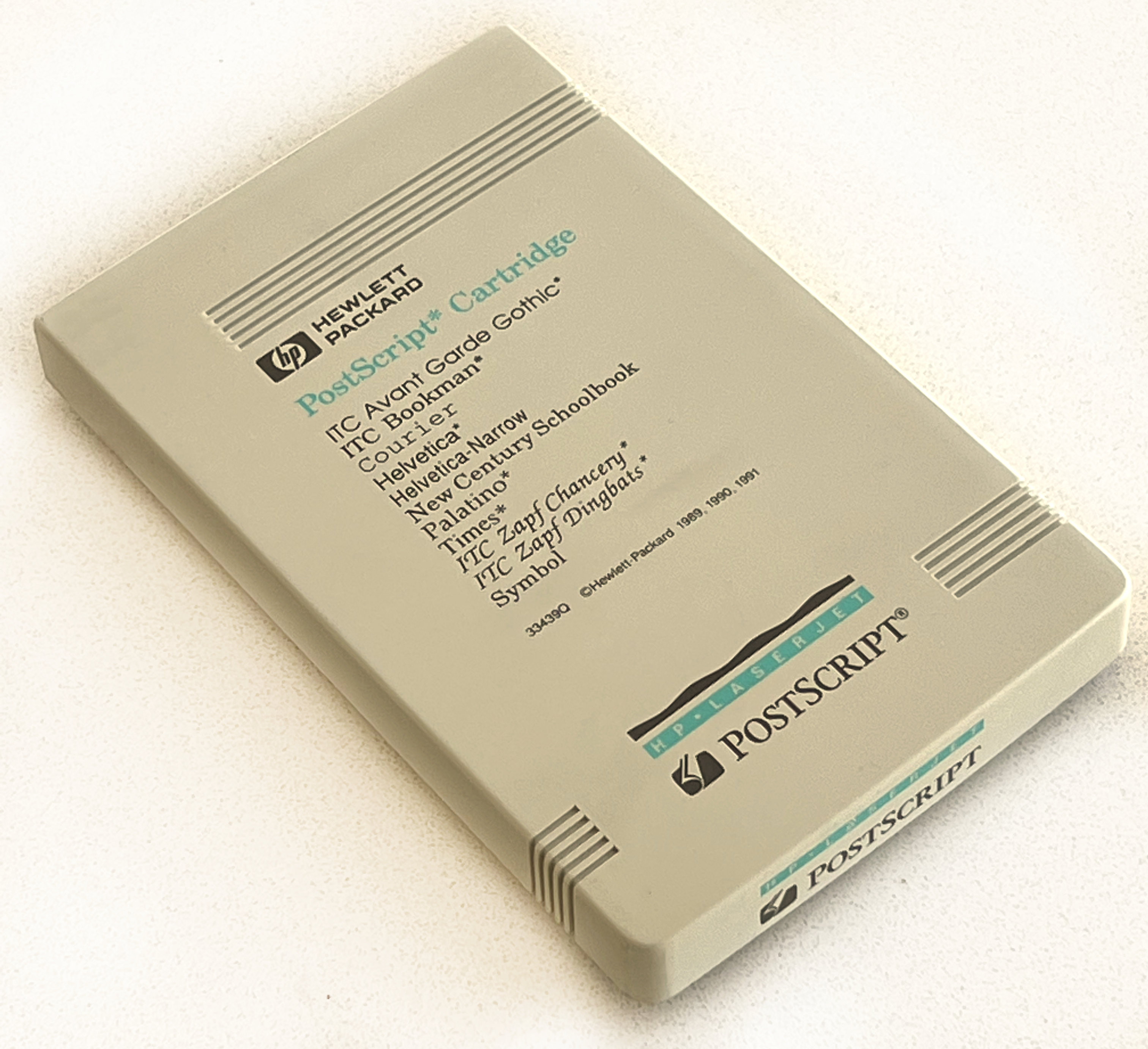
We have recently dissected and dumped the Level 2 “Plus” version of HP’s PostScript cartridge series. This time, we will look at the earlier Level 1 “PostScript Cartridge”.
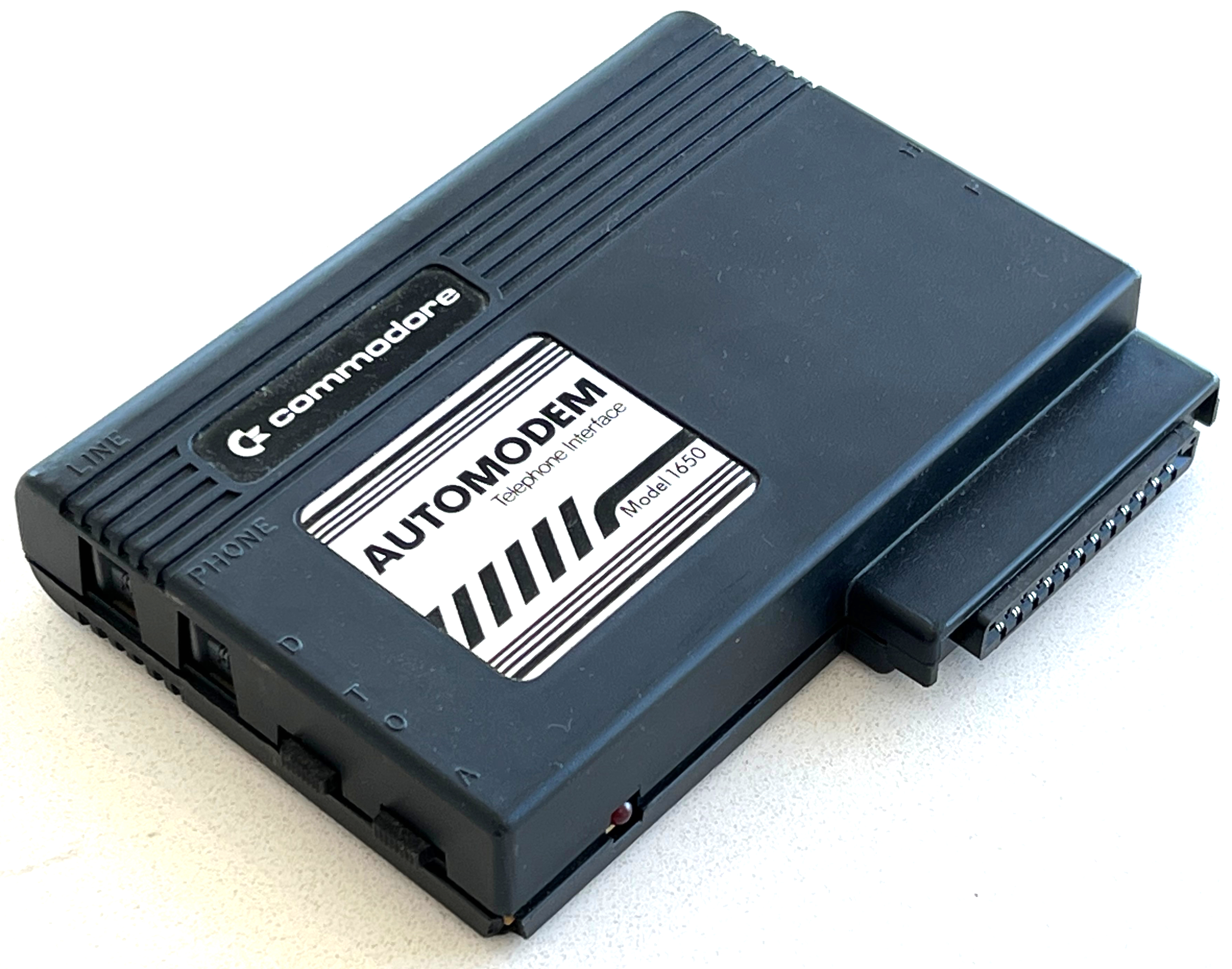
The Commodore 1650, also known as the “AUTOMODEM”, is Commodore’s first full modem directly connected to the phone line. It supports pulse dialing in software and 300 baud duplex connections.
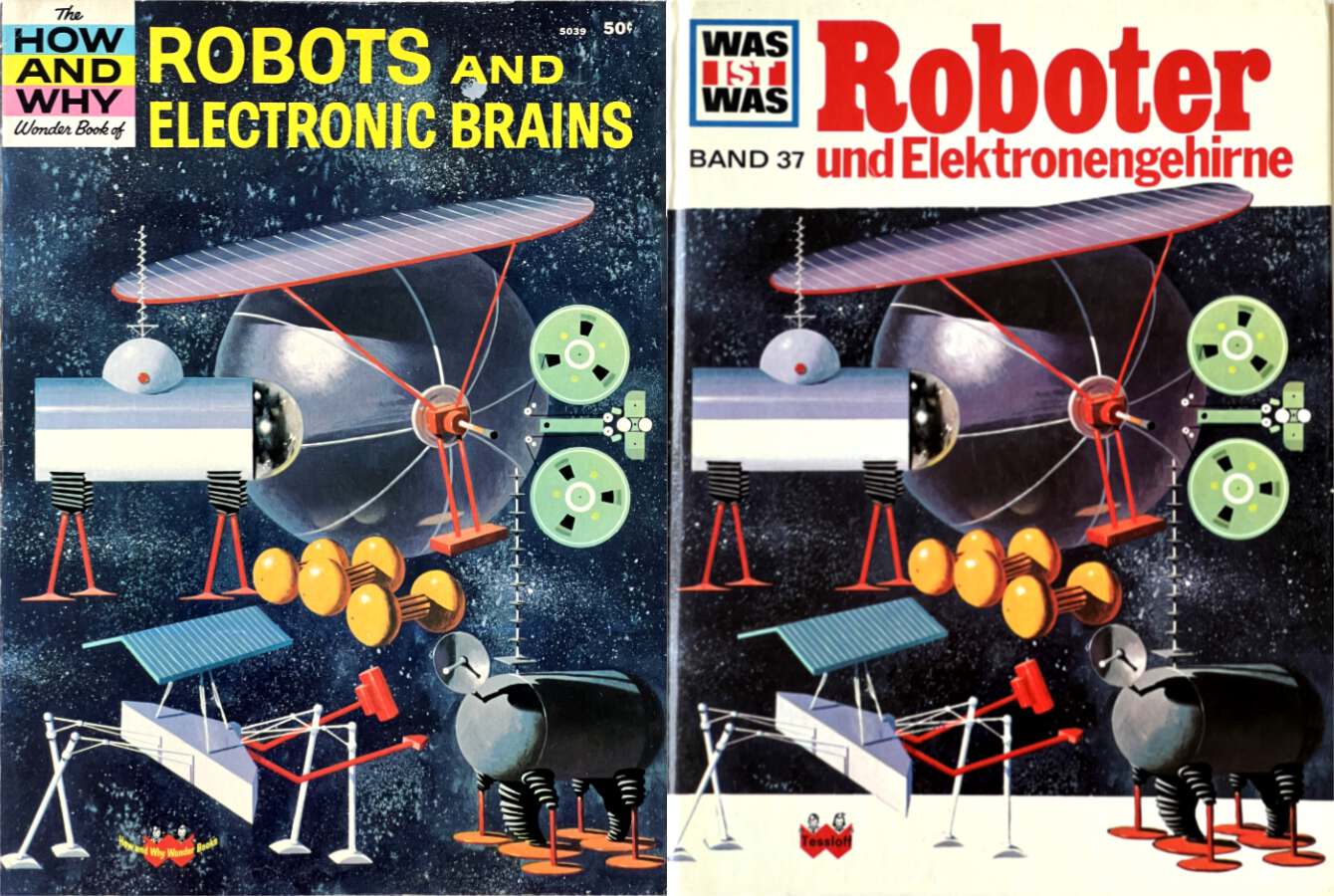
The 1963 book “Robots and Electronic Brains” (by Robert Scharff) from the “How and Why Wonder Books” series is an early children’s book about computers. Let’s look at some of the interesting contents – and how the German translation “Was ist was: Roboter und Elektronengehirne” from 1967 changed some details.
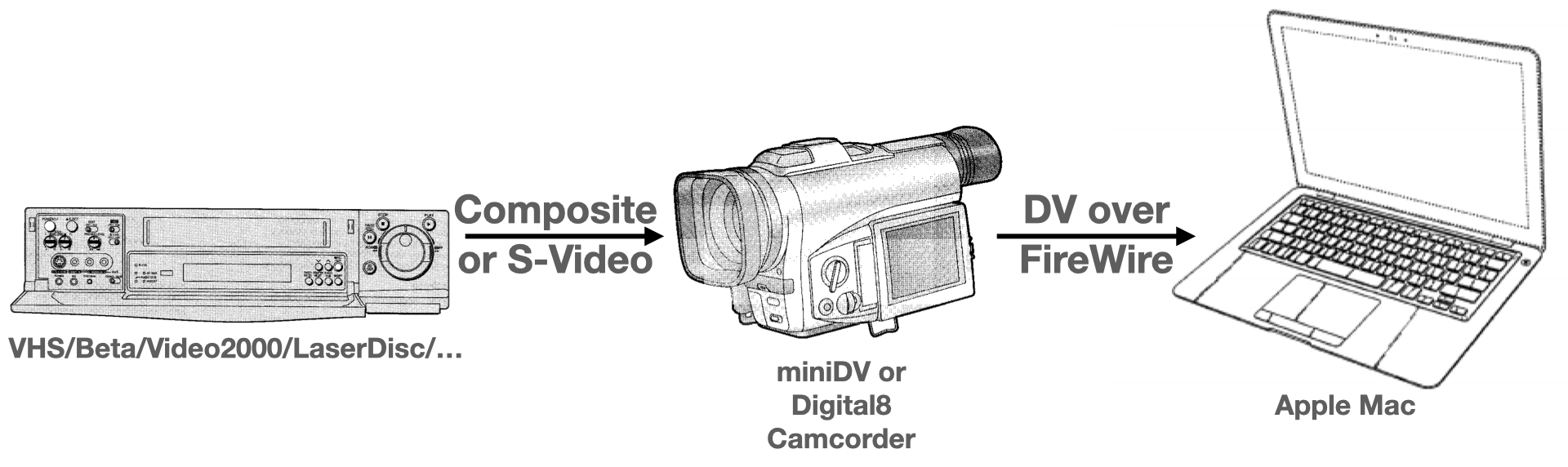
This article explains a setup and workflow for digitizing analog video (e.g. VHS, Beta, Video 2000, LaserDisc, …) using a Mac and digital camcorder – in high quality and with interlacing intact; optimized for archival. We will use a old-school digital camcorder (they are cheap!) to convert the analog signal to a high-quality digital “DV” stream and then record the DV stream on a Mac using a FireWire connection.
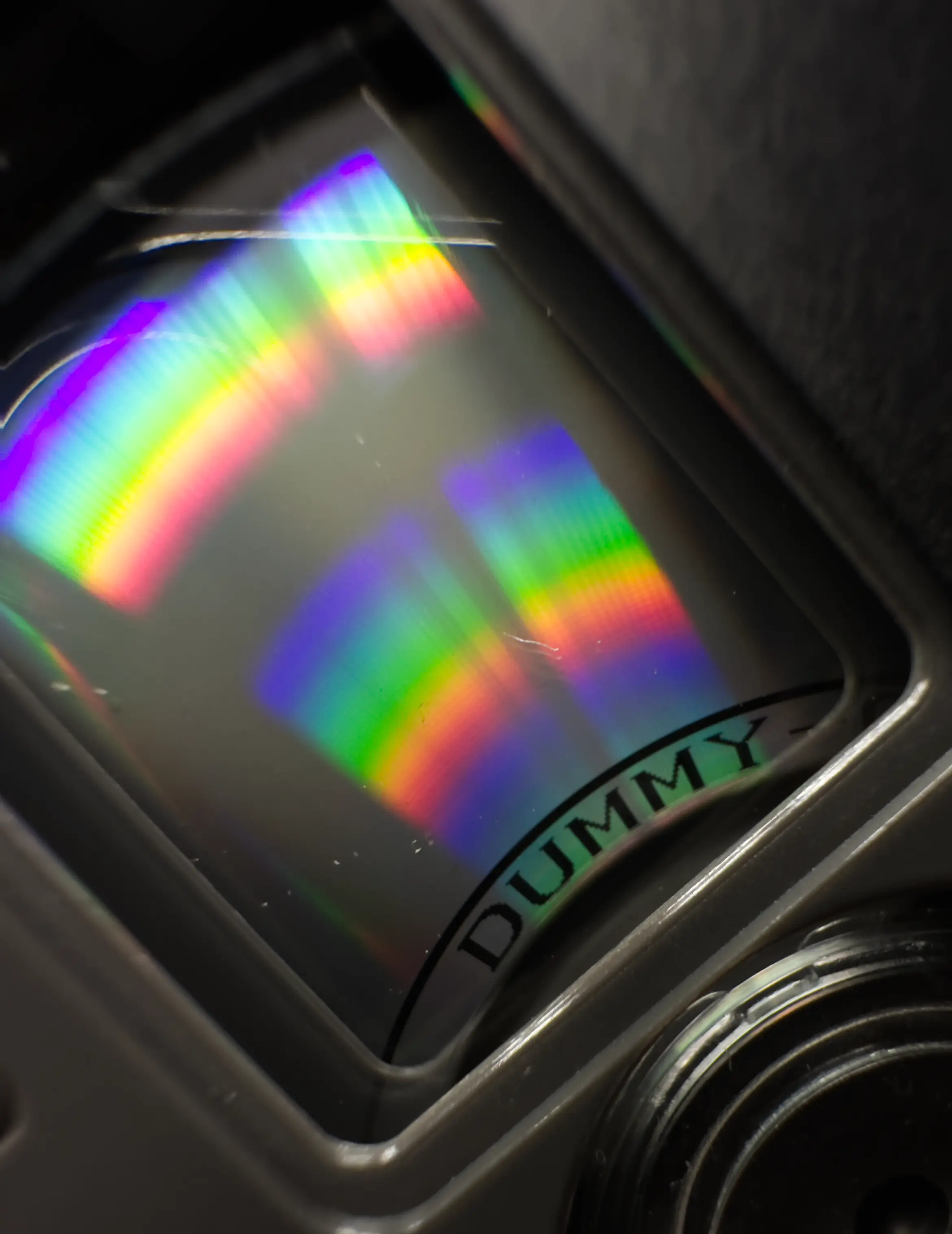
Many pre-recorded MiniDiscs are rare and expensive. An extra rare special case is the dummy promo copy of Michael Jackson’s “Dangerous”, which we will dissect in this article.
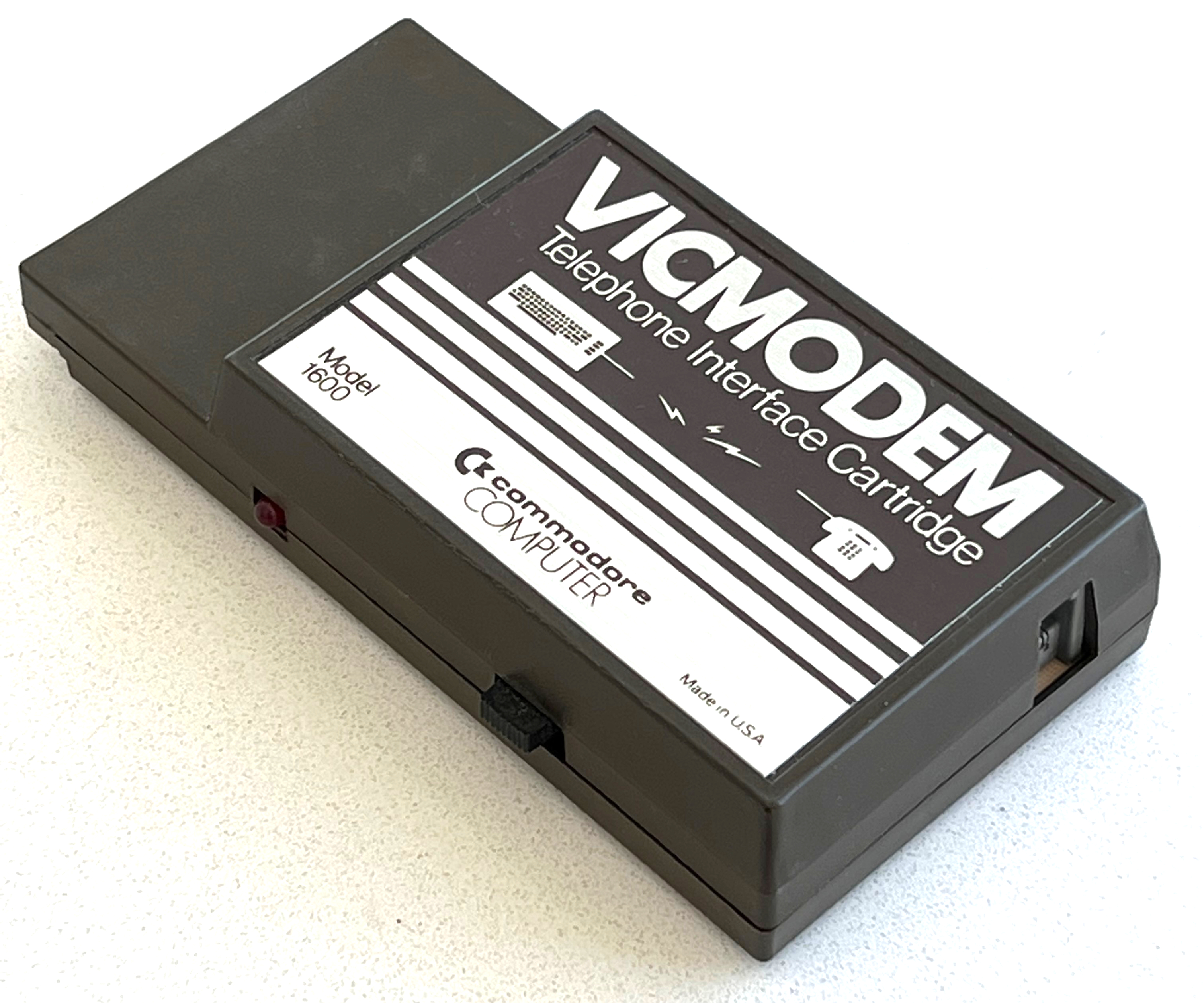
The Commodore 1600, also known as the “VICMODEM”, is Commodore’s very first modem (1982): It supports 300 baud duplex connections, and is connected to an existing telephone’s handset connector instead of the phone line. This kept the price down, but required the user to dial manually through the phone.
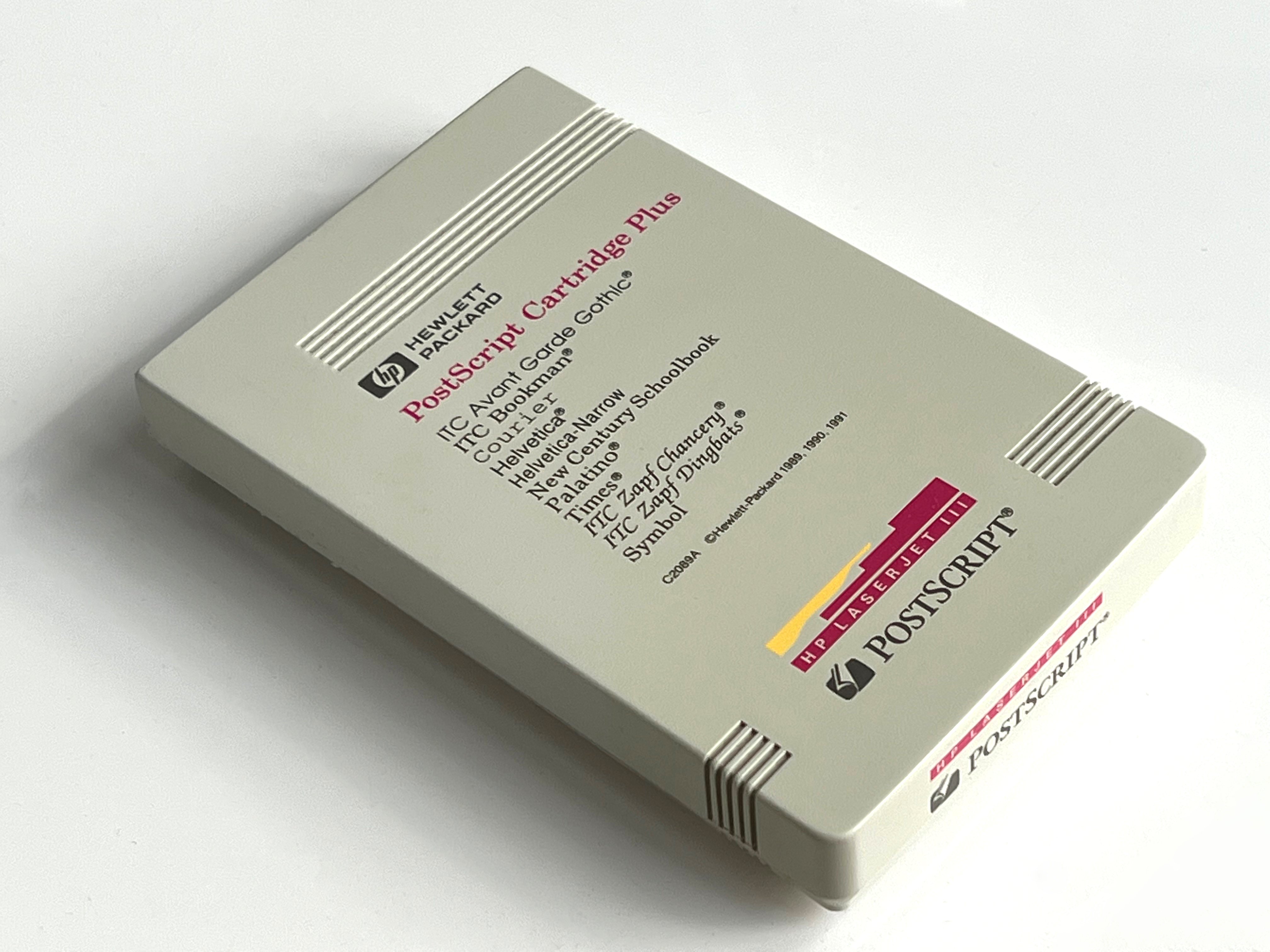
The HP LaserJet III laser printer from 1990 used the “Printer Command Language” PCL 5 by default, but could be upgraded with the “HP PostScript Cartridge Plus” cartridge, which contained 2 MB of ROM with Adobe’s PostScript Level 2 rasterizer. Let’s look at the ROM contents and some of its hidden gems.
The Punter file transfer protocol (“New Punter”/“Punter C1”) is an alternative to the XMODEM family of protocols, which was and still is very popular on BBSes for Commodore computers. It is notorious for being badly documented. Let’s fix that.