What Does This Assembly Code Do?
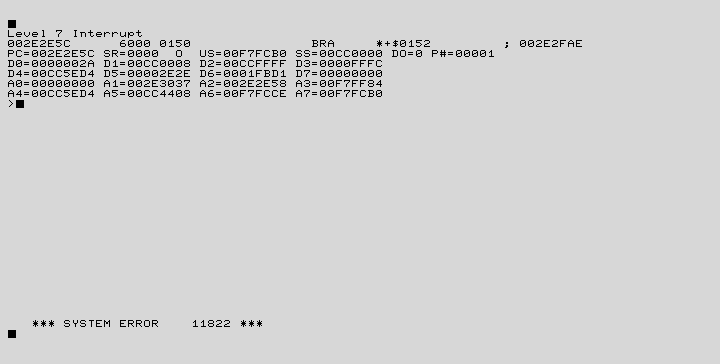
What does this assembly code do? What machine is it?
Some Assembly Required
What does this assembly code do? What machine is it?

The Deutsches Museum in Munich (Germany) has a new art installation as part of the reopened Electronics exhibition: The “Schrott-Tornado”, a tornado-shaped sculpture made from scrap electronics. There is (at least) one item in it that is most definitely not trash.
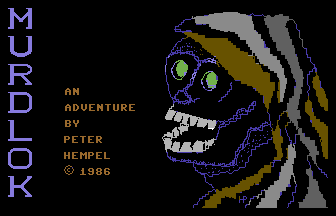
Murdlok is a previously unreleased graphical text-based adventure game for the Commodore 64 written in 1986 by Peter Hempel. A German and an English version exist.
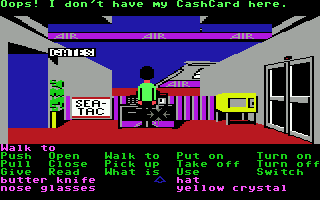
It seems that a lot of readers of pagetable.com are fans of SCUMM games like Maniac Mansion (and at least one is their creator). Here is a puzzle for you (credits go to Bernhard Bauer):
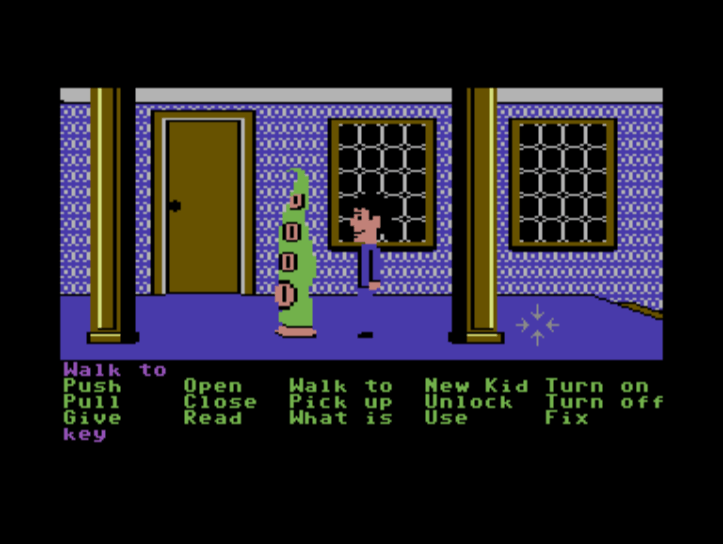
In (any version of) Maniac Mansion, if one kid is in the hallway with Green Tentacle, any other kid (even Syd and Razor) will refuse to go up the stairs to that hallway: “I’m not going up there… that monster’s got my friend!”
(Read comments for solution.)
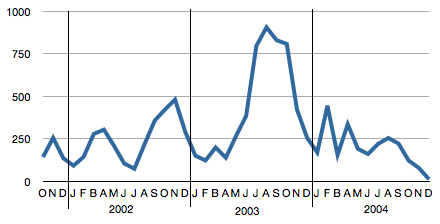
Slashdot had a story recently on how in 1942, the allies were able to estimate the number of German taks produced based on the serial numbers of the tanks. In 2010, a German hacker is doing the exact same thing with Xboxes. This article describes the generic approach, shows some results, and provides previously unreleased raw data of 14,000 Xbox serials so you can do your own statistics!
Everything can be expressed in bits. It takes 4 kilobits to decompress ZIP data, 25 kilobits to kill a human, 43 megabits for a working Mac OS X kernel, and 10^120 bits to describe our universe. What is the entropy/complexity of the 6502 CPU, you might wonder?
A while ago, an engineer from a respectable company for low-level solutions (no names without necessity!) claimed that a certain company’s new 4-way SMP system had broken CPUs or at least broken firmware that didn’t set up some CPU features correctly: While on the older 2-way system, all CPUs returned the same features (using CPUID), on the 4-way system, two of the CPUs would return bogus data.

There is only one way to find out – all you need is a giant pile of money and a vending machine that sells soda for $1.25: If you put in a dollar note and press the “return change” button, you will get the dollar note back directly. If you put in two dollar notes (the maximum it takes) at a time, it will give you change for the two dollars.

Google is always right.
Here is a fun game for long car rides: One person names a respected standard implemented by dozens of IT companies, and the other person names Microsoft’s competing technology. Example: MPEG Audio (MP3/AAC) – Windows Media Audio.
In some i386/x86_64 assembly code my coworker was working on, there was a macro like this:
Today’s puzzle is about some code behaving horribly wrong.
Bitfields are very common in low level C programming. You can use them for efficient storage of a data structure with lots of flags, or to pass a set of flags between functions. Let us look at the different ways of doing this.
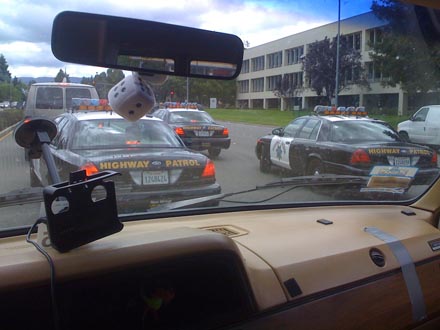
I happened to drive through Cupertino, CA, USA last Wednesday and ended up in this situation:
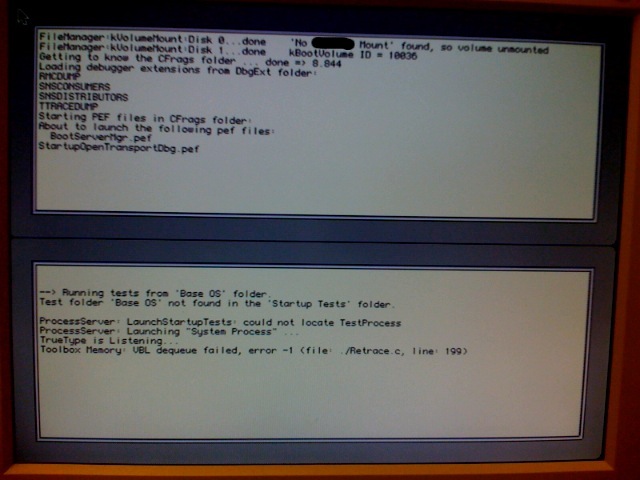
Unfortunately, I have not been able to successfully boot this up all the way on this machine – it hangs on this screen.
If you disassemble any version of Microsoft BASIC for 6502, you’ll find this code in a function that normalizes the (simulated) floating point accumulator:
This audio file is an important (previously unreleased) artifact of computer history. The aim of the puzzle is to decode and identify it correctly.
What does this instruction sequence do? (This was a collaborative effort by Chuck Gray, Myria and Michael.)