Trivia
darmok.com: Memes in the Tamarian Language

I have created darmok.com, a website that lets you share common memes in the Tamarian language.
The story of 15 Second Copy for the C-64
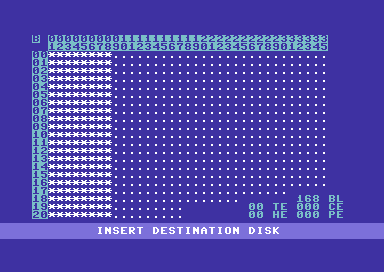
Published with permission.
The story of FCopy for the C-64
Reprinted with permission.
Chaosradio Express #177: Commodore 64
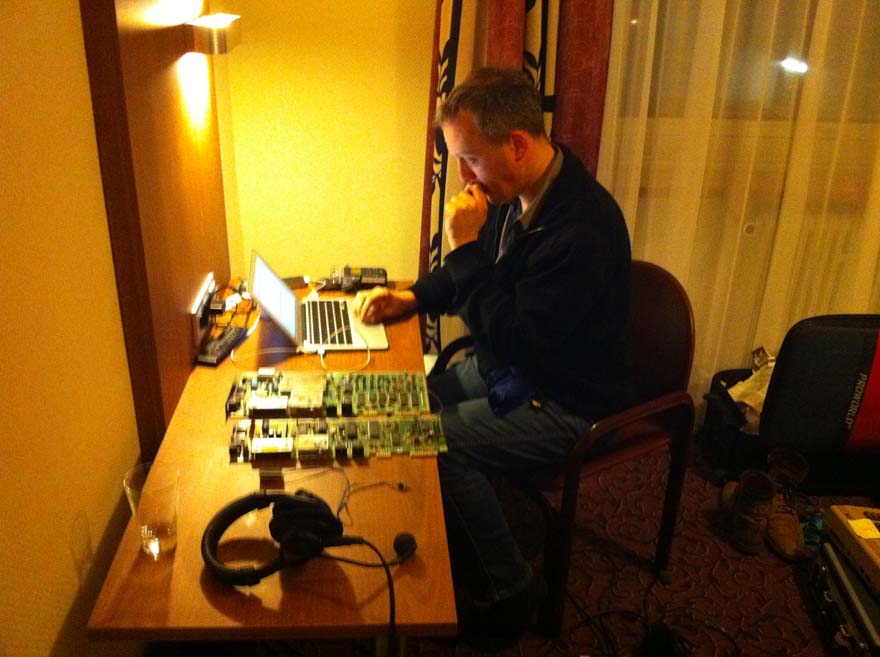
(This article is about a German-language podcast episode on the C64.)
Racism in Monstropolis
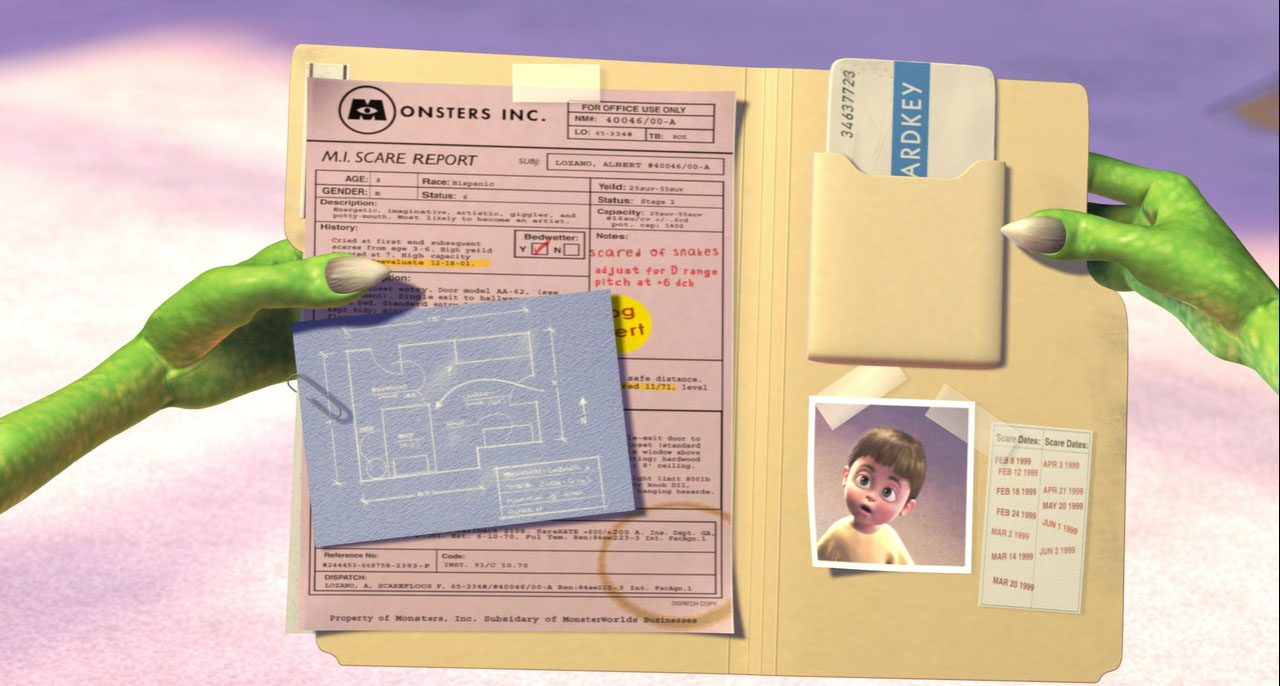
Sometimes, freezeframe fun does not provide fun, but sadness.
SCUMM Script
Ron Gilbert posted this as a comment on The Mansion – Technical Aspects, I am re-posting it here as an article.

Limitations in Maniac Mansion
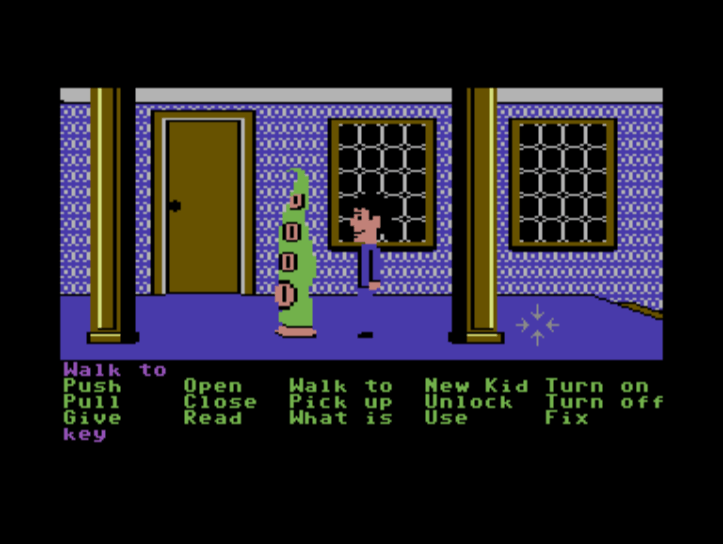
In (any version of) Maniac Mansion, if one kid is in the hallway with Green Tentacle, any other kid (even Syd and Razor) will refuse to go up the stairs to that hallway: “I’m not going up there… that monster’s got my friend!”
Windows Phone 7 & the Floppy Disk
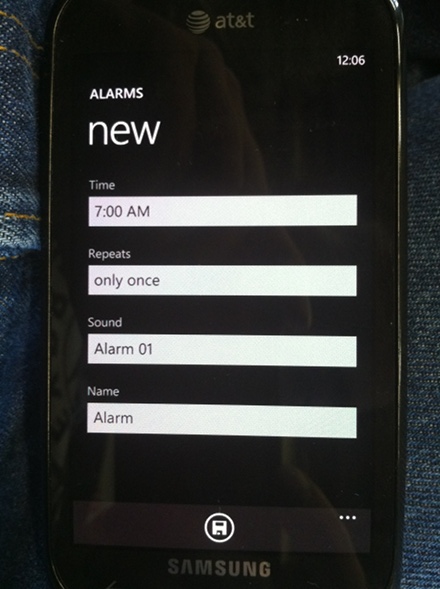
I’m sure all users will immediately associate a Sony 3.5″ Floppy Disk with “save”. It’s not like the stock icon library also had an OK button.
For Lisa, the World Ended in 1995
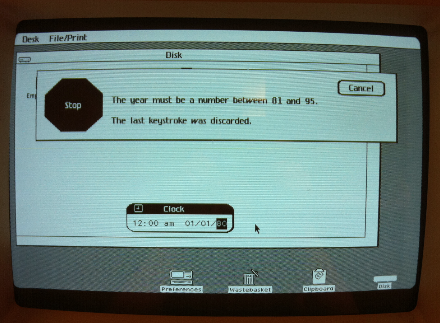
If you try to set the clock in Lisa OS 3.1 to 2010, you’re out of luck:
Internals of BRK/IRQ/NMI/RESET on a MOS 6502
After 35 years of measuring the behaviour of the MOS 6502 CPU to better understand what is going on, the Visual6502 simulator finally allows us insight into the chip, so we can understand what the CPU does internally. One interesting thing here is the question how the 6502 handles BRK, IRQ, NMI and RESET.
Measuring the Entropy of the MOS 6502 CPU
Everything can be expressed in bits. It takes 4 kilobits to decompress ZIP data, 25 kilobits to kill a human, 43 megabits for a working Mac OS X kernel, and 10^120 bits to describe our universe. What is the entropy/complexity of the 6502 CPU, you might wonder?
Why is there no CR1 – and why are control registers such a mess anyway?
If you want to enable protected mode or paging on the i386/x86_64 architecture, you use CR0, which is short for control register 0. Makes sense. These are important system settings. But if you want to switch the pagetable format, you have to change a bit in CR4 (CR1 does not exist and CR2 and CR3 don’t hold control bits), if you want to switch to 64 bit mode, you have to change a bit in an MSR, oh, and if you want to turn on single stepping, that’s actually in your FLAGS. Also, have I mentioned that CR5 through CR15 don’t exist – except for CR8, of course?
Having Fun with Branch Delay Slots
Branch Delay Slots are one of the awkward features of RISC architectures. RISC CPUs are pipelined by definition, so while the current instruction is in execution, the following instruction(s) will be in the pipeline already. If there is for example a conditional branch in the instruction stream, the CPU cannot know whether the next instruction is the one following the branch or the instruction at the target location until it has evaluated the branch. This would cause a bubble in the pipeline; therefore some RISC architectures have a branch delay slot: The instruction after the branch will always be executed, no matter whether the branch is taken or not.
PCEPTPDPTE
Here is a new pagetable entry.
The Easiest Way to Reset an i386/x86_64 System
Try this in kernel mode:
Bill Gates’ Personal Easter Eggs in 8 Bit BASIC
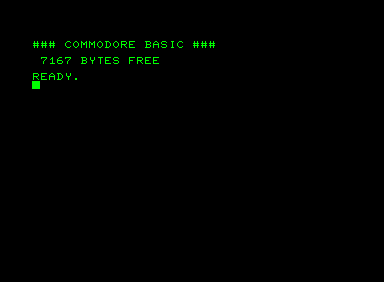
If you type “WAIT6502,1″ into a Commodore PET with BASIC V2 (1979), it will show the string “MICROSOFT!” at the top left corner of the screen. Legend has it Bill Gates himself inserted this easter egg “after he had had an argument with Commodore founder Jack Tramiel”, “just in case Commodore ever tried to claim that the code wasn’t from Microsoft”.
How MOS 6502 Illegal Opcodes really work
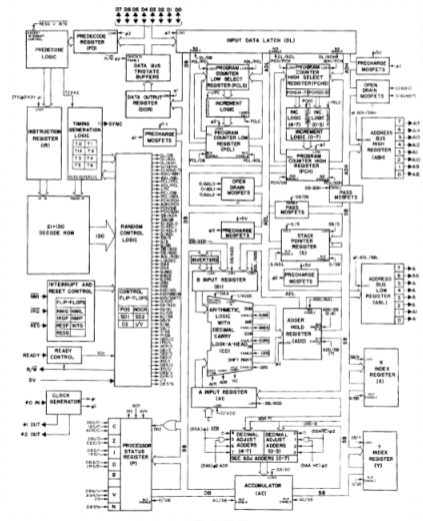
The original NMOS version of the MOS 6502, used in computers like the Commodore 64, the Apple II and the Nintendo Entertainment System (NES), is well-known for its illegal opcodes: Out of 256 possible opcodes, 151 are defined by the architecture, but many of the remaining 105 undefined opcodes do useful things.