Commodore 128, das große BASIC-Buch [PDF]
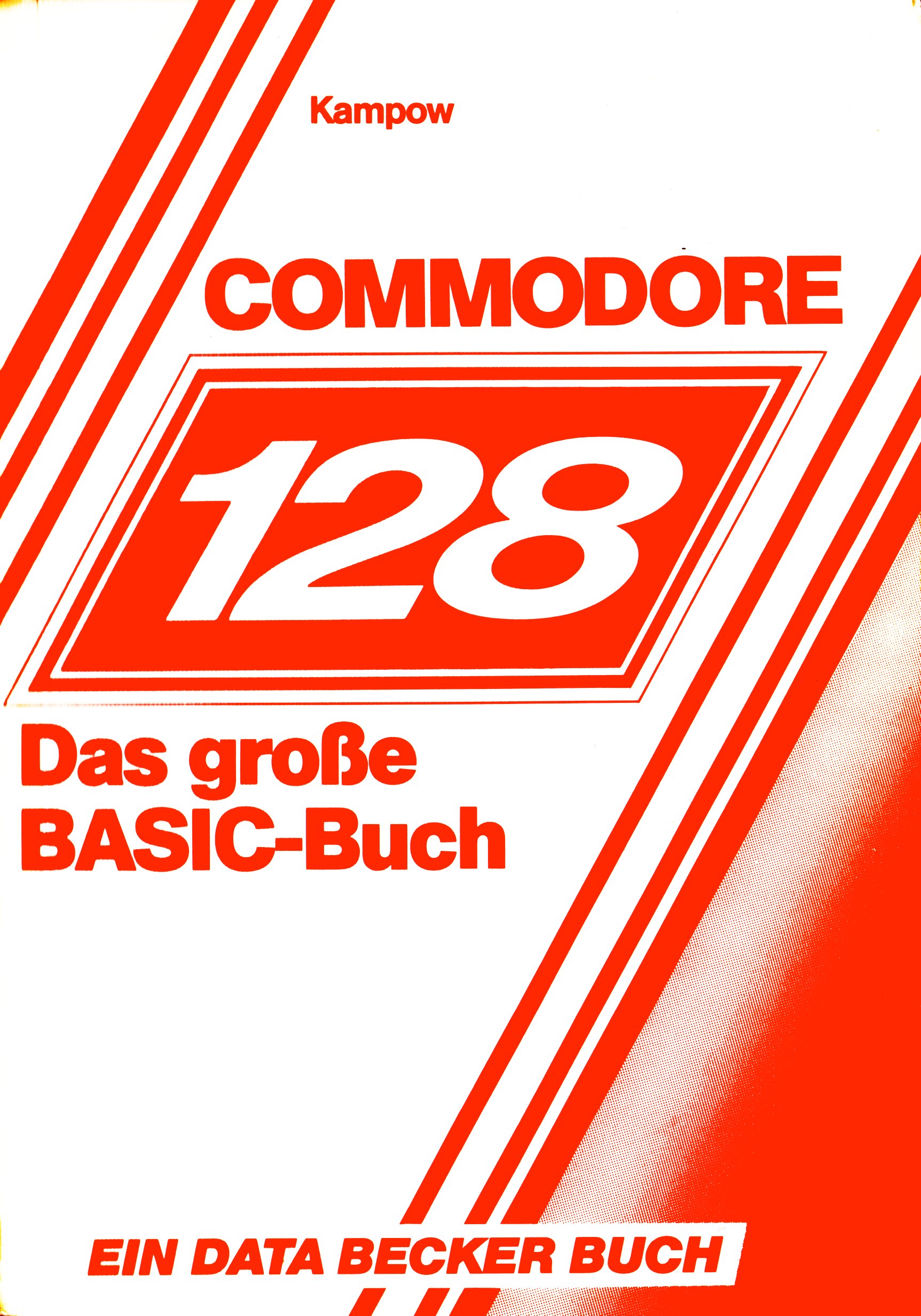
Frank Kampow:
Das große BASIC-Buch zum Commodore 128
Düsseldorf: Data Becker, 1985.
ISBN 3-89011-114-9.
(466 pages, 40 MB)
Danke an Dirk Wagner für die Bereitstellung des Buchs.
Some Assembly Required
Frank Kampow:
Das große BASIC-Buch zum Commodore 128
Düsseldorf: Data Becker, 1985.
ISBN 3-89011-114-9.
(466 pages, 40 MB)
Danke an Dirk Wagner für die Bereitstellung des Buchs.
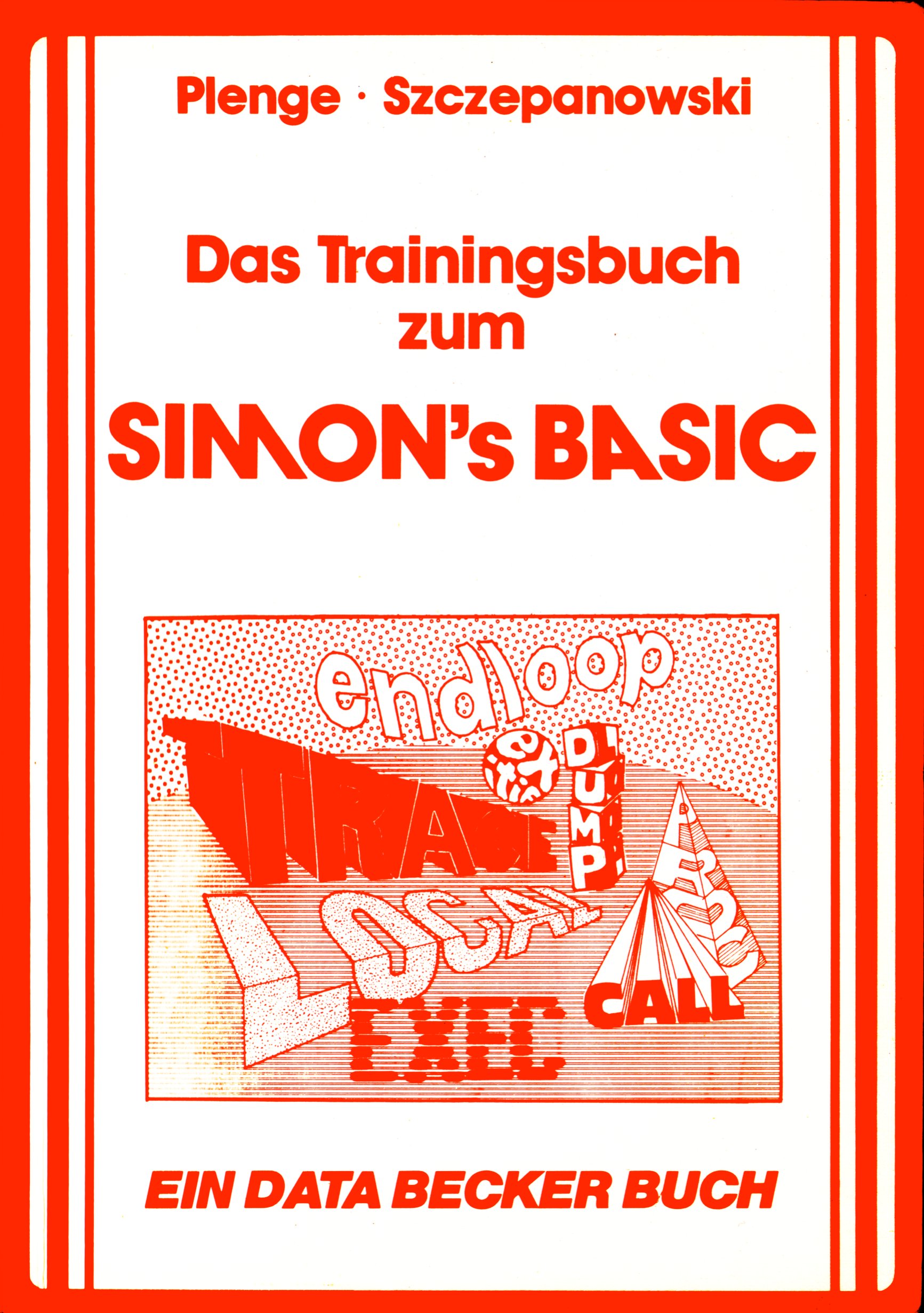
Axel Plenge, Norbert Szczepanowski:
Das Trainingsbuch zum SIMON’S BASIC
Düsseldorf: Data Becker, 1983.
ISBN 3-89011-009-6.
(394 pages, 70 MB)
Danke an Dirk Wagner für die Bereitstellung des Buchs.
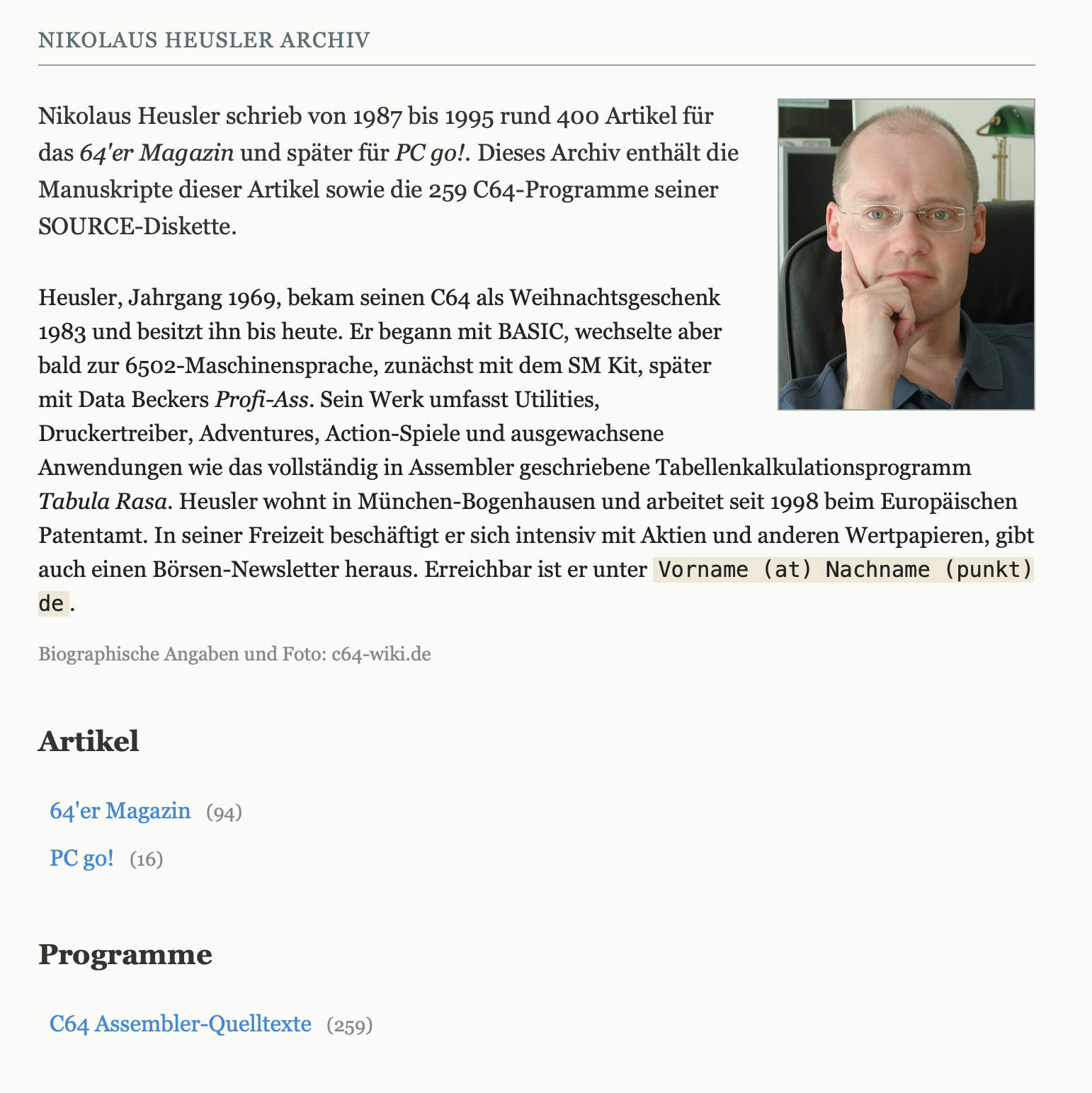
Nikolaus Heusler zählt zu den produktivsten Autoren des 64’er Magazins: hunderte Beiträge zwischen 1987 und 1995. Heusler, Jahrgang 1969, hatte seinen C64 zu Weihnachten 1983 bekommen; heute arbeitet er beim Europäischen Patentamt in München.
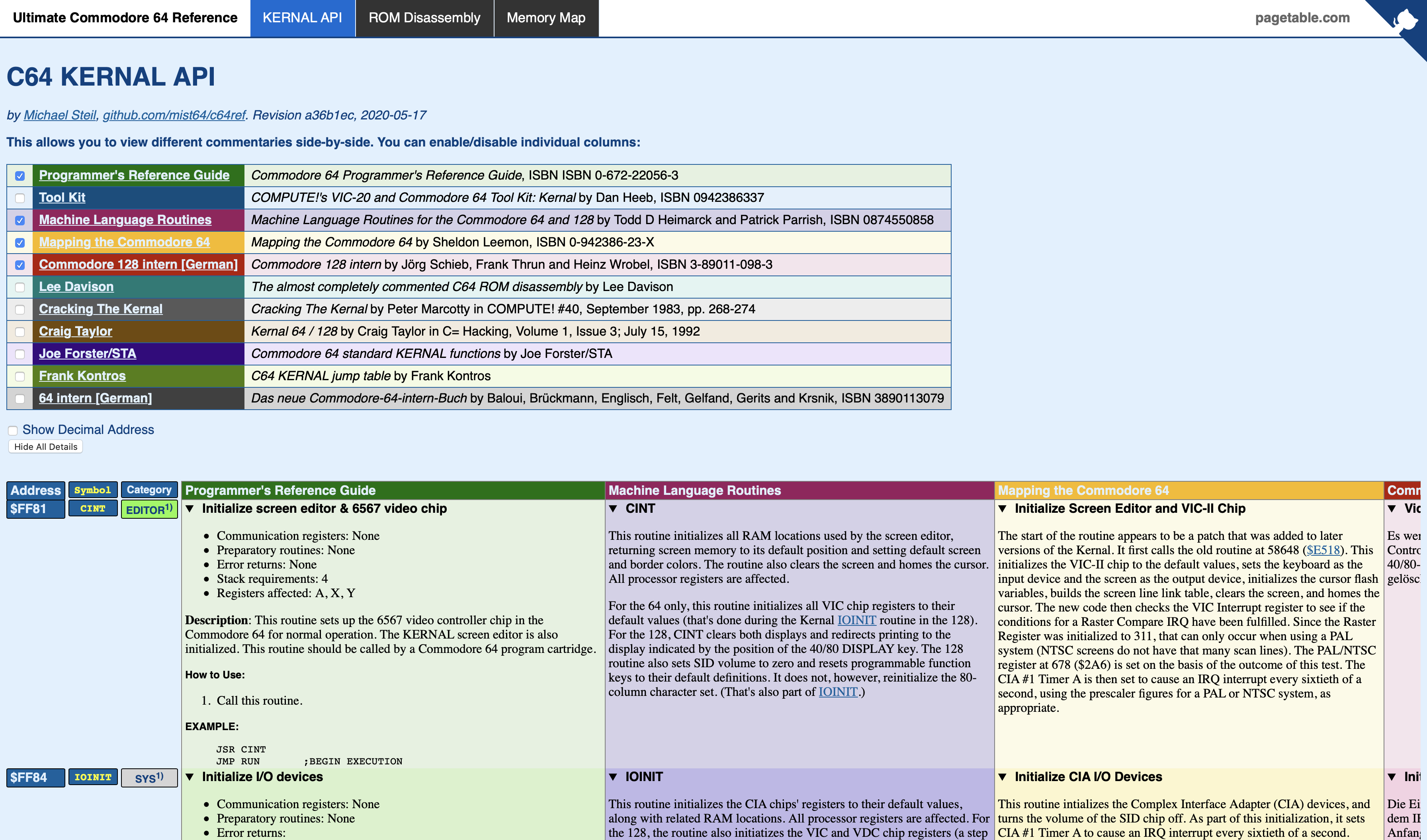
The Ultimate C64 Reference is growing again: This time, we’re adding the KERNAL API reference – as always, in eleven different versions side-by-side.
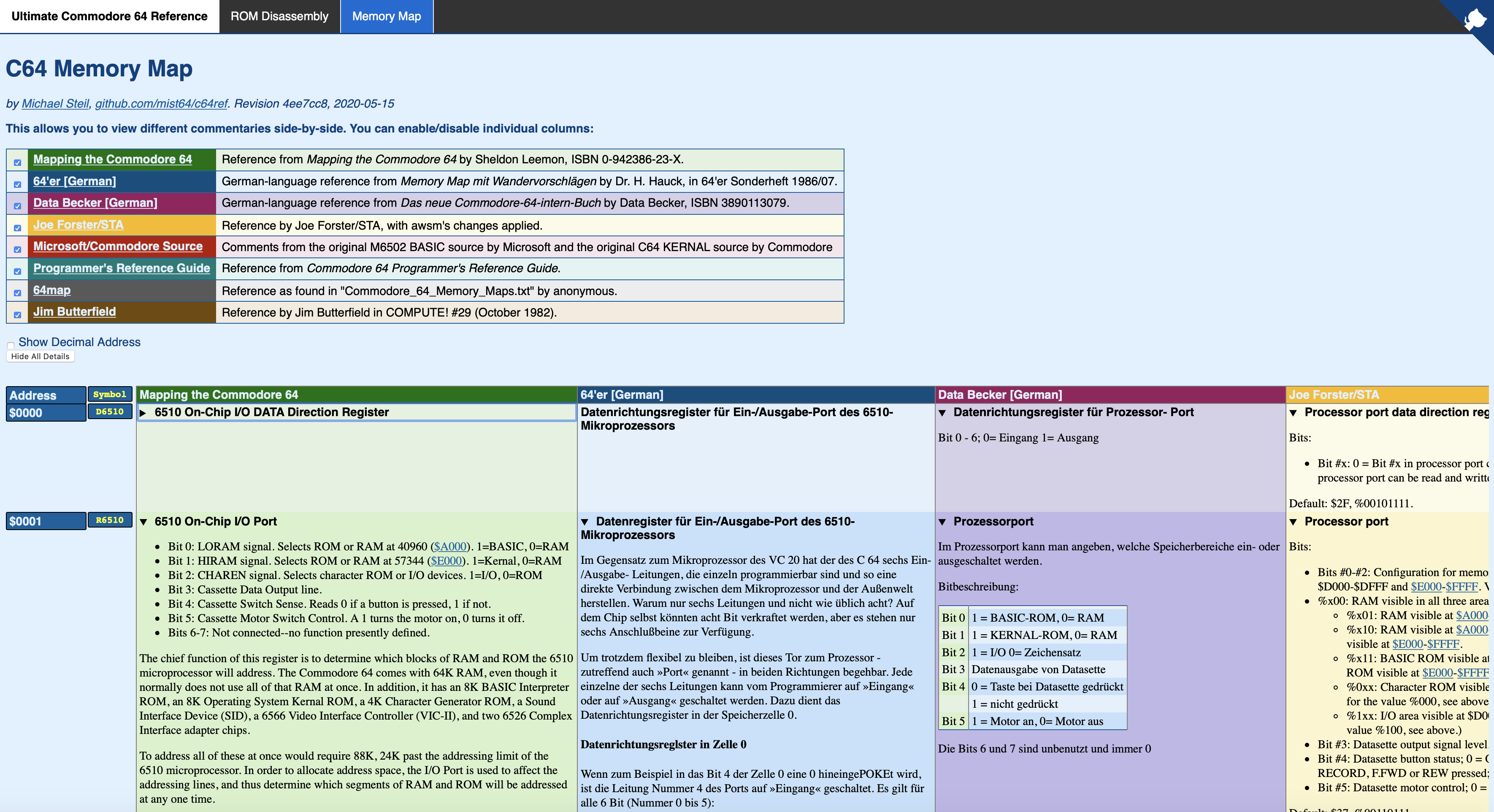
The system software of the Commodore 64 has been extensively reverse-engineered. Next to disassemblies of the ROM, several “memory maps” have been published: tables that document system variables in the first kilobyte of RAM, and how to tweak the system software with PEEK and POKE. Now, I’m presenting the Ultimate C64 Memory Map: A C64 memory reference that shows eight sources side-by-side.
The original Commodore 64 KERNAL and BASIC source code has been available for a while. It used to be built using Commodore’s assembler of a PET.
My side-by-side C64 ROM disassembly/commentary page has been completely redone!
Over the years, the ROM source code of many Commodore computers and peripherals has appeared. I have been collecting them in a git repository here:
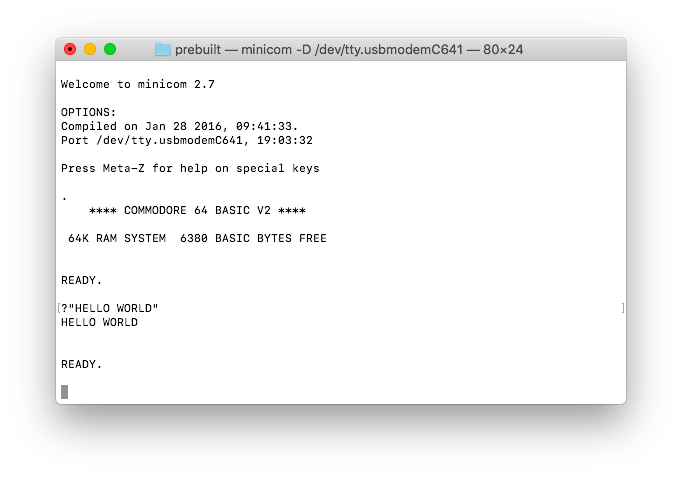
Tomu is a super cheap Open Source Hardware 24 MHz ARM computer with 8 KB of RAM and 64 KB of ROM that fits into your USB connector! Of course I had to put Commodore 64 BASIC on it, which can be accessed through the USB-Serial port exposed by the device.
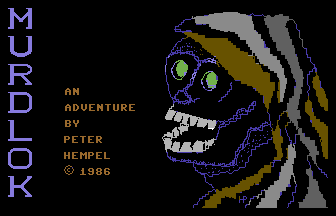
Murdlok is a previously unreleased graphical text-based adventure game for the Commodore 64 written in 1986 by Peter Hempel. A German and an English version exist.
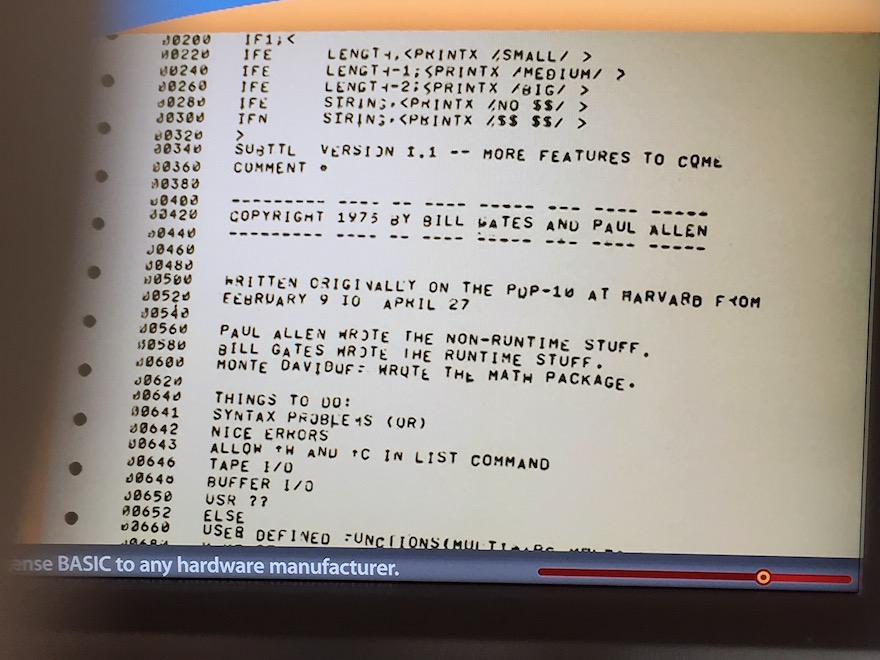
Microsoft BASIC for 6502 exists digitally in source form – the older version of the Intel 8080 CPU only exists on paper though: as a printout in the archives of Harvard University. Some snippets of the code are public though:
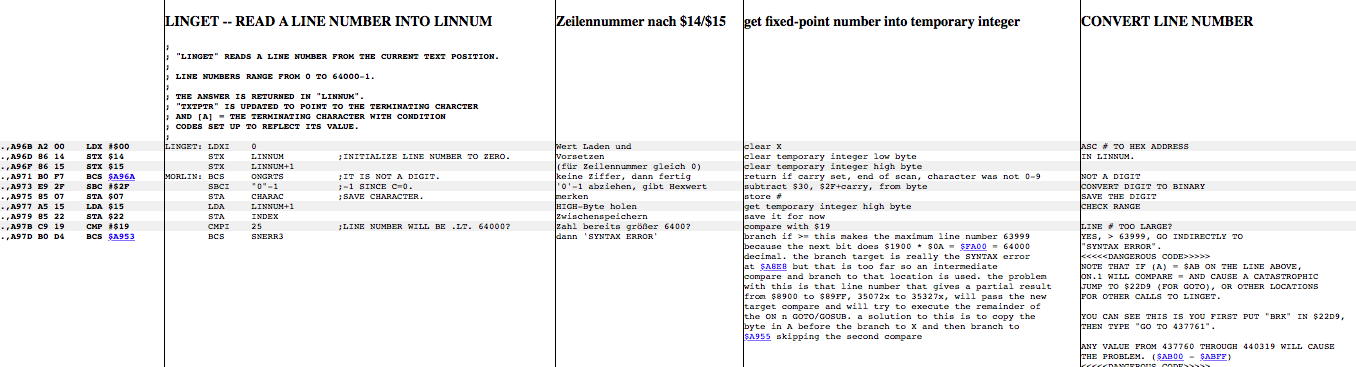
The Commodore 64 ROM has been subject to immense reverse engineering. Many commented disassemblies were published over the decades, scattered over different media such as books, magazines, disks, and later, the internet – and there are even some commentaries that apply to the C64 ROM, but were written with other systems in mind that shared Microsoft’s BASIC interpreter.
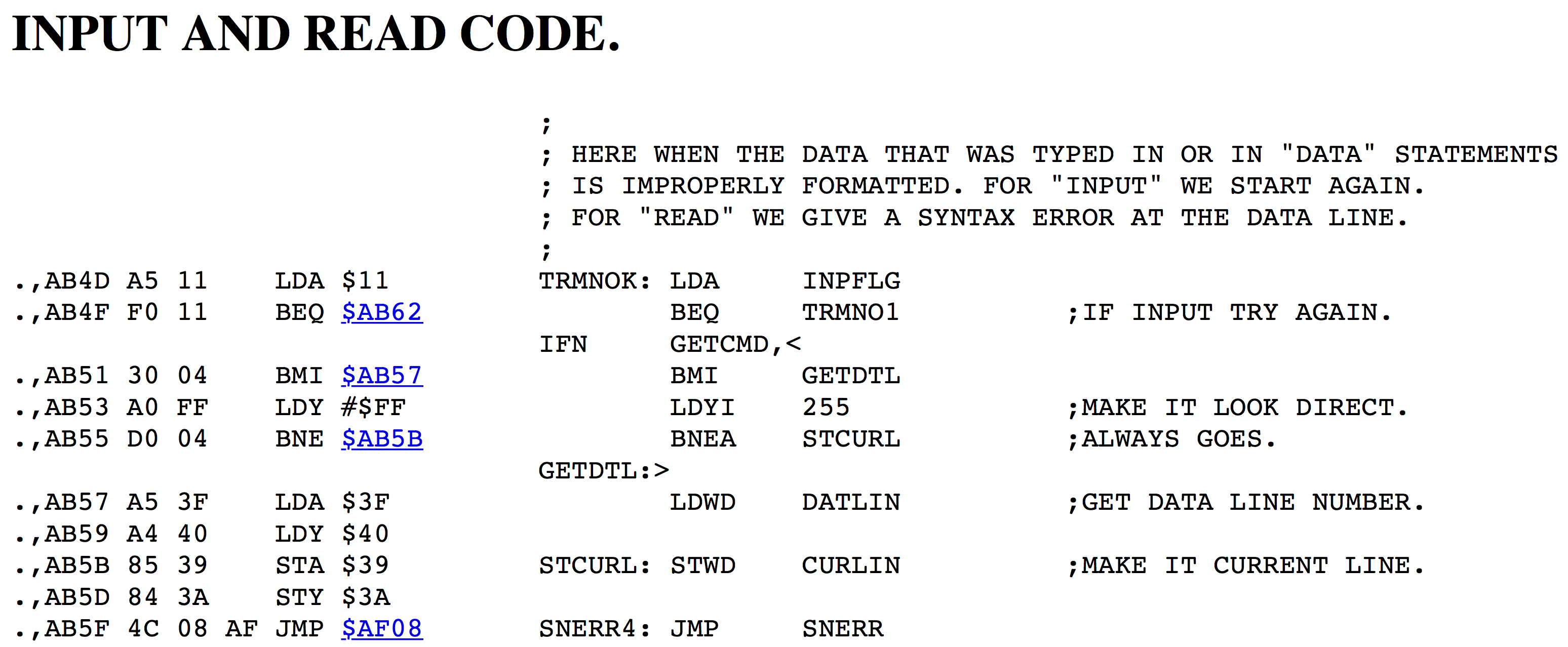
On my quest of collecting as many commentaries on the Commodore 64 ROM at pagetable.com/c64rom, we have gathered Lee Davison’s excellent commentary, the German de facto standard by Data Becker, and an adaptation of Bob Sander-Cederlof’s Apple II ROM commentary, all in the same cross-referenced HTML format.
This is the original 1978 source code of Microsoft BASIC for 6502 with all original comments, documentation and easter eggs:
In our series about C64 ROM commentaries (English version by Lee Davison, German version by Data Becker), I’m now presenting a most unusual C64 ROM commentary – based on a commented disassembly of the Apple II ROM.
After last week’s German C64 ROM disassembly from the “64 intern” book, I have now also converted Lee Davison’s commented disassembly into the same format.
Whenever I need to look up some code in the ROM of the Commodore 64, I have the choice of the commented disassembly by Marko Mäkelä, the one by Ninja/The Dreams, or the one by Lee Davison – or I can just use my paper copy of “Das neue Commodore-64-intern-Buch“, an excellent line-by-line commentary in German.
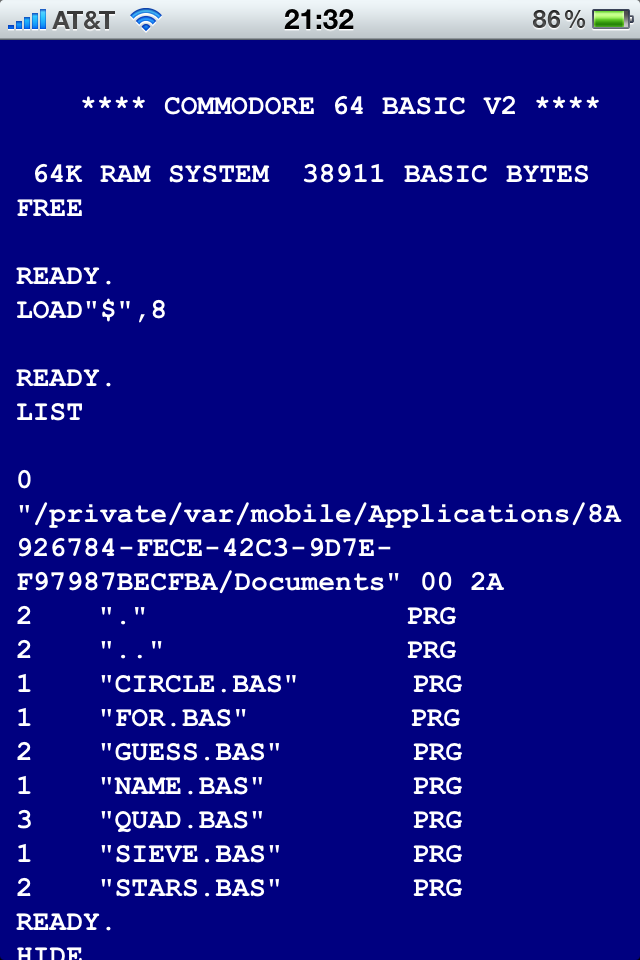
You might remember the hassle about the Commodore 64 emulator in the iPhone App Store about a year ago: First it was approved, but then pulled again, because it allowed access to the C64’s BASIC – general-purpose interpreters were not allowed. After Apple relaxed this restriction, BASIC was added again.
It is a good time for statically recompiled versions of BASIC from old computers. First there was Apple I BASIC. Then came Commodore BASIC. Now, due to overwhelming demand, we’re proud to release TI-99/4A BASIC. For those unfamiliar the TI-99/4A was a home computer by Texas Instruments released in 1981. Unusually for the time it had a 16-bit CPU: the TMS9900.