Having Fun with Branch Delay Slots

Branch Delay Slots are one of the awkward features of RISC architectures. RISC CPUs are pipelined by definition, so while the current instruction is in execution, the following instruction(s) will be in the pipeline already. If there is for example a conditional branch in the instruction stream, the CPU cannot know whether the next instruction is the one following the branch or the instruction at the target location until it has evaluated the branch. This would cause a bubble in the pipeline; therefore some RISC architectures have a branch delay slot: The instruction after the branch will always be executed, no matter whether the branch is taken or not. read more

How MOS 6502 Illegal Opcodes really work

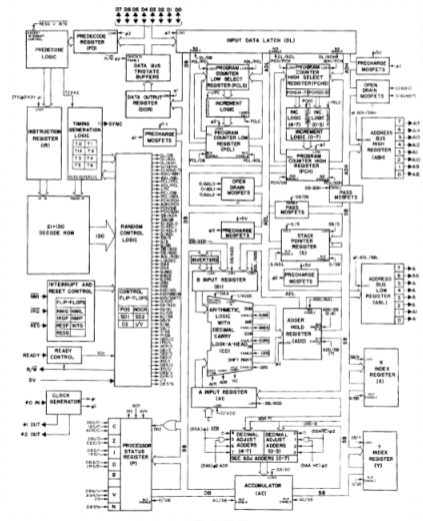
The original NMOS version of the MOS 6502, used in computers like the Commodore 64, the Apple II and the Nintendo Entertainment System (NES), is well-known for its illegal opcodes: Out of 256 possible opcodes, 151 are defined by the architecture, but many of the remaining 105 undefined opcodes do useful things. read more

Strange SSE3 opcodes

Intel used some strange opcodes for the SSE3 instructions. All MMX/SSE opcodes use the 0x0f prefix (former “pop cs”). They soon noticed the the 0x0f area gets full, so they used the 0x66, 0xf2, 0xf3 prefix as modifiers. The basic rule is: read more

Redundant SSE instructions

As we all know the x86-ISA has a lot of redundant instructions (ie. instructions with the same semantic but different opcodes). Sometimes this is unavoidable, sometimes it looks like bad design. But with SSE it gets really weird. Let’s say we want to perform xmm0 <- xmm0 & xmm1 (ie. bitwise and). Not an uncommon operation; but we have 3 different ways do archive this: read more

FFREEP – the assembly instruction that never existed

Due to simplified instruction decoding of the Intel 80287, this CPU had opcode aliases for instructions like FXCH, FSTP, i.e. there were some additional encodings that did the same as the originals as defined by the 8087. As a side effect of this, a new instruction, FFREEP appeared, although not intented by Intel. read more

First assembly puzzle!

This is our first assembly language puzzle for the new site! These puzzles are tests to see whether you are good enough of an assembly nerd, and to learn some tricks if you’re not =^_^= read more