Inside geoWrite – 2: Screen Recovery
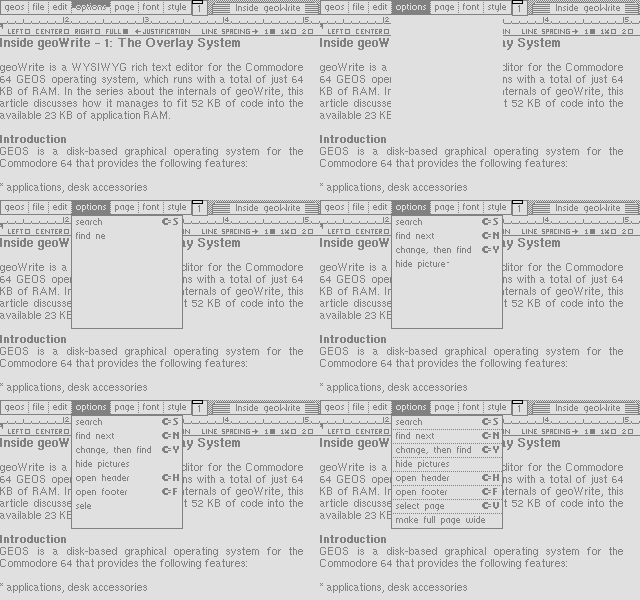
In the series about the internals of the geoWrite WYSIWYG text editor for the C64, this article discusses how the app manages to extend its usable RAM by 5 KB using a custom screen recovery solution.
Some Assembly Required
In the series about the internals of the geoWrite WYSIWYG text editor for the C64, this article discusses how the app manages to extend its usable RAM by 5 KB using a custom screen recovery solution.
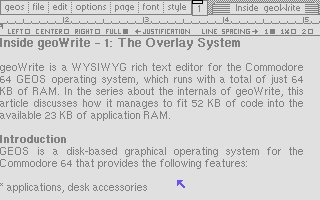
geoWrite is a WYSIWYG rich text editor for the Commodore 64 GEOS operating system, which runs with a total of just 64 KB of RAM. In the series about the internals of geoWrite, this article discusses how it manages to fit 52 KB of code into the available 23 KB of application RAM.

Another addition to the The Ultimate C64 Reference: We’re adding character sets, PETSCII codes and keyboard layouts – supporting eight different Commodore computers.
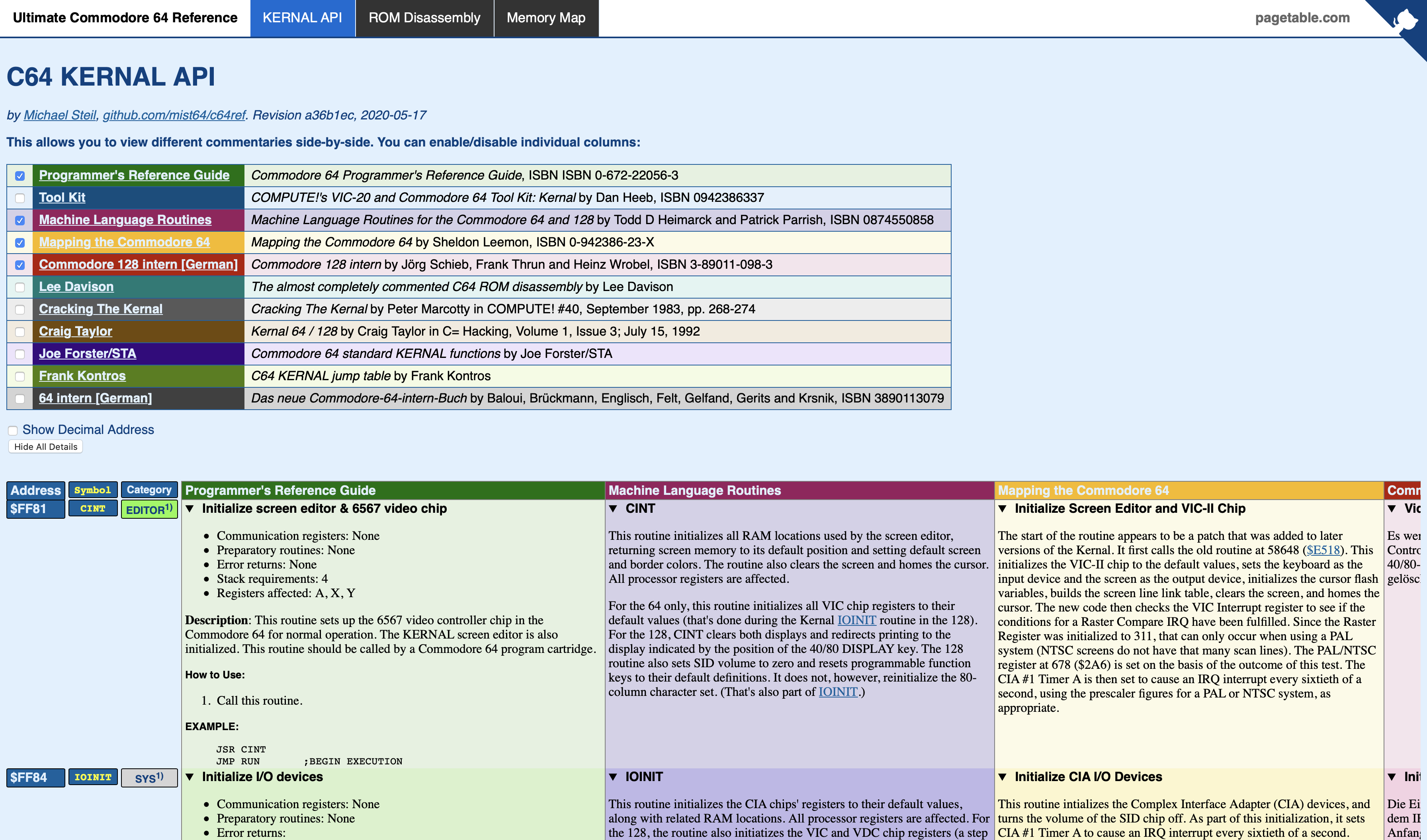
The Ultimate C64 Reference is growing again: This time, we’re adding the KERNAL API reference – as always, in eleven different versions side-by-side.
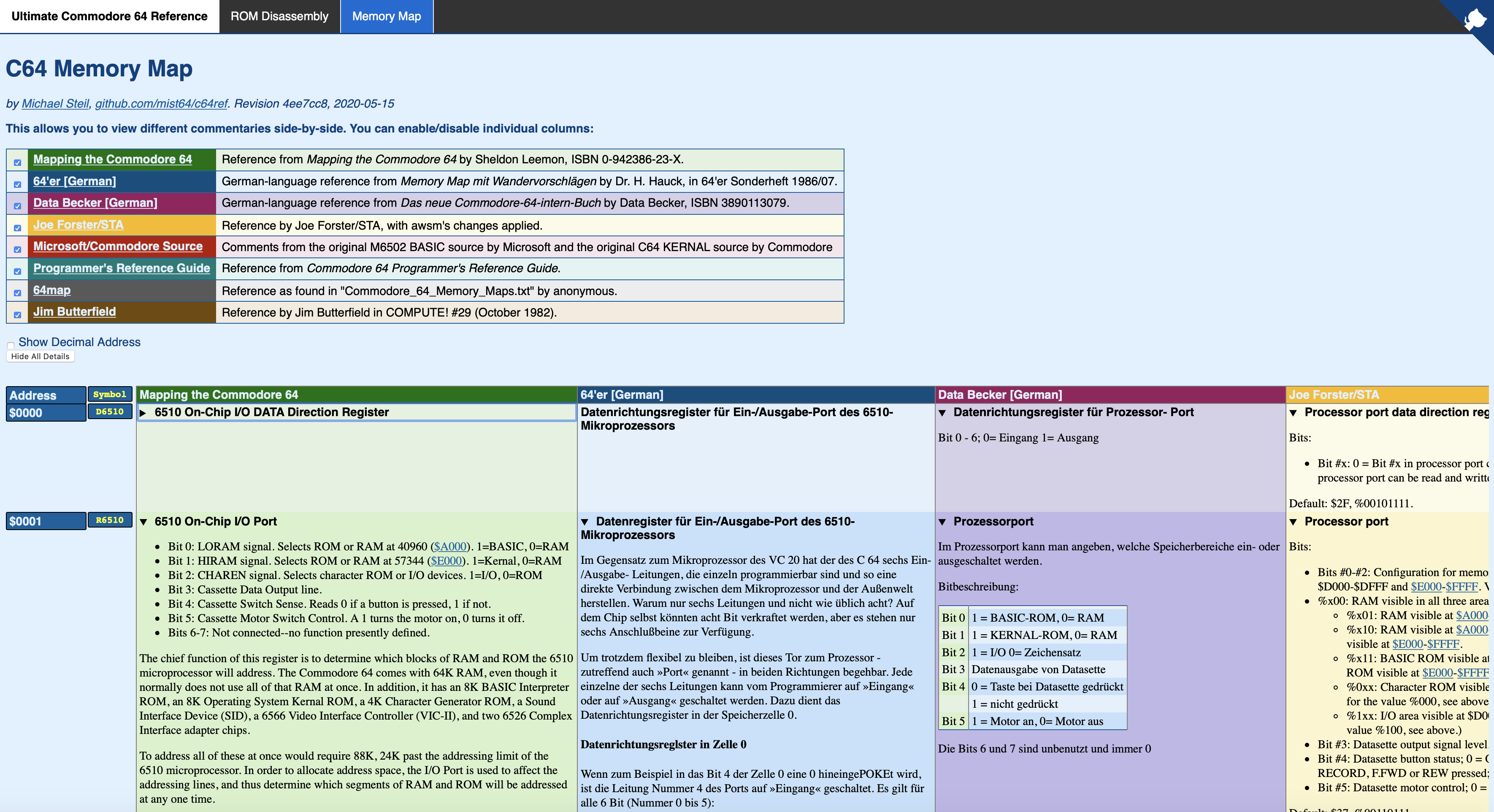
The system software of the Commodore 64 has been extensively reverse-engineered. Next to disassemblies of the ROM, several “memory maps” have been published: tables that document system variables in the first kilobyte of RAM, and how to tweak the system software with PEEK and POKE. Now, I’m presenting the Ultimate C64 Memory Map: A C64 memory reference that shows eight sources side-by-side.
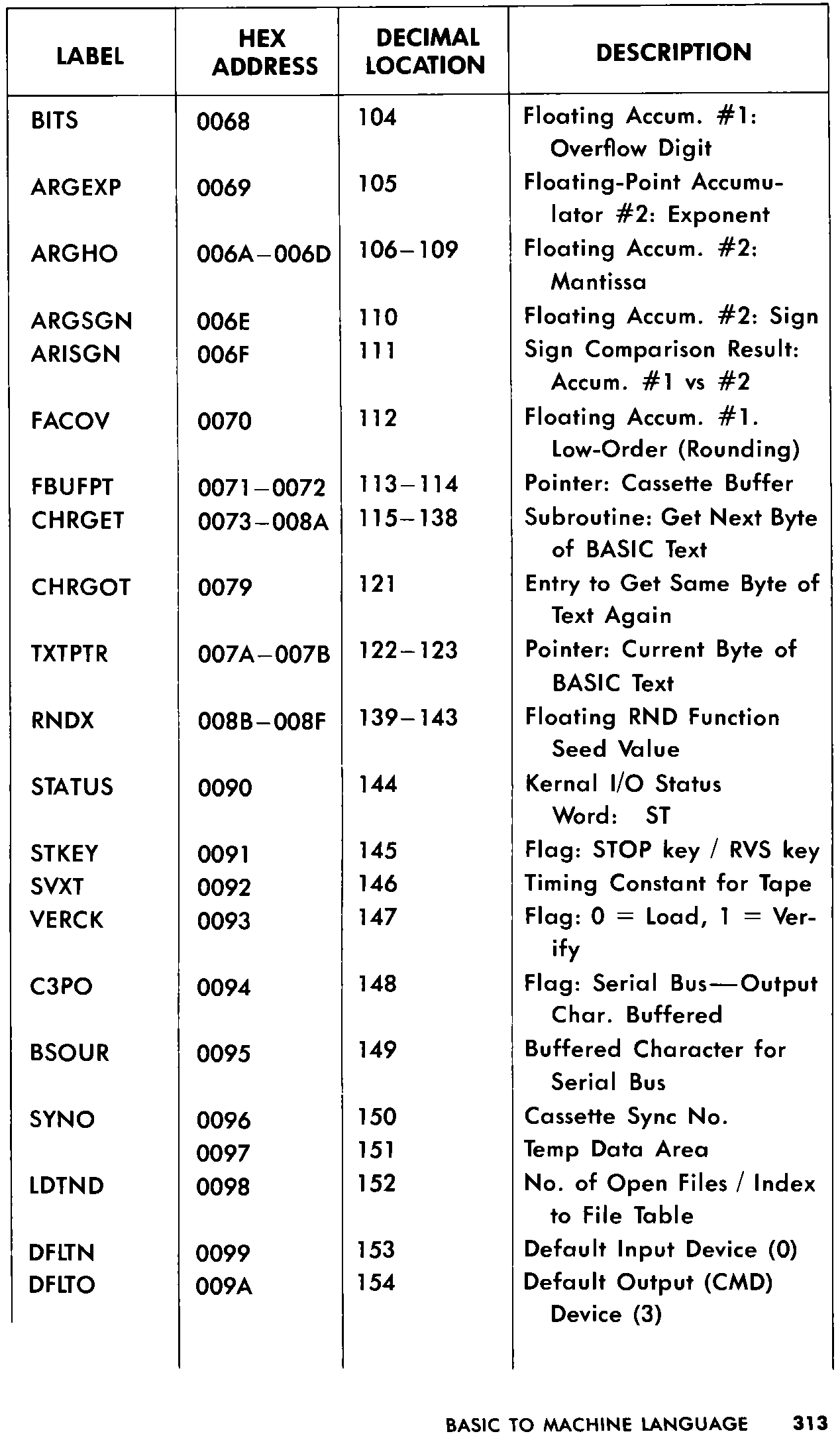
The Commodore 64 Programmer’s Reference Guide contains a memory map with a complete description of the zeropage and system variables used by KERNAL and BASIC, but now that we have the original source, we know there are three typos in this table.
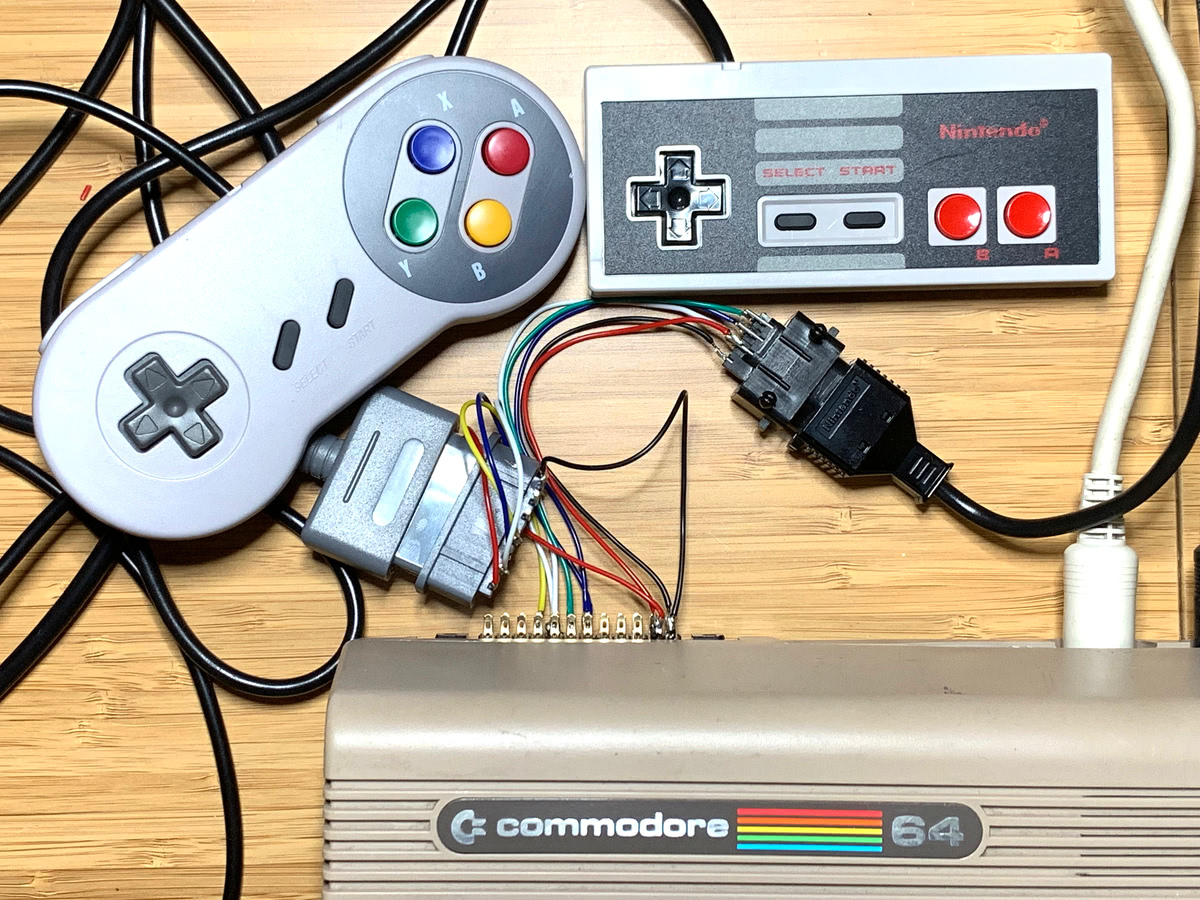
NES and SNES controllers support 8 to 12 buttons with only three data pins (plus VCC/GND). Let’s attach them to a C64 – or any 6502-based system!

The “Video Supergame 64” is a Commodore 64 bundled with a joystick and three games on a cartridge, sold mainly in Germany in 1988/1989. Here are some pictures.

Many old Commodore 64/1541 disks have read errors, but this doesn’t mean the data isn’t recoverable – with the right nibtools settings and some cleaning.
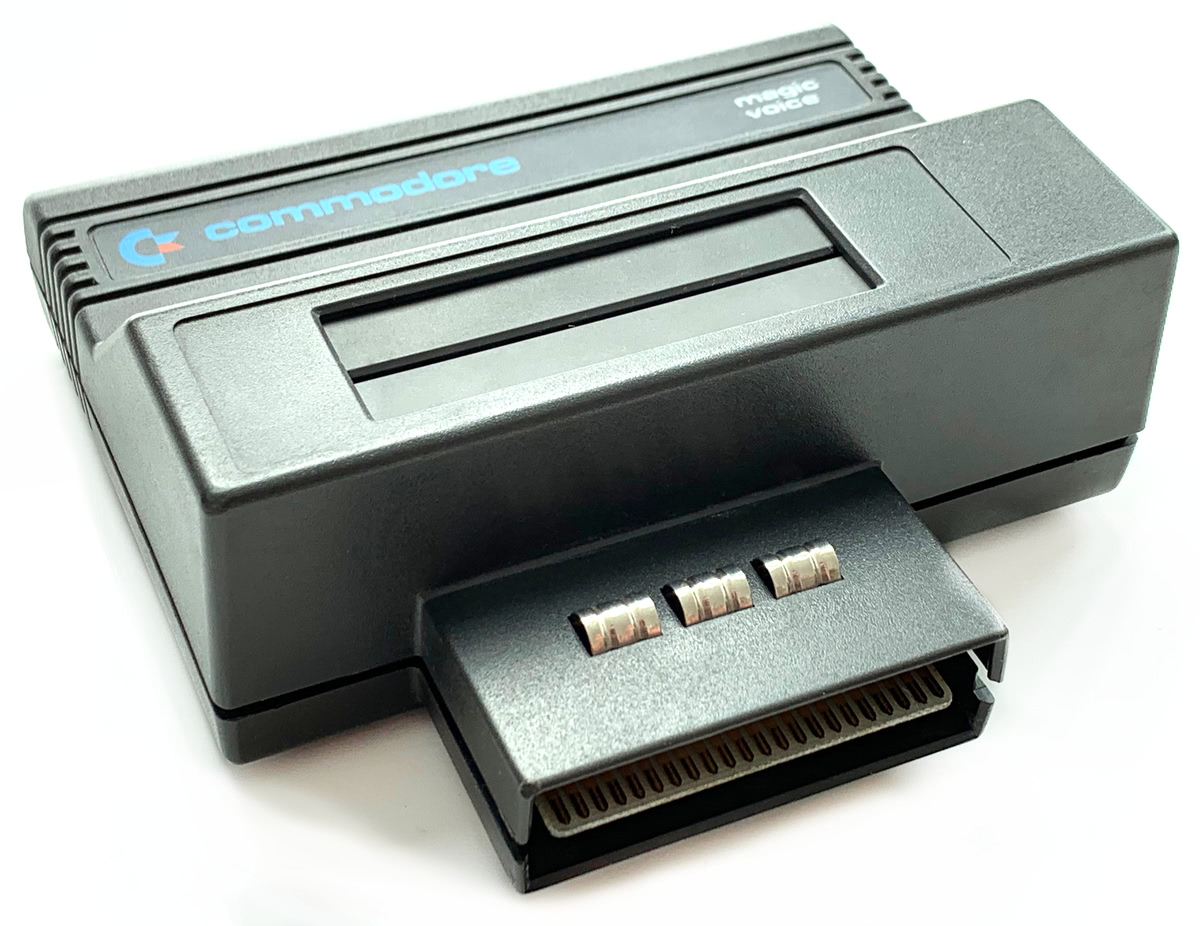
“Magic Voice” is an expansion cartridge for the Commodore 64 that can speak 235 predefined words. Here are some pictures.
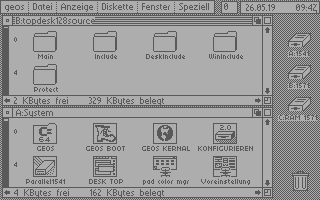
Thanks to Falk Rehwagen and Jürgen Heinisch, the original source of the TopDesk file manager for the GEOS operating system of C64/C128 is available.
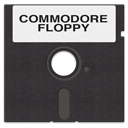
In this episode of computer archeology, we deconstruct a very interesting case of borrowing code from multiple places – but first try this D64 disk image with any Commodore 64 emulator or a real C64:
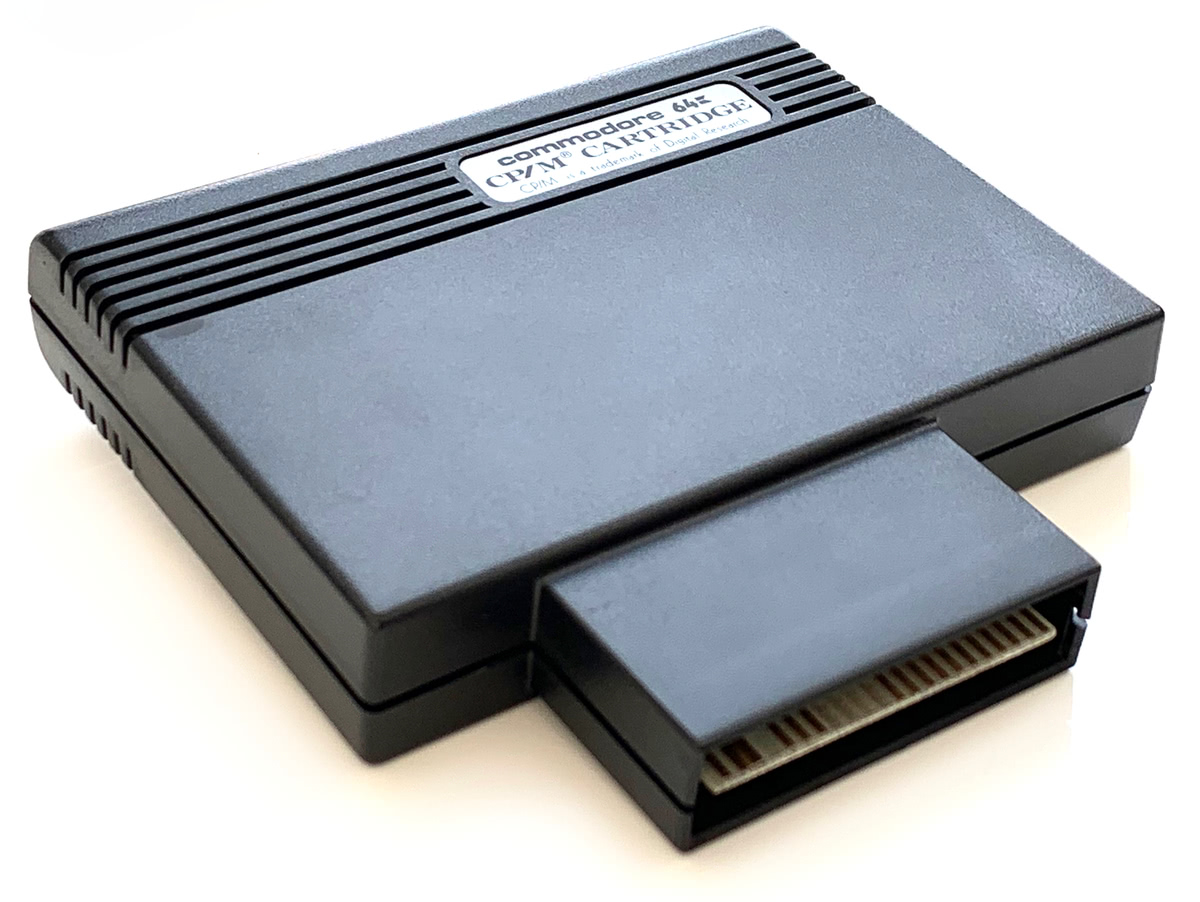
The cartridge that makes a C64 a “dual processor” computer: Commodore’s CP/M cartridge for C64 contains a Z80 CPU and comes with version 2.2 of the CP/M operating system. Here are some pictures.
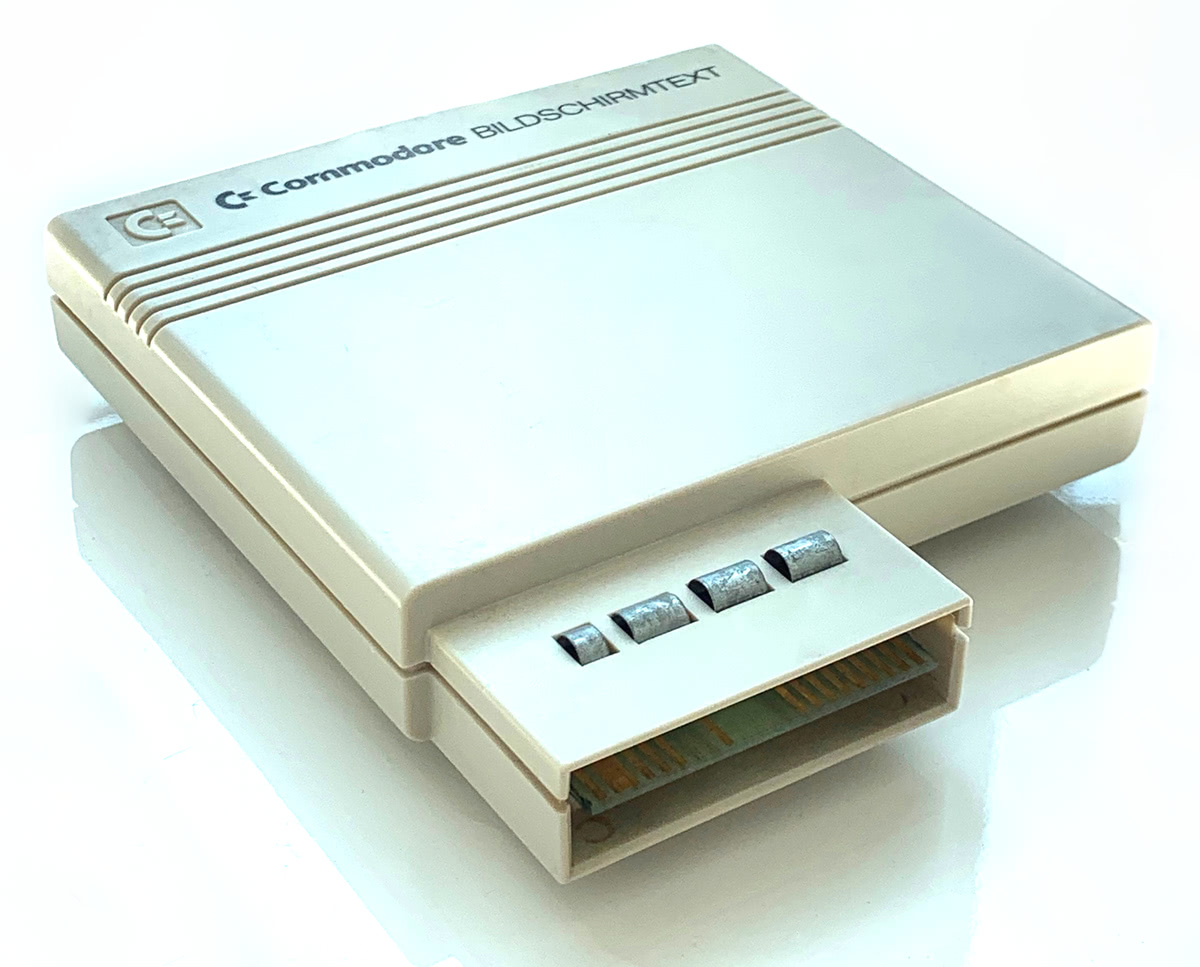
Here are some pictures of the outside and the inside of a Commodore Bildschirmtext II Decoder Cartridge for the C64 – a 6800-based computer connected to the expansion port!
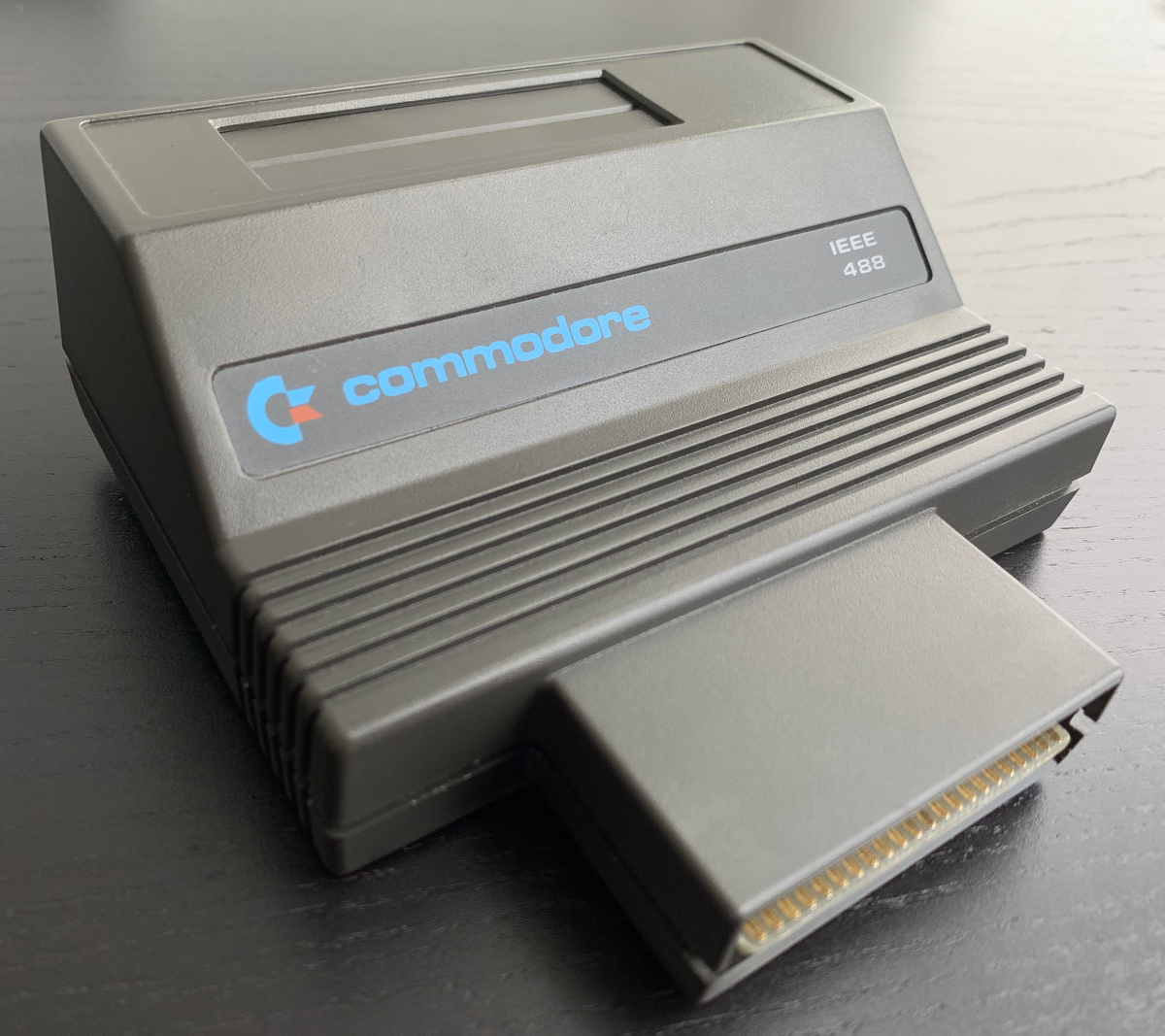
Commodore 64 disk drives were usually connected through the slow serial bus. This article shows some hi-res photos of the Commodore “IEEE-488 cartridge”, which made the faster PET drives available for the C64.

The Final Cartridge III is great: It comes with a disk speeder, BASIC extensions, an excellent monitor – and an impressive, but ultimately useless GUI, because there are practically no applications for it. Let’s replace the FC3 GUI with GEOS!
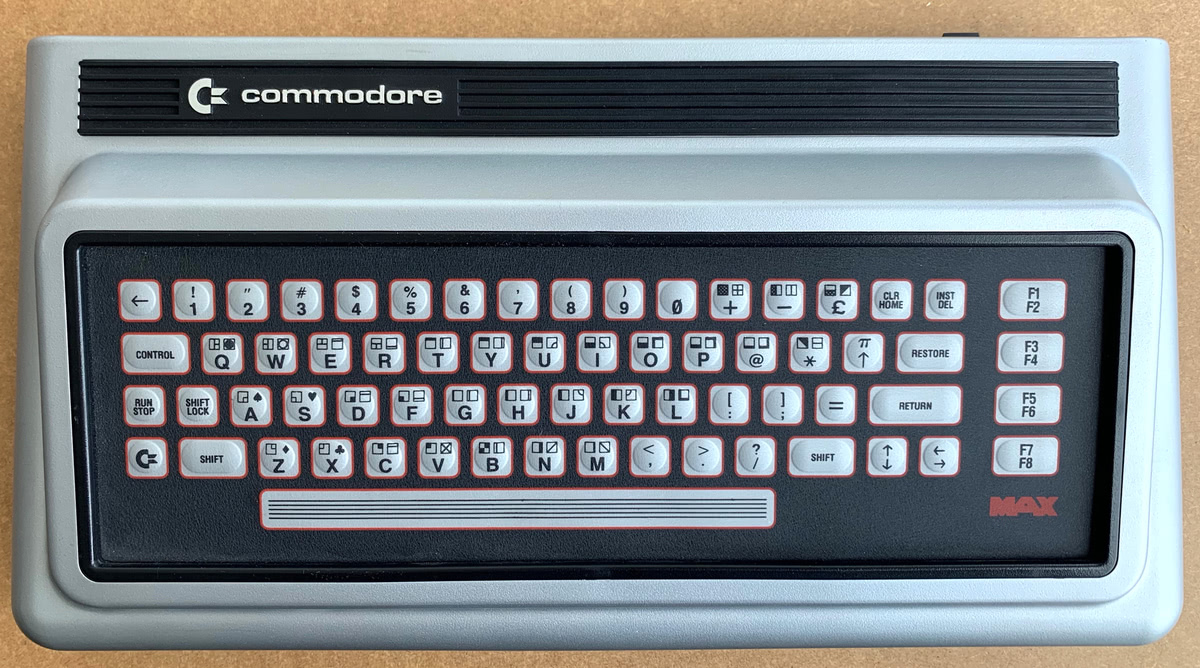
Here are some hi-res pictures of the Commodore MAX machine (aka Ultimax or VC-10), a stripped-down game console variant of the Commodore 64 that was briefly available in 1982.
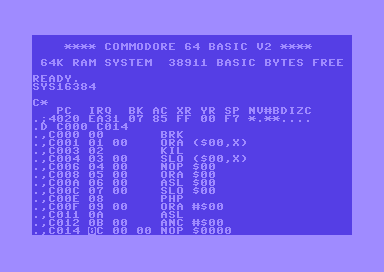
The monitor built into the Final Cartridge III is one of the best ones for the C64. Some of its unique features are:
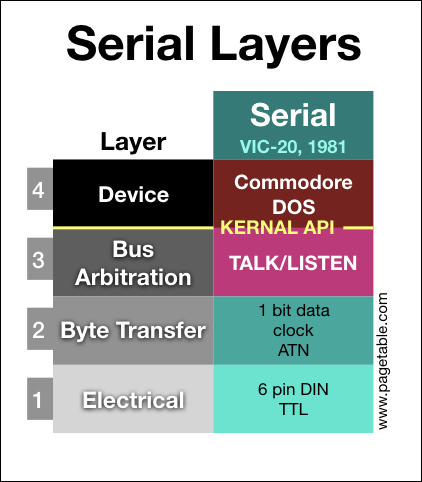
In the series about the variants of the Commodore Peripheral Bus family, this article covers the lowest two layers (electrical and byte transfer) of the “Standard Serial” bus as found on the VIC-20/C64 as the main bus, but also supported by all other Commodore home computers.