Commodore Peripheral Bus: Part 1: IEEE-488
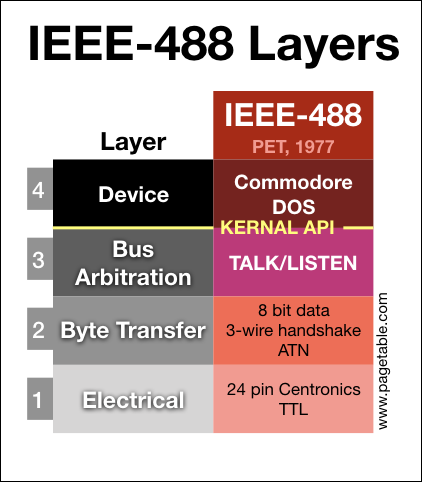
In the series about the variants of the Commodore Peripheral Bus family, this article covers the lowest two layers (electrical and byte transfer) of the IEEE-488 bus as found on the PET/CBM series.
Some Assembly Required
In the series about the variants of the Commodore Peripheral Bus family, this article covers the lowest two layers (electrical and byte transfer) of the IEEE-488 bus as found on the PET/CBM series.
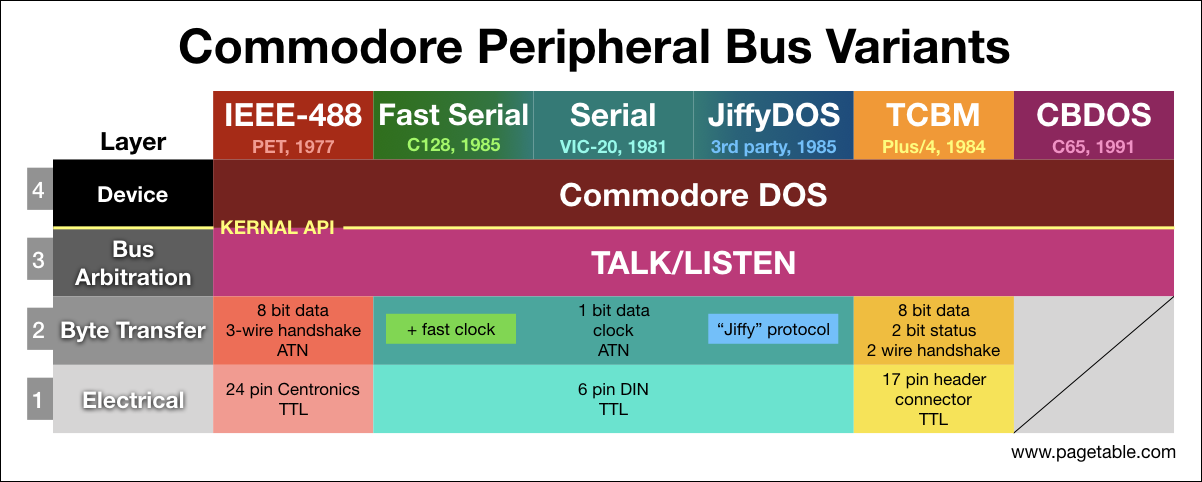
The well-known Serial Bus (aka Serial “IEC” Bus) of the Commodore 64 that connects to disk drives such as the 1541 is just one variant of a whole family of busses and protocols used by the line of 8 bit Commodore machines from the PET to the C65. This is the first article of a multi-part series on the Commodore Peripheral Bus family.
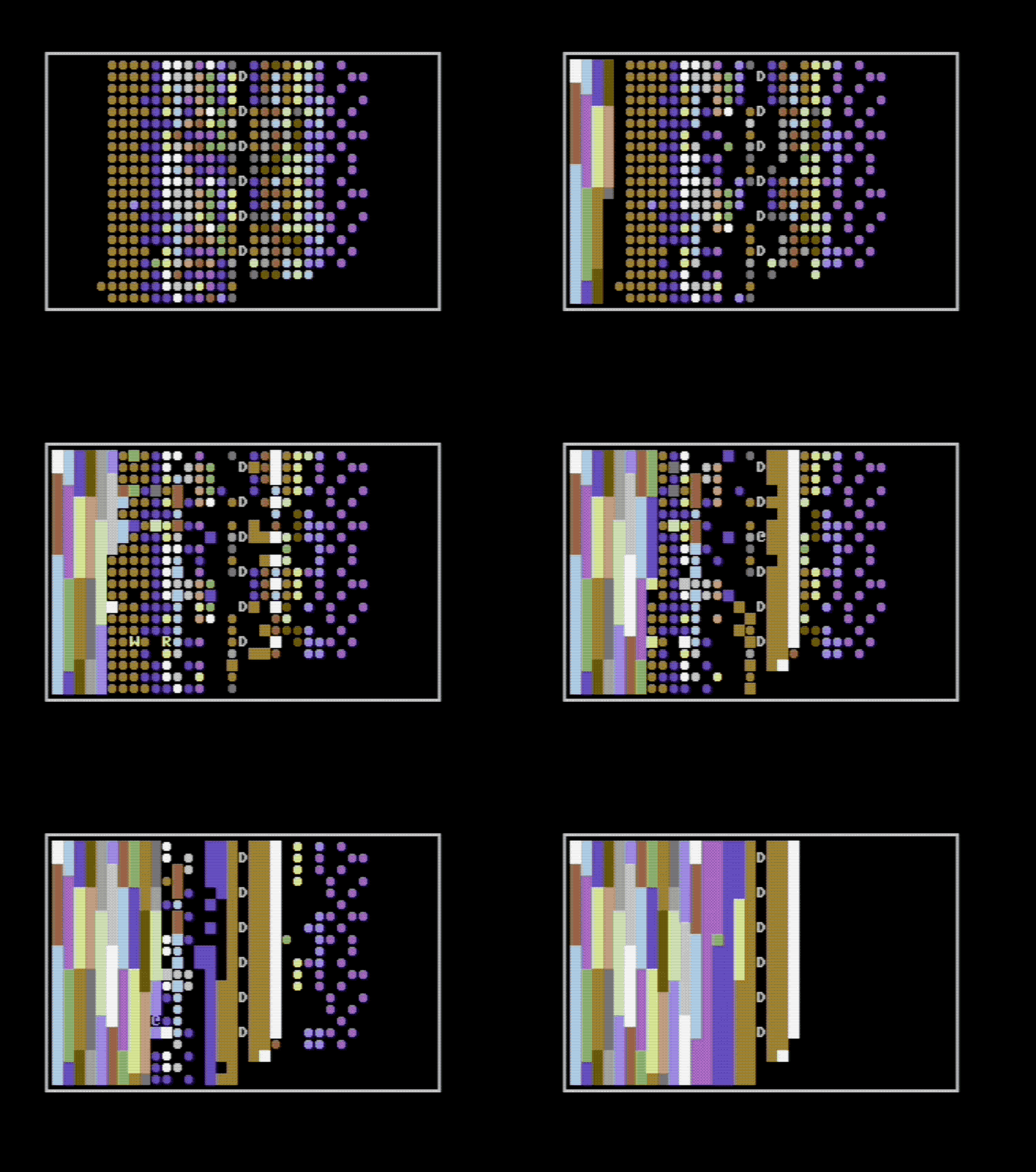
For decades, PC users have been able to relax by watching the computer defragment a disk. Now C64 users can do the same! Introducing “defrag1541″, a disk defragmentation tool for C64 and 1541.
The Commodore Datasette recording format is heavily optimized for data safety and can compensate for many typical issues of cassette tape, like incorrect speed, inconsistent speed (wow/flutter), and small as well as longer dropouts. This makes the format more complex and way less efficient than, for example, “Turbo Tape” or all other custom formats used by commercial games. Let’s explore the format by writing a minimal tape loader for the C64, optimized for size, which can decode correct tapes, but does not support error correction.
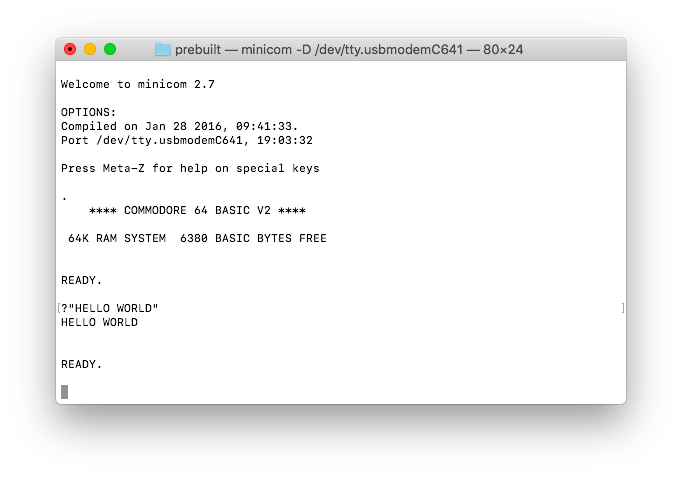
Tomu is a super cheap Open Source Hardware 24 MHz ARM computer with 8 KB of RAM and 64 KB of ROM that fits into your USB connector! Of course I had to put Commodore 64 BASIC on it, which can be accessed through the USB-Serial port exposed by the device.
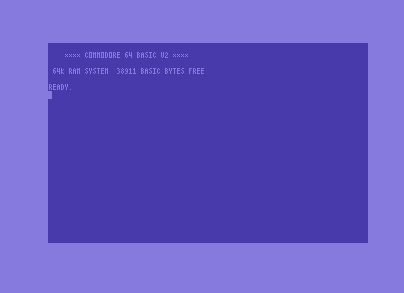
The text screen of the Commodore 64 has a resolution of 40 by 25 characters, based on the hardware text mode of the VIC-II video chip. This is a step up from the VIC-20’s 22 characters per line, but since computers in the professional segment (Commodore PET 8000 series, CP/M, MS-DOS) usually had 80 columns, several solutions – both hardware and software – exist to allow 80 columns on a C64 as well. Let’s look at how this is done in software! At the end of this article, I present a fast and full-featured open source implementation with several different character sets.
Many reverse-engineered versions of “KERNAL”, the C64’s ROM operating system exist, and some of them even in a form that can be built into the original binary. But how about building the original C64 KERNAL source with the original tools?
The GEOS operating system managed to clone the Macintosh GUI on the Commodore 64, a computer with an 8 bit CPU and 64 KB of RAM. Based on Maciej Witkowiak's work, I created a reverse-engineered source version of the C64 GEOS 2.0 KERNAL for the cc65 compiler suite:
There are many MOS 6502 cross-assemblers available. Here’s a new one. Or actually a very old one. “Macross”, a very powerful 6502 macro assembler, which was used to create Habitat, Maniac Mansion and Zak McKracken, was developed between 1984 and 1987 at Lucasfilm Ltd. and is now Open Source (MIT license):
Here’s the challenge: Take code that you wrote some 20 years ago in an obsolete programming language for an obsolete platform, make it run on a modern system (without emulation!)… and actually make it useful!
The Final Cartridge III was one of the major multi-function extension cartridges for the Commodore 64. It contained BASIC extensions, floppy and tape speeders, centronics printer support, screen editor extensions including F-key shortcuts, a monitor, a freezer – and a GEOS-like windowing system called “Desktop”. In all this, the FC3 integrated seamlessly with the look-and-feel of the stock Commodore 64: It did not change anything (same screen colors and banner!), it only extended functionality in consistent ways.
geowrite2rtf is a tool that converts Commodore 64/128 GEOS GeoWrite documents into RTF format. Most formatting will be preserved, but some formatting and graphics will be discarded.
I just did a Lightning Talk at the 26th Chaos Communication Congress 26C3 about our new project “libcpu”, and it has already been picked up by Golem.de and reddit.com, so I might as well announce it here:
Update: The source is available at github.com/mist64/msdos1
Update: The source is available at github.com/mist64/msdos1

Update: The source is available at github.com/mist64/extract-adf; more info here.
Update: The source is available at github.com/mist64/cbmbasic
Update: The source is available at github.com/mist64/msbasic