How much change is in a vending machine?

There is only one way to find out – all you need is a giant pile of money and a vending machine that sells soda for $1.25: If you put in a dollar note and press the “return change” button, you will get the dollar note back directly. If you put in two dollar notes (the maximum it takes) at a time, it will give you change for the two dollars.
Intel VT VMCS Layout
I understand that there might be a good reason for Intel to add virtualization extensions to their CPU architecture. Instead of fixing the x86 architecture to (optionally) make it Popek-Goldberg compliant and have all critial instructions trap if not run in Ring 0, they added non-root mode, a very big hammer that allows me to switch my CPU state completely to that of the guest and switches back to my original host state on a certain event in the guest. Well, it’s a great toy for people who want to play with CPU internals.
Michael Steil rocks

Google is always right.
Microsoft vs. Standards
Here is a fun game for long car rides: One person names a respected standard implemented by dozens of IT companies, and the other person names Microsoft’s competing technology. Example: MPEG Audio (MP3/AAC) – Windows Media Audio.
Who invented the computer?
- In 1837, Charles Babbage designed a general purpose computer, the Analytical Engine, but never built it.
- Between 1934 and 1937, Church, Turing et al. defined the general purpose computer, but didn’t design one.
- In 1941, Konrad Zuse built the first general purpose computer, the Z3, but didn’t know it was general purpose and didn’t use it that way.
- From 1943 to 1946, Mauchly and Eckert finally built a computer, ENIAC, that was designed to be general-purpose.
Standards and Intellectual Property
I am sitting here, working with my PC: My keyboard and my mouse are connected wirelessly via Bluetooth and my monitor is hooked up through DVI. The graphics card is sitting in a PCI slot, main memory is DDR-SDRAM, and my optical drive can do CDs and DVDs. While my internal hard disk speaks the SATA protocol, my home directory is actually sitting on an SD card that is connected through a USB reader. My internet connection is done through DSL. On the software side, I am using GNU/Linux and browsing the internet with Firefox. No way I would ever watch a video in H.264 format.
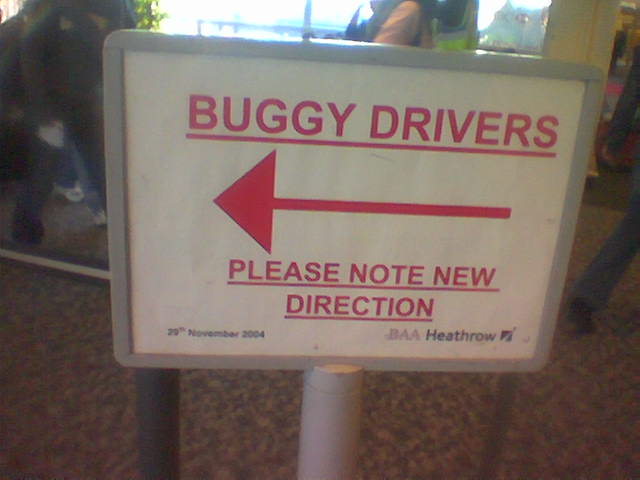
Buggy Drivers
Announcement: 'libcpu' Binary Translator
I just did a Lightning Talk at the 26th Chaos Communication Congress 26C3 about our new project “libcpu”, and it has already been picked up by Golem.de and reddit.com, so I might as well announce it here:
Having Fun with Branch Delay Slots
Branch Delay Slots are one of the awkward features of RISC architectures. RISC CPUs are pipelined by definition, so while the current instruction is in execution, the following instruction(s) will be in the pipeline already. If there is for example a conditional branch in the instruction stream, the CPU cannot know whether the next instruction is the one following the branch or the instruction at the target location until it has evaluated the branch. This would cause a bubble in the pipeline; therefore some RISC architectures have a branch delay slot: The instruction after the branch will always be executed, no matter whether the branch is taken or not.
PCEPTPDPTE
Here is a new pagetable entry.
A Standalone printf() for Early Bootup
A while ago, I complained about operating systems with overly complicated startup code that spends too much time in assembly and does hot have printf() or framebuffer access until very late.
Pictures of Apple Lisa 2 Boards
TI-99/4A BASIC as a Scripting Language
It is a good time for statically recompiled versions of BASIC from old computers. First there was Apple I BASIC. Then came Commodore BASIC. Now, due to overwhelming demand, we’re proud to release TI-99/4A BASIC. For those unfamiliar the TI-99/4A was a home computer by Texas Instruments released in 1981. Unusually for the time it had a 16-bit CPU: the TMS9900.
Amiga intern (PDF)
(German) Die Qualität dieses Scans ist furchtbar, aber wenigstens ist die PDF durchsuchbar.
Dangerous Xbox 360 Update Killing Homebrew
On Tuesday, Microsoft has released an Xbox 360 software update that overwrites the first stage bootloader of the system. Although there have been numerous software updates for Microsoft’s gaming console in the past, this is the first one to overwrite the vital boot block. Any failure while updating this will break the Xbox 360 beyond repair. Statistics from other systems have shown that about one in a thousand bootloader updates goes wrong, and unless Microsoft has a novel solution to this problem, this puts tens of thousands of Xboxes at risk.
Minimizing the Assembly needed for Machine Initialization
In many operating systems, I have seen overly complicated startup code. Too much is done in assembly, and printf() and framebuffer access is only available very late. In the next three blog posts, I will show how this can be avoided.
Aggressive Tail Call Optimization
In some i386/x86_64 assembly code my coworker was working on, there was a macro like this:
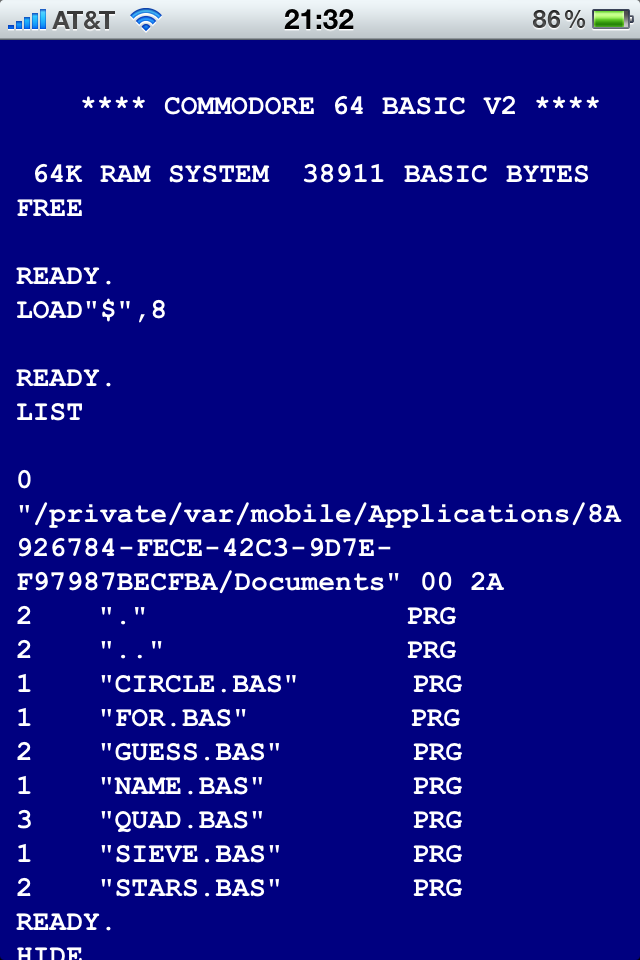
LOAD"$",8
Commodore computers up to BASIC 2.0 (like the Commodore 64, the VIC-20 and the PET 2001) only had a very basic understanding of mass storage: There were physical device numbers that were mapped to the different busses, and the “KERNAL” library had “open”, “read”, “write” and “close” functions that worked on these devices. There were also higher-level “load” and “save” functions that could load and save arbitrary regions of memory: The first two bytes of the file would be the (little endian) start address of the memory block.
The Infinite Loop Mystery
Today’s puzzle is about some code behaving horribly wrong.
This is Copyright 1983 Microsoft – NOT!
If you look at a hexdump of any version of the Logitech mouse driver for MS-DOS, you will see the following: