Commodore KERNAL History
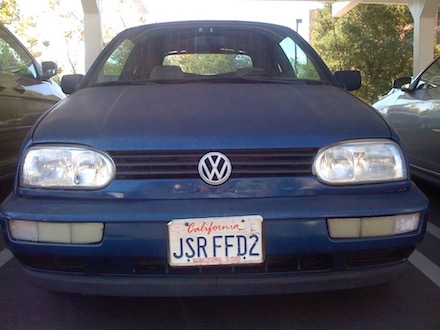
If you have ever written 6502 code for the Commodore 64, you may remember using “JSR $FFD2” to print a character on the screen. You may have read that the jump table at the end of the KERNAL ROM was designed to allow applications to run on a all Commodore 8 bit computers from the PET to the C128 (and the C65!) – but that is a misconception. This article will show how
The Ultimate Apollo Guidance Computer Talk [video]
This is the video recording of “The Ultimate Apollo Guidance Computer Talk” at 34C3. If you think it is too fast, try watching it at 0.75x speed.
The Ultimate Apollo Guidance Computer Talk @ 34C3
After The Ultimate Commodore 64 Talk (2008) and The Ultimate Game Boy Talk (2016), my third talk from the “Ultimate” series will take place at the 34th Chaos Communication Congress at Leipzig (27-30 Dec 2017):
62 Reverse-Engineered C64 Assembly Listings
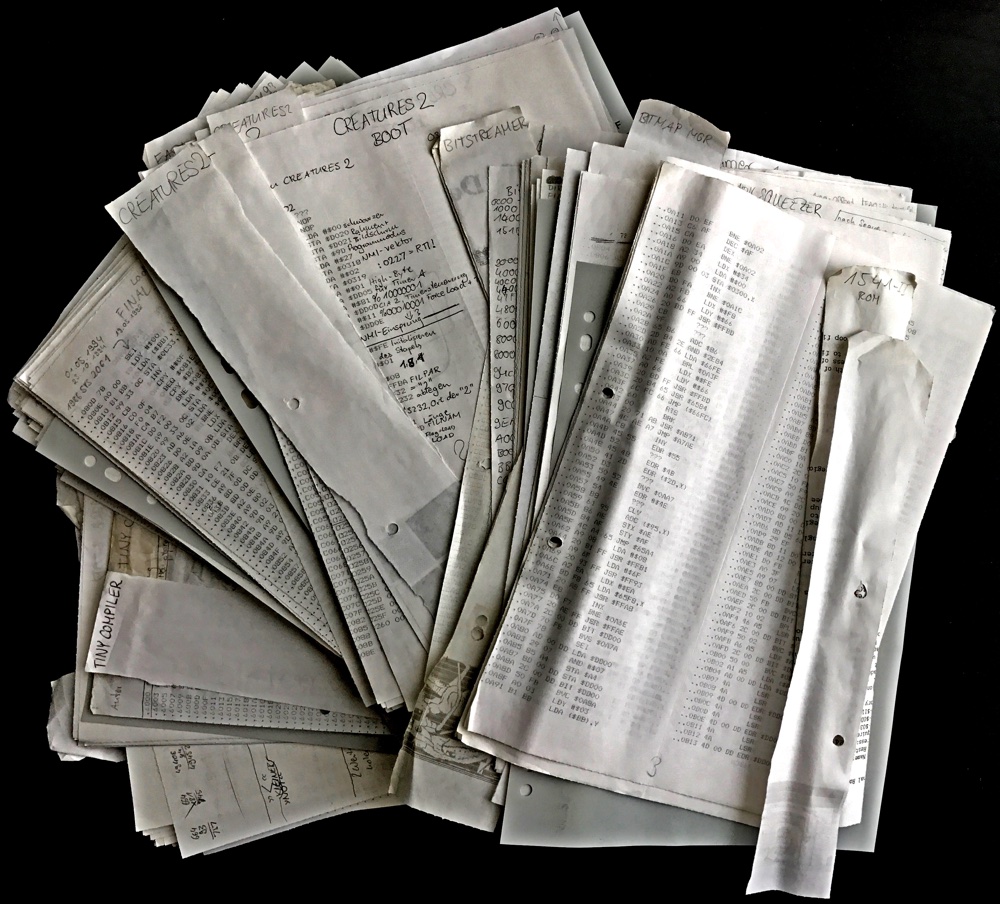
Between 1992 and 1995, I reverse engineered Commodore 64 applications by printing their disassemblies on paper and adding handwritten comments (in German). These are the PDF scans of the 62 applications, which are 552 pages total.
80 Columns Text on the Commodore 64
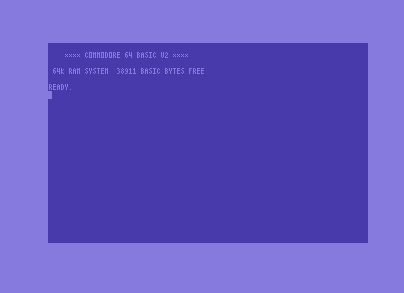
The text screen of the Commodore 64 has a resolution of 40 by 25 characters, based on the hardware text mode of the VIC-II video chip. This is a step up from the VIC-20’s 22 characters per line, but since computers in the professional segment (Commodore PET 8000 series, CP/M, MS-DOS) usually had 80 columns, several solutions – both hardware and software – exist to allow 80 columns on a C64 as well. Let’s look at how this is done in software! At the end of this article, I present a fast and full-featured open source implementation with several different character sets.
Building the Original Commodore 64 KERNAL Source
Many reverse-engineered versions of “KERNAL”, the C64’s ROM operating system exist, and some of them even in a form that can be built into the original binary. But how about building the original C64 KERNAL source with the original tools?
The Ultimate Game Boy Talk [video]
This is the video recording of “The Ultimate Game Boy Talk” at 33C3.
Announcement: "The Ultimate Game Boy Talk" at 33C3
I will present “The Ultimate Game Boy Talk” at the 33rd Chaos Communication Congress in Hamburg later in December.
Reverse-Engineered GEOS 2.0 for C64 Source Code
The GEOS operating system managed to clone the Macintosh GUI on the Commodore 64, a computer with an 8 bit CPU and 64 KB of RAM. Based on Maciej Witkowiak's work, I created a reverse-engineered source version of the C64 GEOS 2.0 KERNAL for the cc65 compiler suite:
Copy Protection Traps in GEOS for C64
Major GEOS applications on the Commodore 64 protect themselves from unauthorized duplication by keying themselves to the operating system's serial number. To avoid tampering with this mechanism, the system contains some elaborate traps, which will be discussed in this article.
How Amica Paint protected tampering with its credits
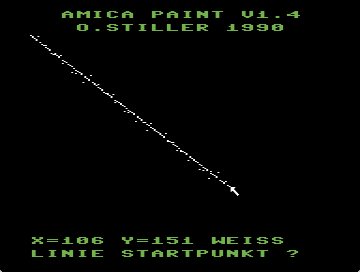
In mid-1990, the floppy disk of special issue 55 of the German Commodore 64 magazine "64'er" contained the "Amica Paint" graphics program – which was broken beyond usefulness. I'll describe what went wrong.
Macross 6502, an assembler for people who hate assembly language
There are many MOS 6502 cross-assemblers available. Here’s a new one. Or actually a very old one. “Macross”, a very powerful 6502 macro assembler, which was used to create Habitat, Maniac Mansion and Zak McKracken, was developed between 1984 and 1987 at Lucasfilm Ltd. and is now Open Source (MIT license):
Reconstructing Some Source of Microsoft BASIC for 8080
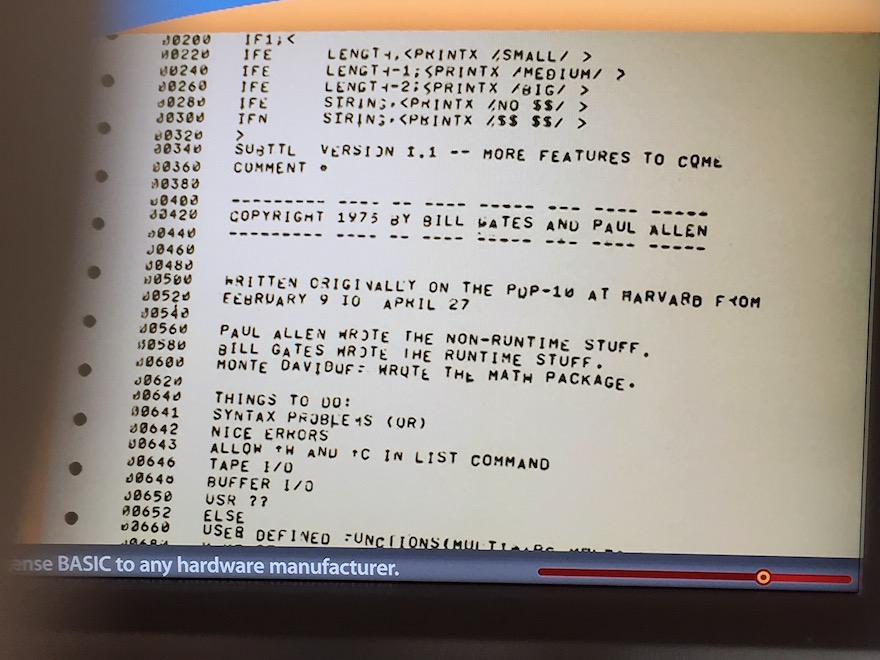
Microsoft BASIC for 6502 exists digitally in source form – the older version of the Intel 8080 CPU only exists on paper though: as a printout in the archives of Harvard University. Some snippets of the code are public though:
Making Obsolete Code Run Again: The mxass 6502 Cross Assembler
Here’s the challenge: Take code that you wrote some 20 years ago in an obsolete programming language for an obsolete platform, make it run on a modern system (without emulation!)… and actually make it useful!
Emulating the Intel 8080 on a MOS 6502
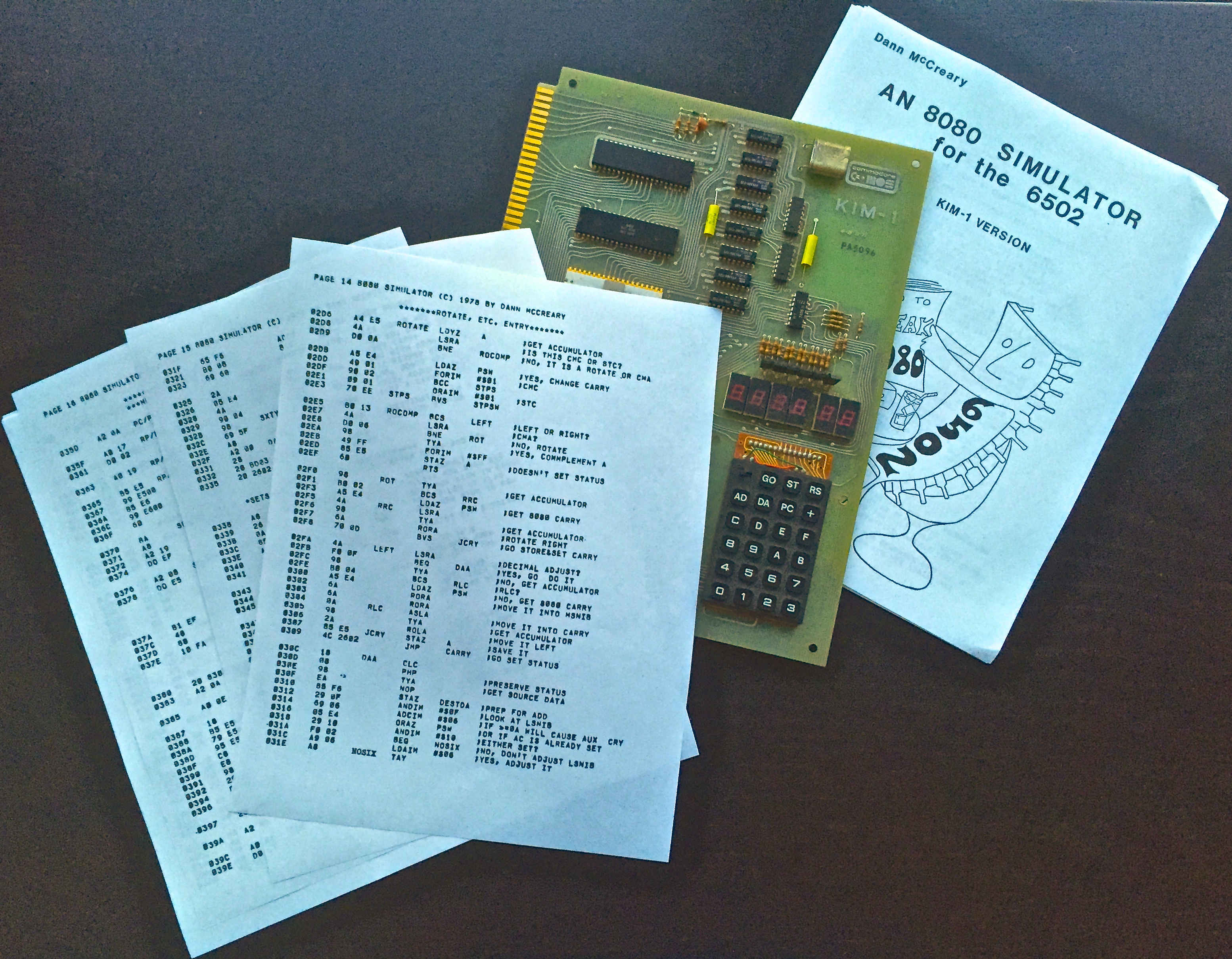
Converting VisAss and F8 AssBlaster Source
If you have developed applications for the Commodore 64 in the 80s or 90s, chances are you still have your old floppy disk with the original assembly sources. If you have used the VisAss or
F8 AssBlaster assemblers, you can use a new command line tool I wrote to convert the encoded binary files into ASCII, so they can be published or you can continue development using modern tools like cc65.
Reverse-Engineered Final Cartridge III Source Code
The Final Cartridge III was one of the major multi-function extension cartridges for the Commodore 64. It contained BASIC extensions, floppy and tape speeders, centronics printer support, screen editor extensions including F-key shortcuts, a monitor, a freezer – and a GEOS-like windowing system called “Desktop”. In all this, the FC3 integrated seamlessly with the look-and-feel of the stock Commodore 64: It did not change anything (same screen colors and banner!), it only extended functionality in consistent ways.
Source of "The Wave" Web Browser for C64/C128 GEOS Wheels
“The Wave” is a Web Browser for GEOS (with the Wheels extension) on C64/C128 machines with a SuperCPU and a RAM extension.
Comparative C64 ROM Disassembly Study Guide
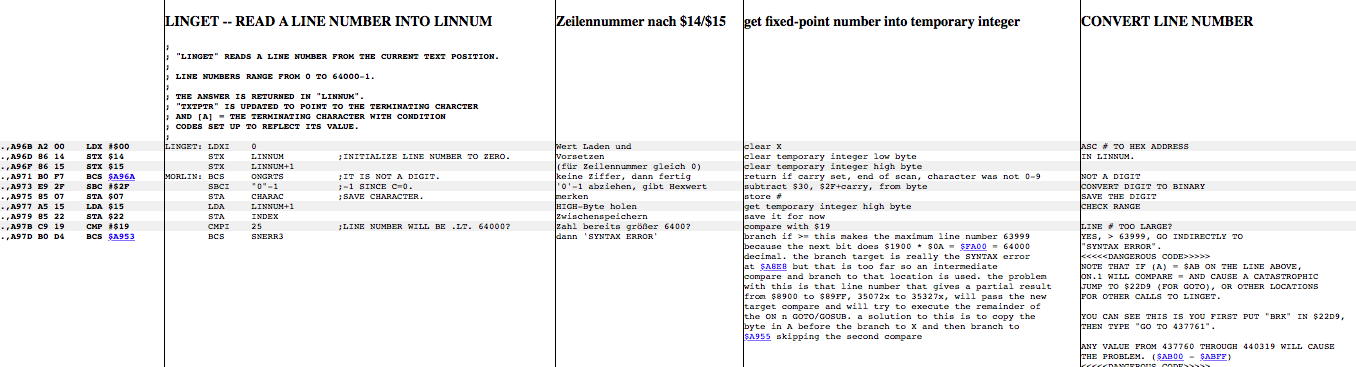
The Commodore 64 ROM has been subject to immense reverse engineering. Many commented disassemblies were published over the decades, scattered over different media such as books, magazines, disks, and later, the internet – and there are even some commentaries that apply to the C64 ROM, but were written with other systems in mind that shared Microsoft’s BASIC interpreter.
Fully Commented Commodore 64 BASIC ROM Disassembly – based on Microsoft's Source
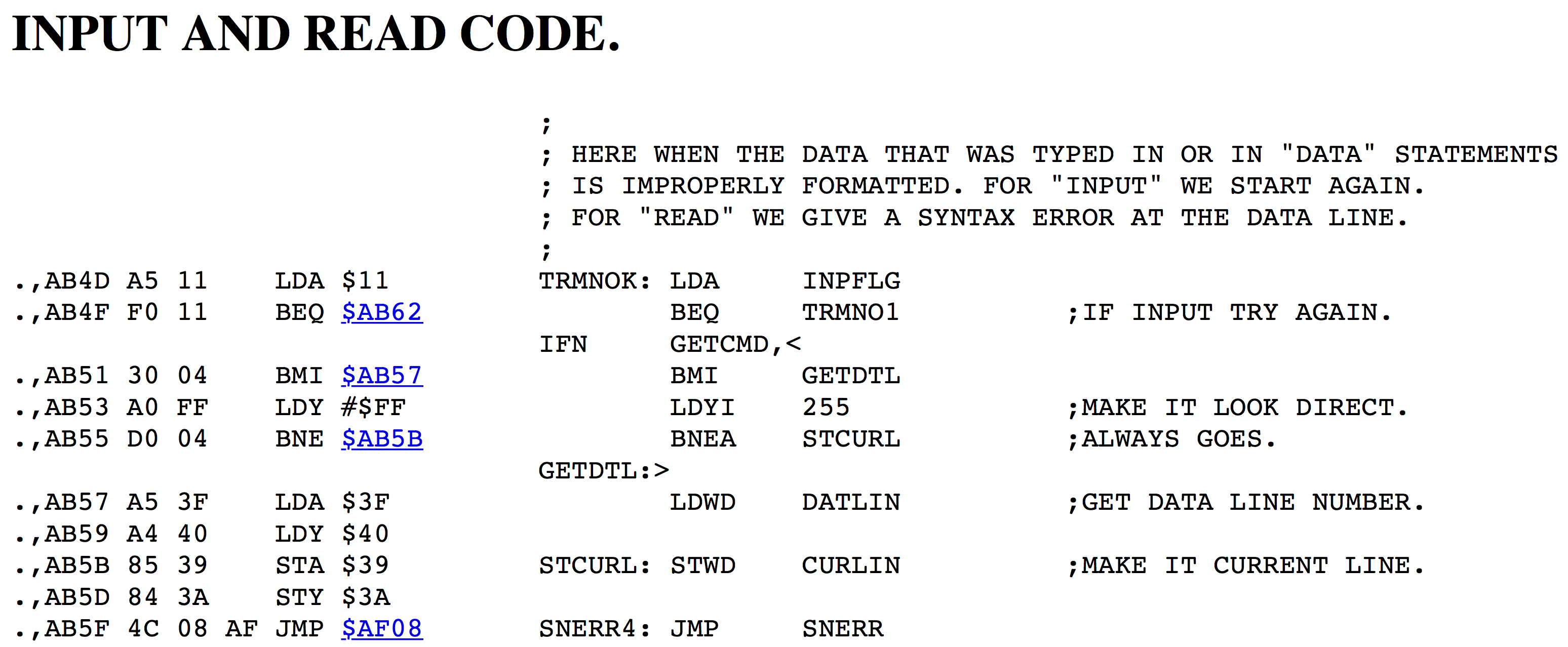
On my quest of collecting as many commentaries on the Commodore 64 ROM at pagetable.com/c64rom, we have gathered Lee Davison’s excellent commentary, the German de facto standard by Data Becker, and an adaptation of Bob Sander-Cederlof’s Apple II ROM commentary, all in the same cross-referenced HTML format.