Archive for the ‘security’ Category

Playstation 3 Hacking – Linux Is Inevitable

Monday, September 6th, 2010

In the talk “Why Silicon Security is still that hard” by Felix Domke at the 24th Chaos Communication Congress in 2007 (in which he described how he hacked the Xbox 360, and bushing had a cameo at the end explaining how they hacked the Wii), I had a little part, in which I argued that “Linux Is Inevitable”: If you lock down a system, it will eventually get hacked. In the light of the recent events happening with PlayStation 3 hacking, let’s revisit them.

This is the original slide from 2007:

device

y

security

hacked

for

effect

PS2

1999

?

?

piracy

-

dbox2

2000

signed kernel

3 months

Linux

pay TV decoding

GameCube

2001

encrypted boot

12 months

Homebrew

piracy

Xbox

2001

encrypted/signed bootup, signed executables

4 months

Linux

Homebrew

piracy

iPod

2001

checksum

<12 months

Linux

-

DS

2004

signed/encrypted executables

6 months

Homebrew

piracy

PSP

2004

signed bootup/executables

2 months

Homebrew

piracy

Xbox 360

2005

encrypted/signed bootup,encrypted/signed executables, encrypted RAM, hypervisor, eFuses

12 months

Linux

Homebrew

leaked keys

PS3

2006

encrypted/signed bootup,encrypted/signed executables, hypervisor, eFuses, isolated SPU

not yet

-

-

Wii

2006

encrypted bootup

1 month

Linux

piracy

AppleTV

2007

signed bootloader

2 weeks

Linux

Front Row piracy

iPhone

2007

?

1 month

Homebrew

international

SIM-Lock revenue

The table shows the relationship between the quality of a device’s security system and the time it took to hack it, as well as the original motivation for hacking and the side effects (collateral damage) it caused.

Correlation security/time to hack

There is a pretty clear correlation betwen the quality of the security system and the time required for hacking it – with the notable exception being the GameCube, which had rather weak security, but since its release coincided with the much more powerful Xbox, much of the hacker community neglected the GameCube until the Xbox was done. What can also be seen is that recently, devices tend to get hacked more quickly; probably simply because there are more and more people interested in hacking.

Correlation Linux/time to hack

The other exception is the PlayStation 3, which was not hacked until about three and a half years after its introduction. I argued that this was because there was only very little motivation to hack it: Sony shipped the devices with the “Other OS” option and even sponsored a port of Linux to it, allowing any user to install Linux if they wanted. Although Linux was running on top of a hypervisor and did not have access to all of the features of the device, it seems to have been enough to take the enough motivation to hack it out of the hacker community.

Linux/homebrew is the primary motivation

This is supported by the by the fact that the motivation for hacking every system in the table was either homebrew (i.e. running unautorized hobbyist applications) or Linux. Hackers seem to love to convert their devices into Linux computers to run a big library of existing software, or to hack the device to make it possible to run versions of existing emulators and games on the native OS.

Piracy is a side effect

None of the hacks in the table was done with the motivation to allow running copied games – but whenever the point of the security system was to prevent piracy, hacking it inevitably enabled piracy as a side effect. Some security systems protected other things like pay TV keys and SIM-locks; these also fell as side effects.

2010 update

In September 2009, Sony started shipping the “slim” model of the PlayStation 3, with the “Other OS” feature removed. With firmware 3.21 in April 2010, the feature was also removed from existing original models that users chose to upgrade – which was required for using any of the online features. The missing “Other OS” feature on the slim model motivated George Hotz (geohot) to hack into hypervisor mode (Jan 2010), but this approach did not lead to a working hack of the security system. In August 2010, the Australian company OzMods announced the commercial “PSJailbreak” USB dongle that hacks into non-hypervisor mode, allowing piracy and homebrew (”Backup Manager” says “backups and homebrew”).

Although this is the first time that a commercial company is first to hack a system, and the first time that piracy seems to have been a key motivation, removal of “Other OS” might have been another motivation, and geohot’s previous attempts might have helped as an entry point for this hack.

Usually, an open hacker community develops a hack, and commercial companies convert them into modchips. This time, a company developed a hack and a modchip, and the community reverse engineered it and ported the exploit code onto several other devices, allowing people to hack the PlayStation 3 without a dedicated device. And I’m sure Linux will be adapted soon to run in the new environment.

Conclusion

What do we learn from this? Linux is inevitable. Or maybe it should be “Homebrew is inevitable”. In the history of mankind, there has yet to be a popular system that is locked down to only allow certain software to run, but does not get hacked to run arbitrary code. I still dare to say that if Sony had not removed “Other OS”, the PlayStation 3 would have been the first system to not get hacked. At all.

(Here is an updated 2010 version of the table:)

device

y

security

hacked

for

effect

PS2

1999

?

?

piracy

-

dbox2

2000

signed kernel

3 months

Linux

pay TV decoding

GameCube

2001

encrypted boot

12 months

Homebrew

piracy

Xbox

2001

encrypted/signed bootup, signed executables

4 months

Linux

Homebrew

piracy

iPod

2001

checksum

<12 months

Linux

-

DS

2004

signed/encrypted executables

6 months

Homebrew

piracy

PSP

2004

signed bootup/executables

2 months

Homebrew

piracy

Xbox 360

2005

encrypted/signed bootup,encrypted/signed executables, encrypted RAM, hypervisor, eFuses

12 months

Linux

Homebrew

leaked keys

PS3

2006

encrypted/signed bootup,encrypted/signed executables, hypervisor, eFuses, isolated SPU

4 years

Piracy

Homebrew

-

Wii

2006

encrypted bootup

1 month

Linux

piracy

AppleTV

2007

signed bootloader

2 weeks

Linux

Front Row piracy

iPhone

2007

signed/encrypted bootup/executables

11 days

Homebrew

SIM-Lock

piracy

iPad

2010

signed/encrypted bootup/executables

1 day

Homebrew

piracy

Dangerous Xbox 360 Update Killing Homebrew

Tuesday, August 11th, 2009

On Tuesday, Microsoft has released an Xbox 360 software update that overwrites the first stage bootloader of the system. Although there have been numerous software updates for Microsoft’s gaming console in the past, this is the first one to overwrite the vital boot block. Any failure while updating this will break the Xbox 360 beyond repair. Statistics from other systems have shown that about one in a thousand bootloader updates goes wrong, and unless Microsoft has a novel solution to this problem, this puts tens of thousands of Xboxes at risk.

It seems that this update is being done to fix a vulnerability already known to the Free60 Project. This vulnerability has been successfully exploited to run arbitrary code, and a complete end user compatible hack has been in development for some time and is planned to be released on free60.org shortly. It will allow users to take back control of their Xboxes and run arbitrary code like homebrew applications or Linux right after turning on the console and without the need of a modchip, finally opening up the Xbox 360 to a level of hacking as the original Xbox.

Because of the dangerousness of the update and the homebrew lockout, the Free60 Project advises all Xbox 360 users to not update their systems to the latest software version. The Project website at http://free60.org/ will provide the latest information on this ongoing topic, including the final hack software.

Free60 (www.free60.org) is a project that aims to enable Xbox 360 users to run homebrew applications and operating systems like Linux on their consoles. The effort is headed by Felix Domke and Michael Steil, who have a background in dbox2, Xbox and GameCube hacking, and who have spoken at various conferences about their findings. Two years ago, Free60 released a hack that allowed arbitrary code execution using a game (”King Kong Hack”) as well as an adapted version of Linux, but this possibility has been disabled by Microsoft in subsequent updates of the Xbox 360 software.

Felix and Michael have repeatedly argued that game console manufacturers should open up their platforms to Linux and homebrew, similar to what Sony has done with the PlayStation 3.

(Felix Domke, Michael Steil, Free60 Project; 11 August 2009)

The Giant Pile of Money in My Office

Tuesday, July 7th, 2009

Corporate security thought it wasn’t the best idea:


(1:06 min, 176 KB)

A Lot of Security

Tuesday, June 16th, 2009

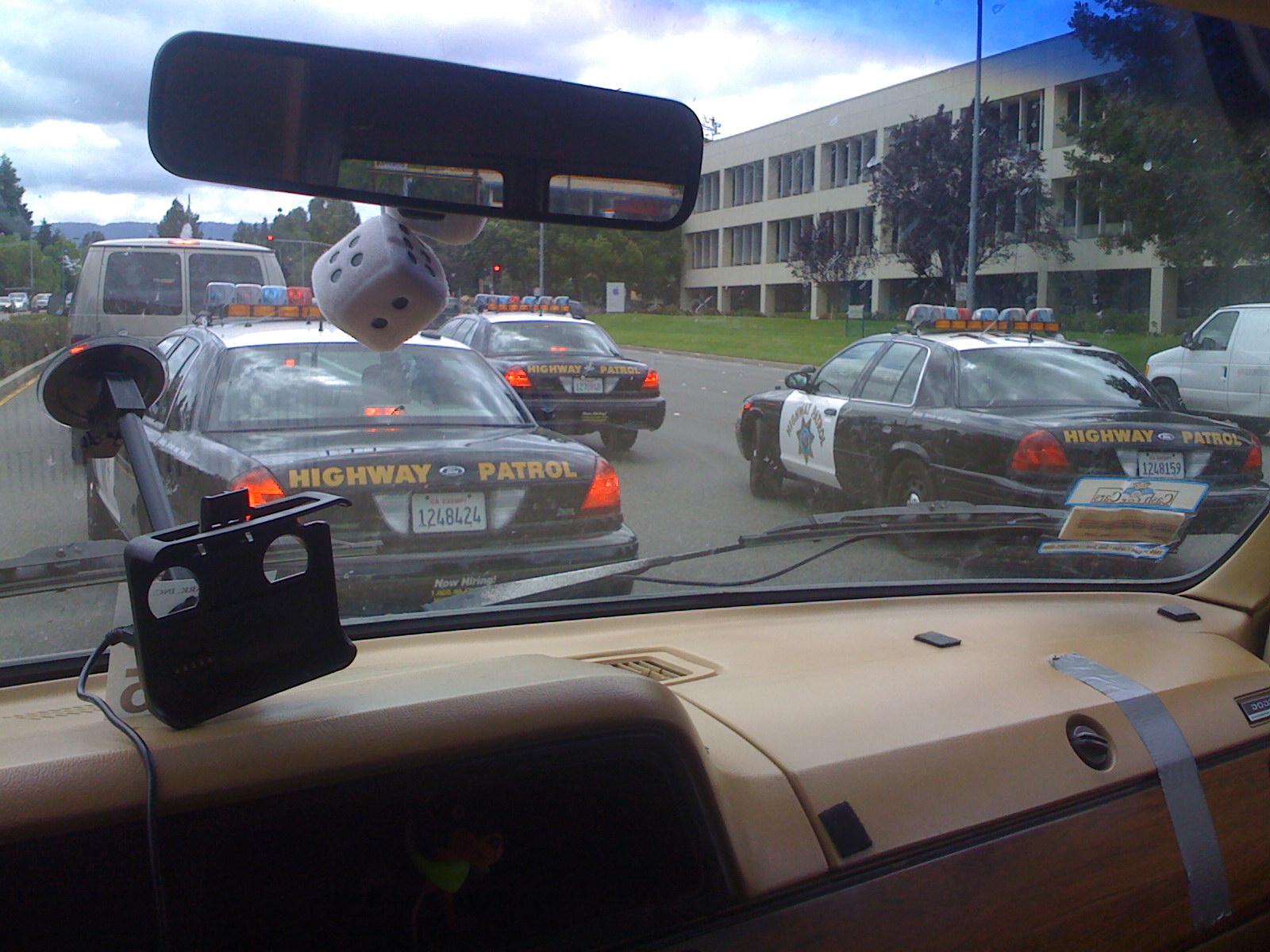
I happened to drive through Cupertino, CA, USA last Wednesday and ended up in this situation:

Oh-oh, they got me. But they were not after me, they escorted two vans onto some company’s campus.


Five police cars, two police motorcycles, and lots of people with suits and sunglasses. For some reason, this outfit doesn’t have the same effect on me any more since “The Matrix”.


The people in the vans went into the building through a side door:


Here are some details:


A blonde woman in white, a woman with a red dress, a man in a brown uniform with a suitcase, and lots of more men in suits. The vans had license places from Maryland.

The question of today’s security puzzle is: Who is the very important person?

Feed in Rogue Signal Here

Tuesday, June 2nd, 2009

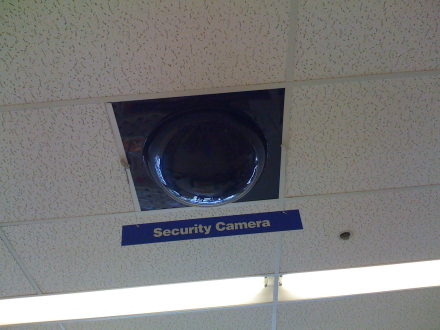
Sometimes it makes sense to label a surveillance camera.

But it rarely makes sense to label the cables that lead to a surveillance camera in a public area of Parking Garage A at the San Francisco airport.

This just invites you to do the “Splice and Dice” attack: