What Operating System Has Crashed Here?

(Read comments for solution.)
The Double Inverted Inconsistency Principle
In a discussion, when pointing out inconsistencies in your opponent’s opinion by giving two examples that you disagree with, remember that it can be made into a point against you, just by inverting the two examples – plus/minus some rhetorical decoration.
Leave security to security code. Or: Stop fixing bugs to make your software secure!
If you read about operating system security, it seems to be all about how many holes are discovered and how quickly they are fixed. If you look inside an OS vendor, you see lots of code auditing taking place. This assumes all security holes can be found and fixed, and that they can be eliminated more quickly that new ones are added. Stop fixing bugs already, and take security seriously!
A 256 Byte Autostart Fast Loader for the Commodore 64
Update: The source is available at github.com/mist64/fastboot1541
How many Commodore 64 computers were really sold?

Nobody doubts that the C64 was the greatest selling single computer model of all time, it even made it into the Guinness Book of World Records, but nobody quite knows how many it really was: Most sources say 17 million, others say 22 or even 30 million. With a high degree of confidence, I can now say that Commodore only sold 12.5 million units – how I would know that, you ask, and how do I dare to contradict well-known facts? By analyzing serial numbers!
Commodore Plus/4, C116, C16 (TED) Technical Documents

The Commodore Plus/4, the C16 and the C116 from 1984 were members of the 6502-based “TED” series, named after the 7360 TED (“Text Editing Device”) video controller. The TED systems were basically the low-cost cousins of the C64: The overall system architecture and the video chip are very similar to the C64’s, but they lack certain features like hardware sprites. On the other hand, there are some added features like extra colors and more control over the internal timing of the video chip.
How to not get sued by Sony

Hint:
Final Cartridge III Undocumented Functions
The “Final Cartridge III” has been among the most popular Commodore 64 extensions, providing a floppy speeder, BASIC extensions, a machine language monior, a freezer and even a (rarely used) graphical desktop. The major advantage compared to other C64 cartridges is the consistent way in which the Final Cartridge III extends the C64 experience.
Reverse Engineering the MOS 6502 CPU [video]
Here is the video recording of my presentation “Reverse Engineering the MOS 6502 CPU” given at 27C3, on the low cost CPU that arguably launched the home computer revolution.
Reverse Engineering the MOS 6502 CPU [announcement]

3510 transistors in 60 minutes
Comparing BitTorrent Downloads of Interlaced TV Shows
In my previous blog post, I was comparing how internet video providers like Hulu, Netflix, iTunes, Amazon and Zune handle interlaced material by comparing an episode of Futurama. This time, let’s see how rips from the BitTorrent network compare to these.
Comparing Digital Video Downloads of Interlaced TV Shows

In the days of CRT monitors, TV shows used to be broadcast in interlaced mode, which is unsupported by modern flat-panel displays. All online streaming services and video stores provide progressive video, so they must deinterlace the data first. This article compares the deinterlacing strategies of Apple iTunes, Netflix, Microsoft Zune, Amazon VoD and Hulu by comparing their respective encodings of a Futurama episode.
Xbox Serial Number Statistics
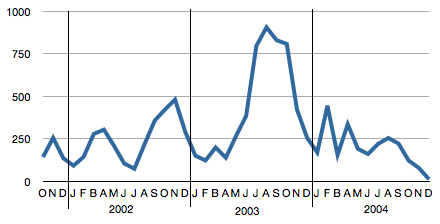
Slashdot had a story recently on how in 1942, the allies were able to estimate the number of German taks produced based on the serial numbers of the tanks. In 2010, a German hacker is doing the exact same thing with Xboxes. This article describes the generic approach, shows some results, and provides previously unreleased raw data of 14,000 Xbox serials so you can do your own statistics!
Windows Phone 7 & the Floppy Disk

I’m sure all users will immediately associate a Sony 3.5″ Floppy Disk with “save”. It’s not like the stock icon library also had an OK button.
The Intel 80376 – a Legacy-Free i386 (with a Twist!)
25 years after the introduction of the 32 bit Intel i386 CPU, all Intel compatibles still start up (and wake up!) in 16 bit stone-age mode, and they have to be switched into 32/64 bit mode to be usable.
Emu8080: an HTML5 App to Emulate a Complete CP/M Machine
by Stefan Tramm
HFS+ File System Analysis and Forensics with fileXray
Modern filesystems are highly optimized database systems that are a core function of modern operating systems. They allow concurrent access by many CPUs, they keep locality up and fragementation down, and they can recover from crashes guaranteeing consistent data structures.
For Lisa, the World Ended in 1995
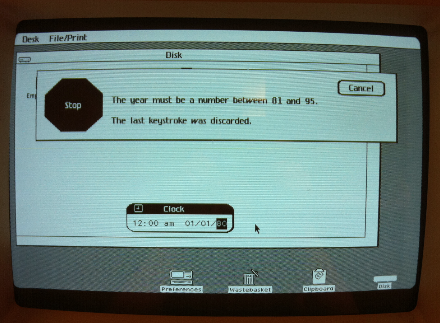
If you try to set the clock in Lisa OS 3.1 to 2010, you’re out of luck:
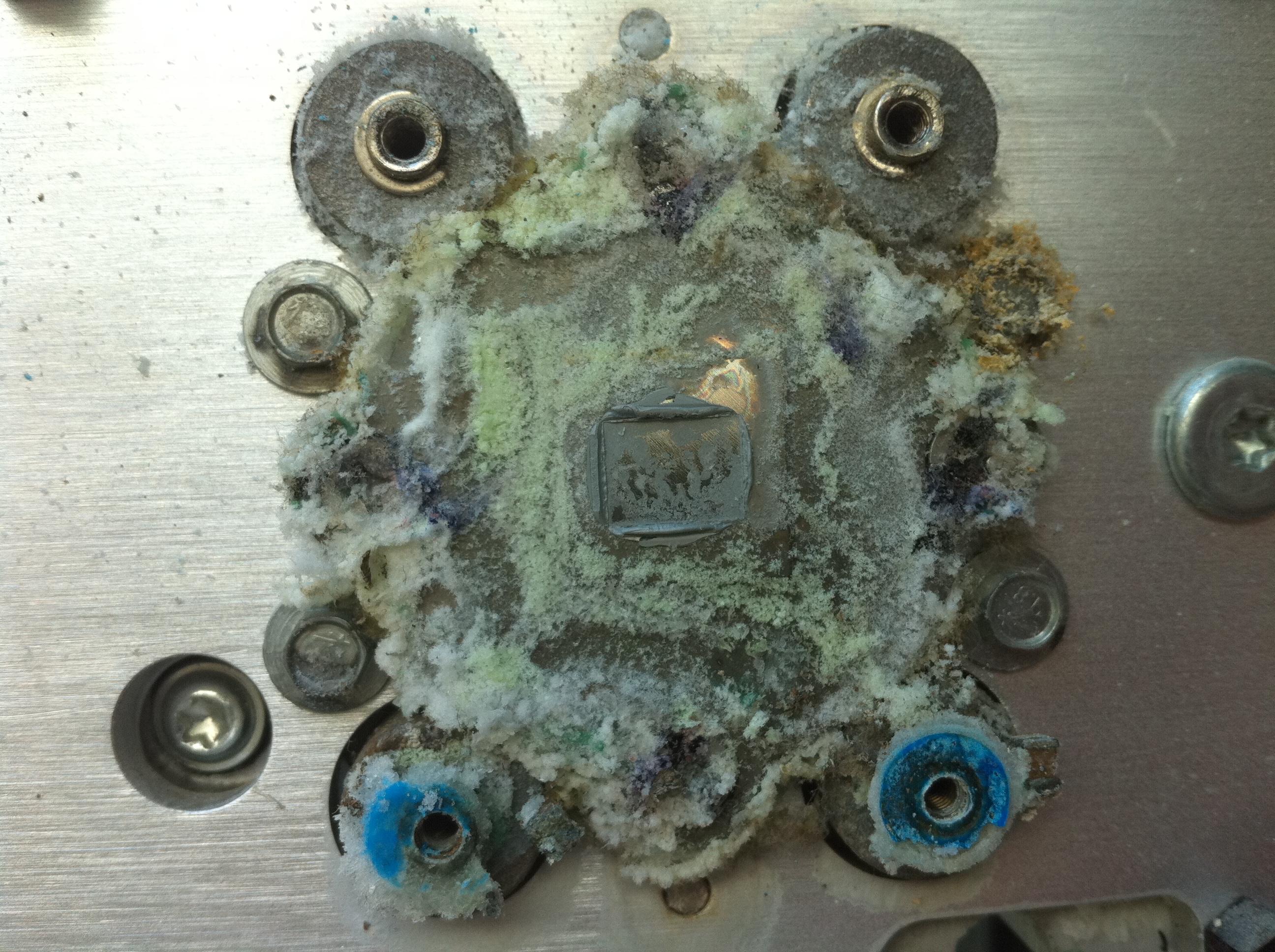
Name that Ware
Standalone Commodore BASIC on the iPhone/iPad
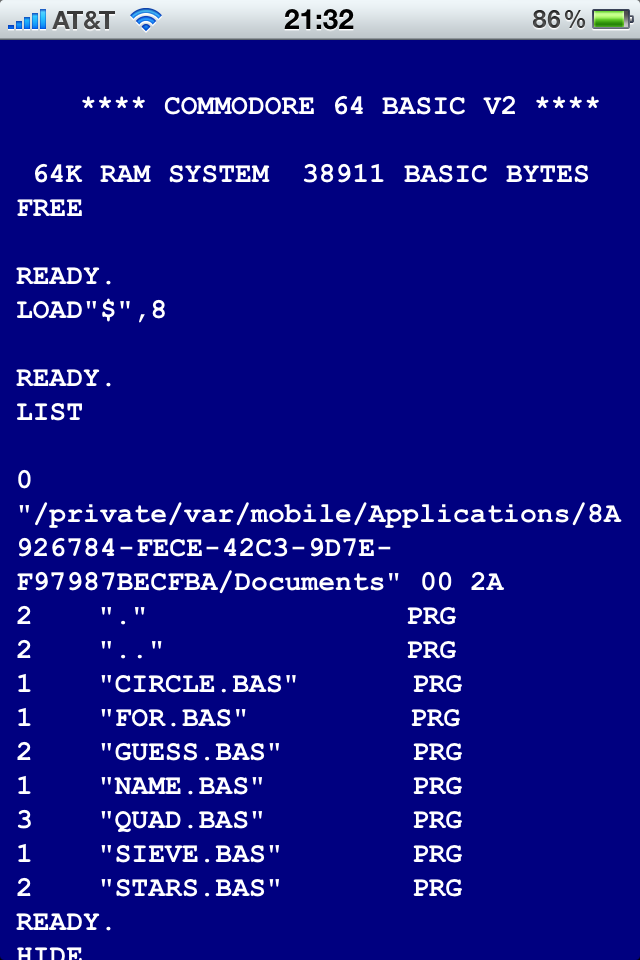
You might remember the hassle about the Commodore 64 emulator in the iPhone App Store about a year ago: First it was approved, but then pulled again, because it allowed access to the C64’s BASIC – general-purpose interpreters were not allowed. After Apple relaxed this restriction, BASIC was added again.