How many Commodore 64 computers were really sold?
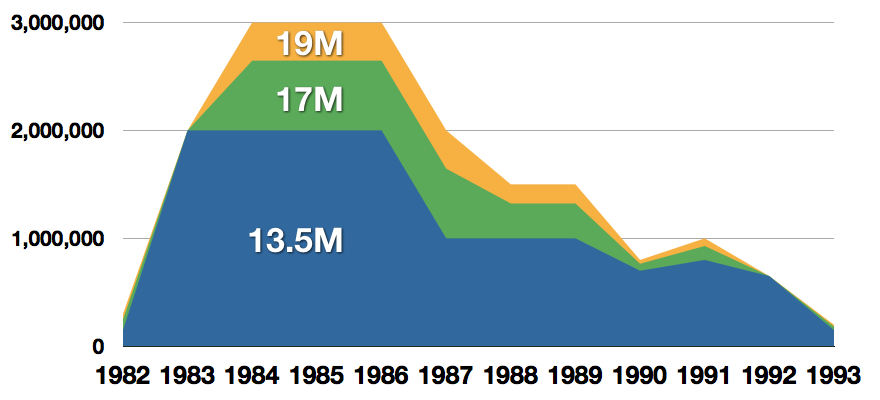
Nobody doubts that the C64 was the greatest selling single computer model of all time, it even made it into the Guinness Book of World Records, but nobody quite knows how many it really was: Most sources say 17 million, others say 22 or even 30 million. With a high degree of confidence, I can now say that Commodore only sold 12.5 million units – how I would know that, you ask, and how do I dare to contradict well-known facts? By analyzing serial numbers!
Final Cartridge III Undocumented Functions
The “Final Cartridge III” has been among the most popular Commodore 64 extensions, providing a floppy speeder, BASIC extensions, a machine language monior, a freezer and even a (rarely used) graphical desktop. The major advantage compared to other C64 cartridges is the consistent way in which the Final Cartridge III extends the C64 experience.
Reverse Engineering the MOS 6502 CPU [video]
Here is the video recording of my presentation “Reverse Engineering the MOS 6502 CPU” given at 27C3, on the low cost CPU that arguably launched the home computer revolution.
Reverse Engineering the MOS 6502 CPU [announcement]
3510 transistors in 60 minutes
Standalone Commodore BASIC on the iPhone/iPad
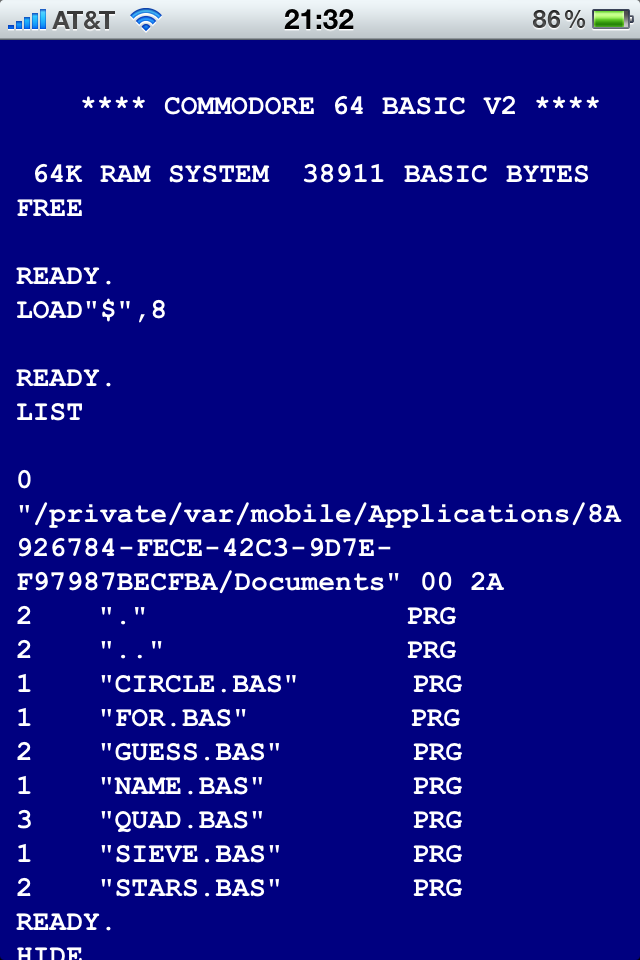
You might remember the hassle about the Commodore 64 emulator in the iPhone App Store about a year ago: First it was approved, but then pulled again, because it allowed access to the C64’s BASIC – general-purpose interpreters were not allowed. After Apple relaxed this restriction, BASIC was added again.
Internals of BRK/IRQ/NMI/RESET on a MOS 6502
After 35 years of measuring the behaviour of the MOS 6502 CPU to better understand what is going on, the Visual6502 simulator finally allows us insight into the chip, so we can understand what the CPU does internally. One interesting thing here is the question how the 6502 handles BRK, IRQ, NMI and RESET.
Measuring the ROR Bug in the Early MOS 6502
The MOS 6502 CPU was introduced in September of 1975, and while the documentation described the three shift/rotate instructions ASL, LSR and ROL, the ROR instruction was missing – the documentation said that ROR would be available in chips starting in June 1976. In fact, the reason for this omission was that the instruction, while being present, didn’t behave correctly. Only few 6502s with the defect are in existence, and nobody seemed to have checked what was actually going on in these chips.
Measuring the Entropy of the MOS 6502 CPU
Everything can be expressed in bits. It takes 4 kilobits to decompress ZIP data, 25 kilobits to kill a human, 43 megabits for a working Mac OS X kernel, and 10^120 bits to describe our universe. What is the entropy/complexity of the 6502 CPU, you might wonder?
High-Res Pictures of a MOS KIM-1
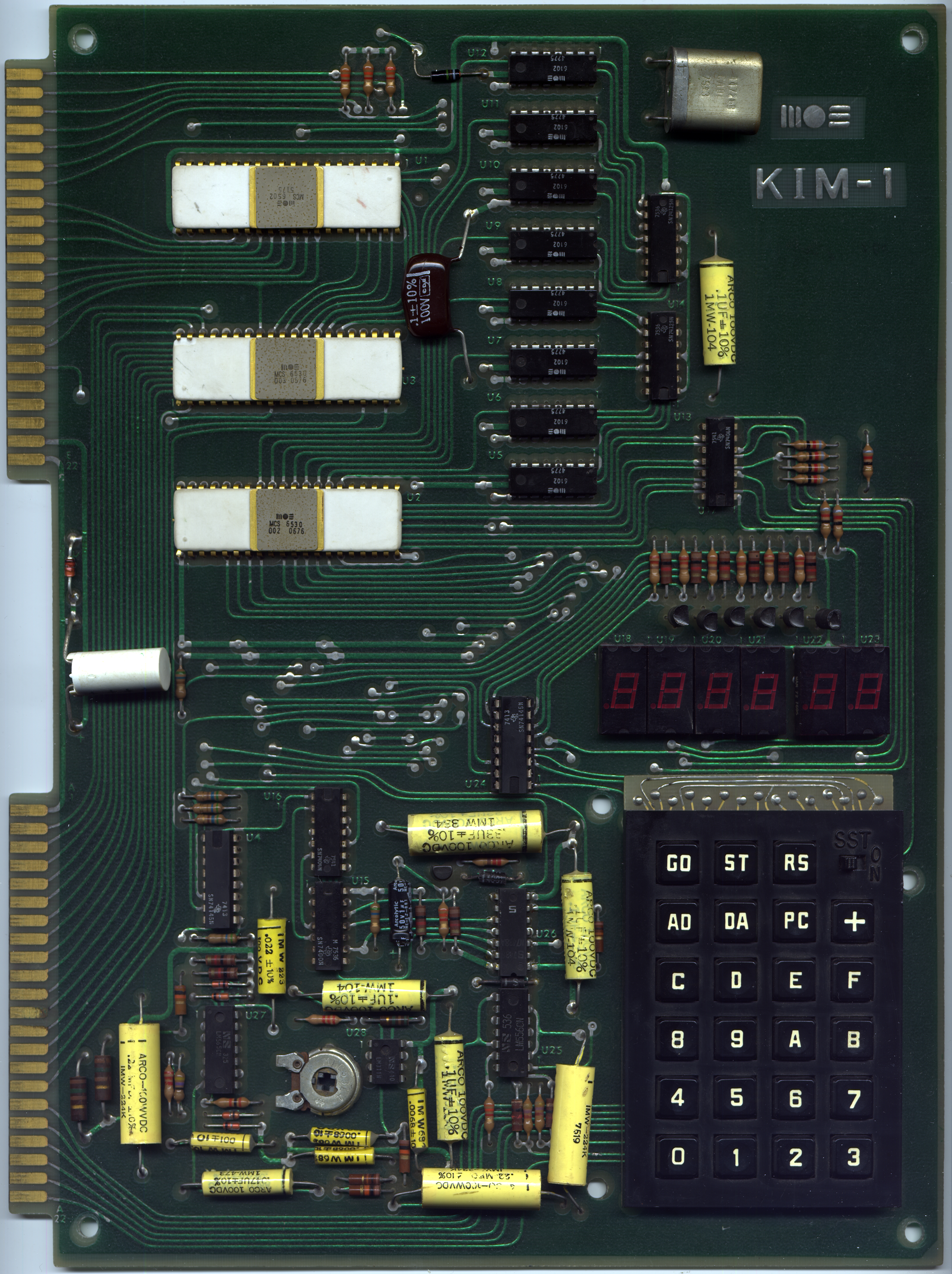
The MOS KIM-1 is a quite rare collector’s item today. So if you hold one in your hands, you better take some high resolution pictures of the board. Here they are:
LOAD"$",8
Commodore computers up to BASIC 2.0 (like the Commodore 64, the VIC-20 and the PET 2001) only had a very basic understanding of mass storage: There were physical device numbers that were mapped to the different busses, and the “KERNAL” library had “open”, “read”, “write” and “close” functions that worked on these devices. There were also higher-level “load” and “save” functions that could load and save arbitrary regions of memory: The first two bytes of the file would be the (little endian) start address of the memory block.
The 6502 in "The Terminator"
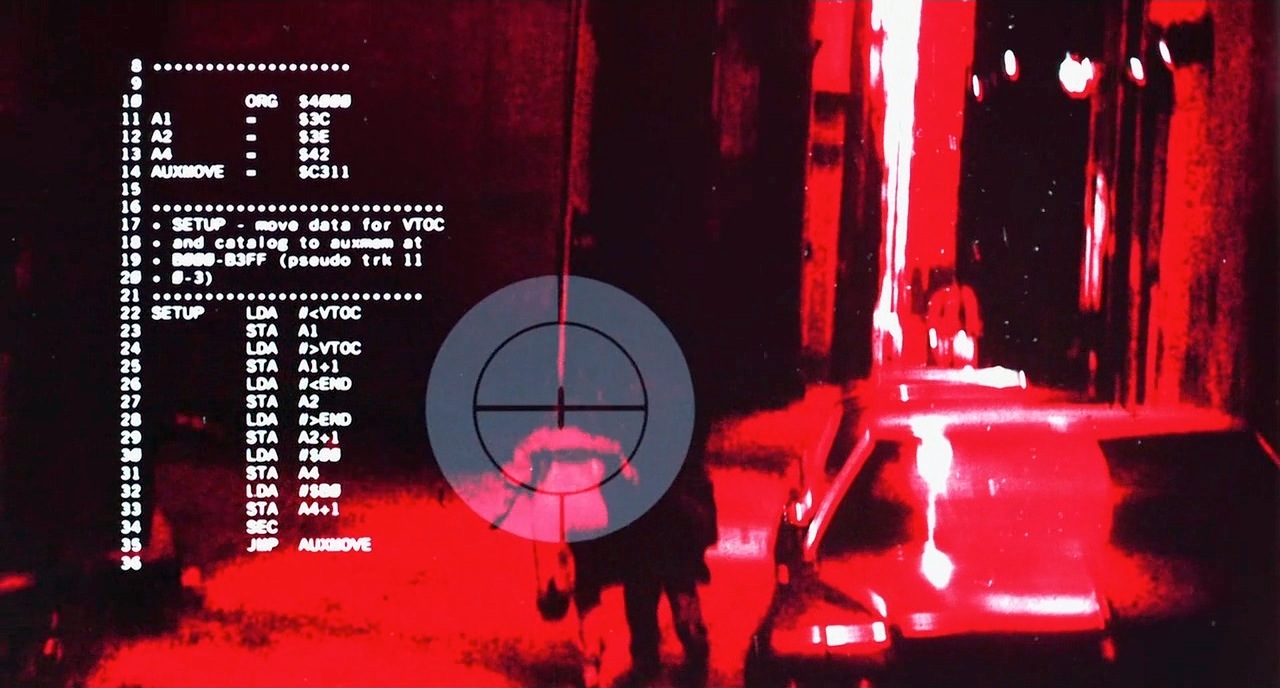
In the first Terminator movie, the audience sees the world from the T-800’s view several times. It is well-known that in two instances, there is 6502 assembly code on the T-800’s HUD, and many sites have analyzed the contents: It’s Apple-II code taken from Nibble Magazine. Here are HD versions of the shots, thanks to Dominik Wagner:
cbmbasic 1.0 with Plugins
I moved cbmbasic development to SourceForge and released version 1.0, which has the following added features:
The Ultimate Commodore 64 Talk @25C3
Update: Video recording available.
64'er 04/1984 (PDF)
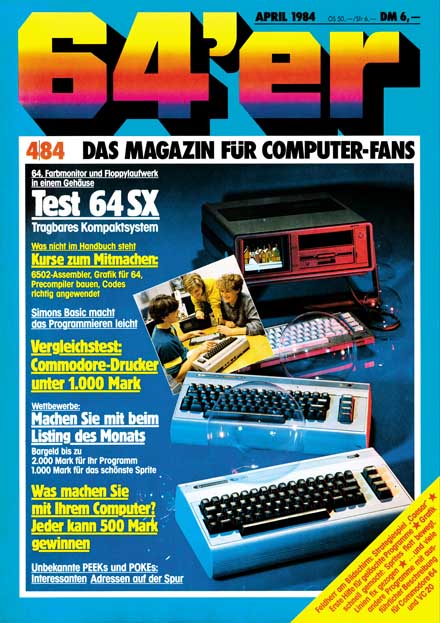
I converted the first issue of the German Commodore 64 magazine 64’er into a searchable PDF:
Commodore BASIC as a Scripting Language for UNIX and Windows – now Open Source
Update: The source is available at github.com/mist64/cbmbasic
Transactor November 1987: Volume 8, Issue 3 (PDF)
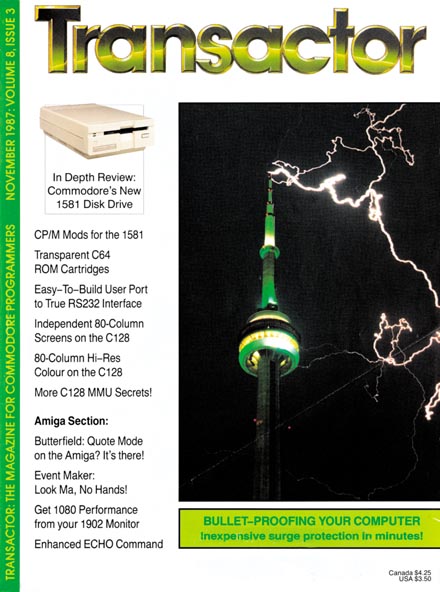
The other day, I found this at WeirdStuff:
Create your own Version of Microsoft BASIC for 6502
Update: The source is available at github.com/mist64/msbasic
"ROR" in Microsoft BASIC for 6502
If you disassemble any version of Microsoft BASIC for 6502, you’ll find this code in a function that normalizes the (simulated) floating point accumulator:
Bill Gates' Personal Easter Eggs in 8 Bit BASIC
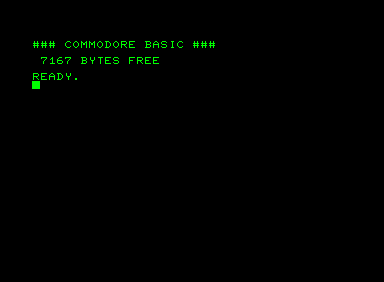
If you type “WAIT6502,1” into a Commodore PET with BASIC V2 (1979), it will show the string “MICROSOFT!” at the top left corner of the screen. Legend has it Bill Gates himself inserted this easter egg “after he had had an argument with Commodore founder Jack Tramiel”, “just in case Commodore ever tried to claim that the code wasn’t from Microsoft”.