The Ultimate Commodore 1541 Disk Drive Talk [video]
This is the video recording of “The Ultimate Commodore 1541 Disk Drive Talk” at VCF West 2021. As always, if you think it’s too fast, try watching it at 0.75x speed!
Some Assembly Required
This is the video recording of “The Ultimate Commodore 1541 Disk Drive Talk” at VCF West 2021. As always, if you think it’s too fast, try watching it at 0.75x speed!
geoWrite is a WYSIWYG rich text editor for the Commodore 64 GEOS operating system. I created a reverse-engineered source version of the geoWrite 2.1 for the C64 (English and German) for the cc65 compiler suite:
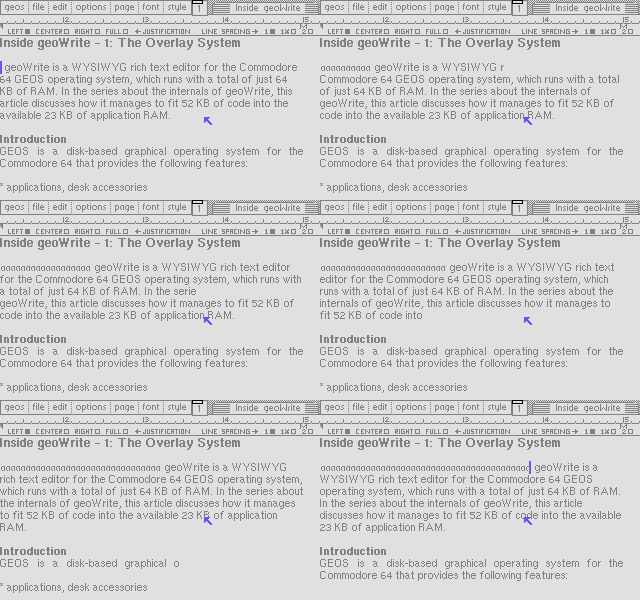
In the series about the internals of the geoWrite WYSIWYG text editor for the C64, this article discusses how the app consolidates keyboard input to keep up with fast typists.
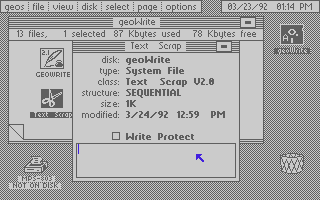
In the series about the internals of the geoWrite WYSIWYG text editor for the C64, this article discusses its efficient cross-application cut/copy/paste implementation.
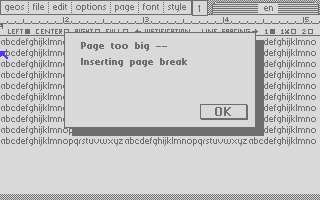
In the series about the internals of the geoWrite WYSIWYG text editor for the C64, this article discusses how its file format allows the app to efficiently edit documents hundreds of KB in size.
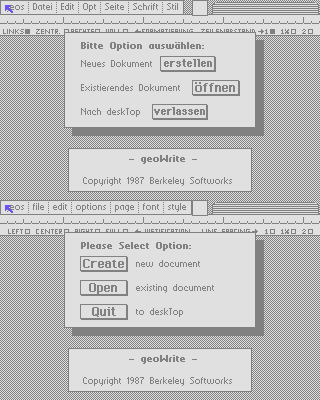
In the series about the internals of the geoWrite WYSIWYG text editor for the C64, this article discusses what was required for the German localization.
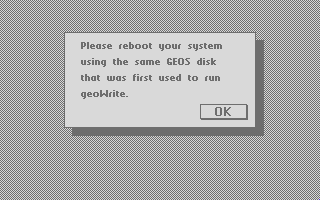
In the series about the internals of the geoWrite WYSIWYG text editor for the C64, this article discusses the geoWrite copy protection.
In the series about the internals of the geoWrite WYSIWYG text editor for the C64, this article discusses how it makes maximum use of the scarce zero page space.
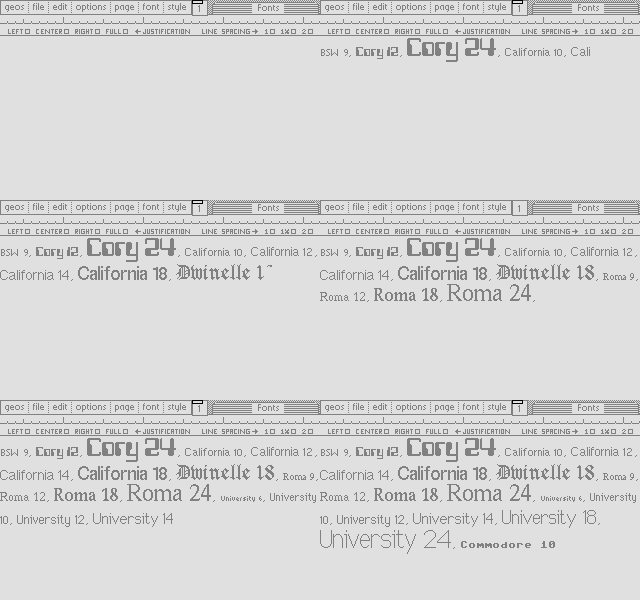
In the series about the internals of the geoWrite WYSIWYG text editor for the C64, this article discusses the font manager’s system of caches for pixel fonts.
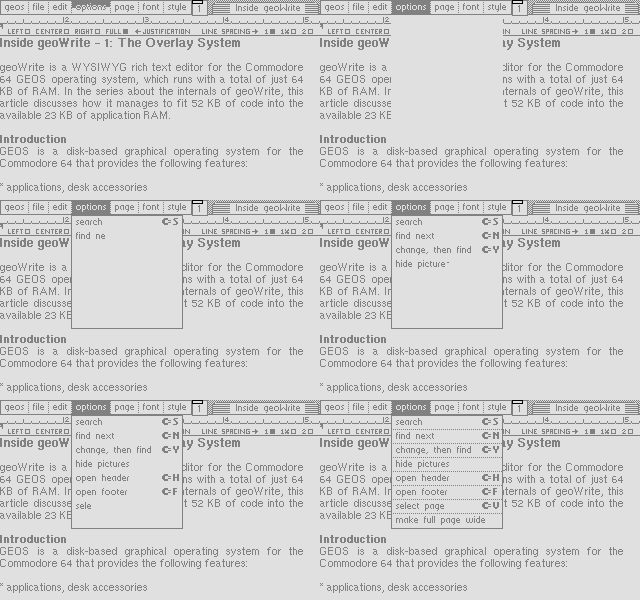
In the series about the internals of the geoWrite WYSIWYG text editor for the C64, this article discusses how the app manages to extend its usable RAM by 5 KB using a custom screen recovery solution.
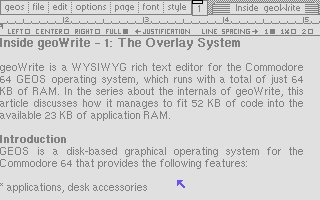
geoWrite is a WYSIWYG rich text editor for the Commodore 64 GEOS operating system, which runs with a total of just 64 KB of RAM. In the series about the internals of geoWrite, this article discusses how it manages to fit 52 KB of code into the available 23 KB of application RAM.
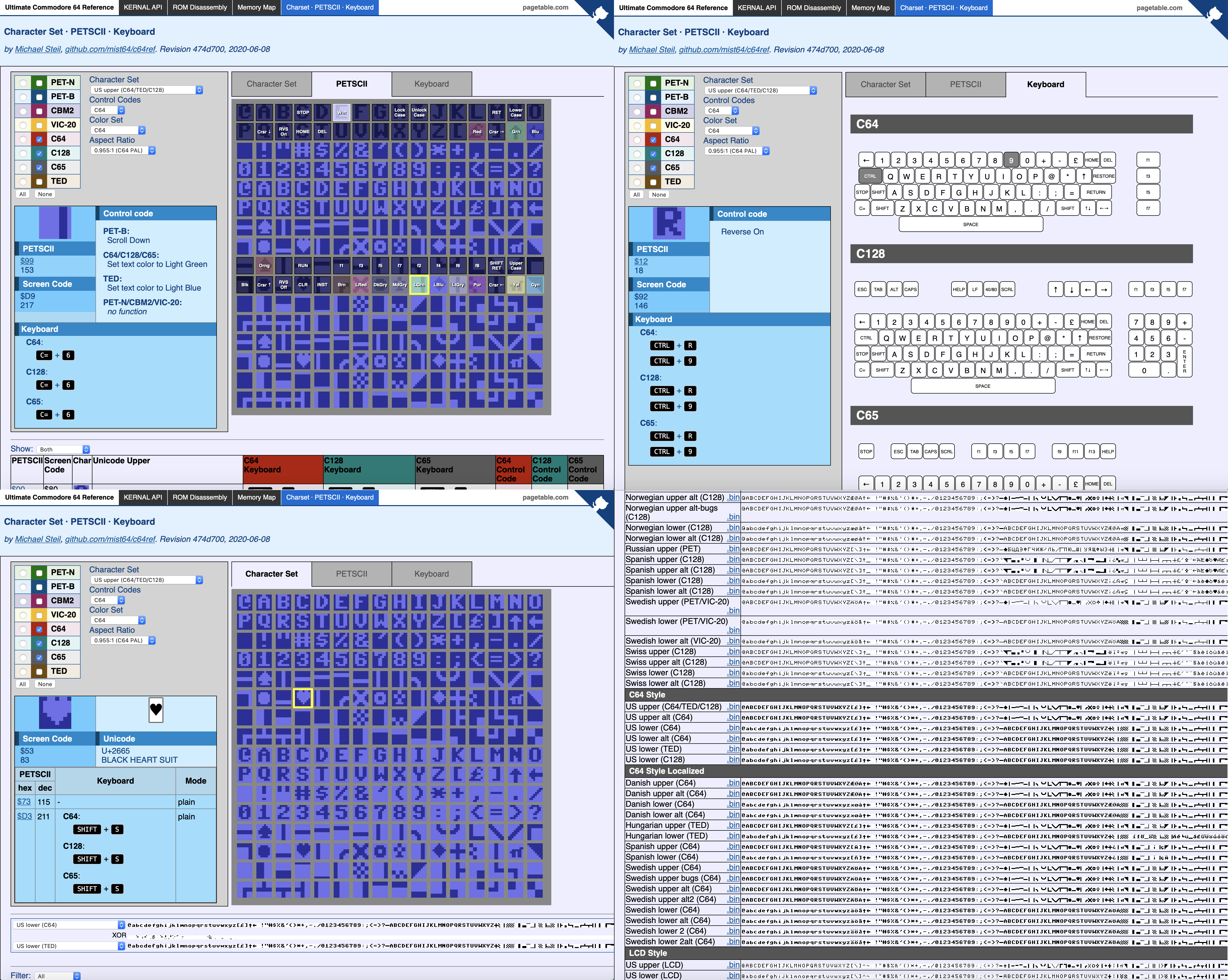
Another addition to the The Ultimate C64 Reference: We’re adding character sets, PETSCII codes and keyboard layouts – supporting eight different Commodore computers.
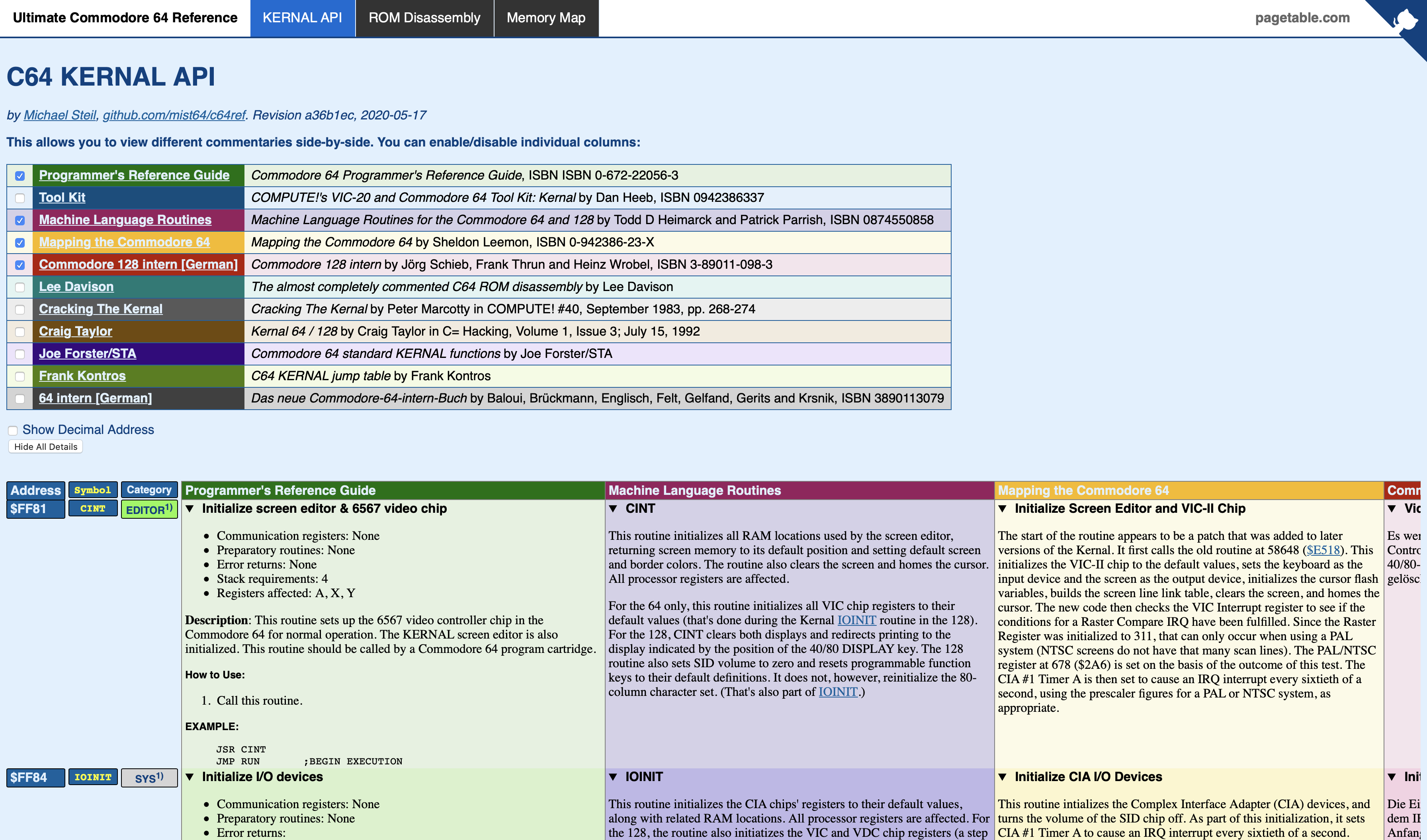
The Ultimate C64 Reference is growing again: This time, we’re adding the KERNAL API reference – as always, in eleven different versions side-by-side.
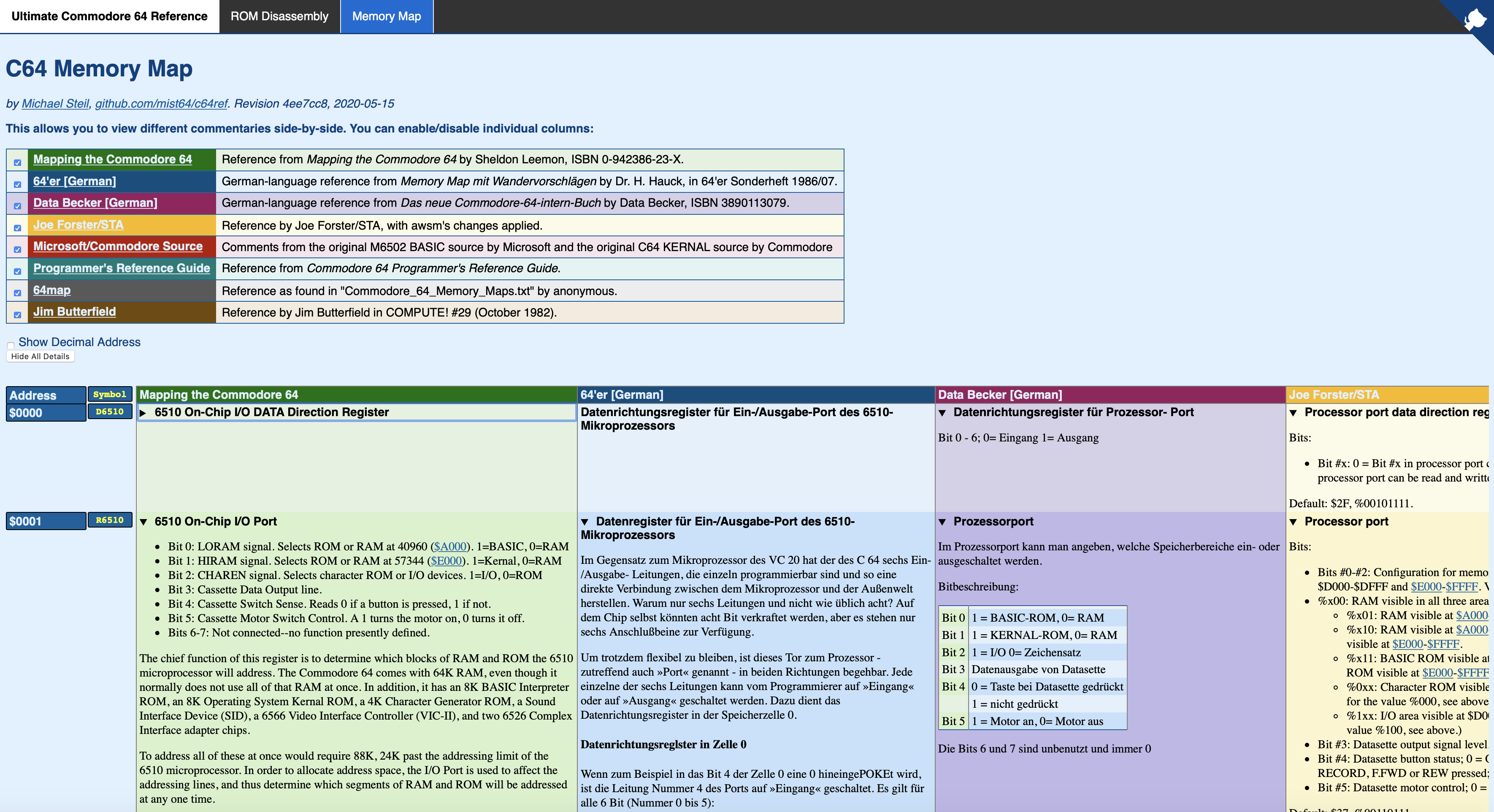
The system software of the Commodore 64 has been extensively reverse-engineered. Next to disassemblies of the ROM, several “memory maps” have been published: tables that document system variables in the first kilobyte of RAM, and how to tweak the system software with PEEK and POKE. Now, I’m presenting the Ultimate C64 Memory Map: A C64 memory reference that shows eight sources side-by-side.
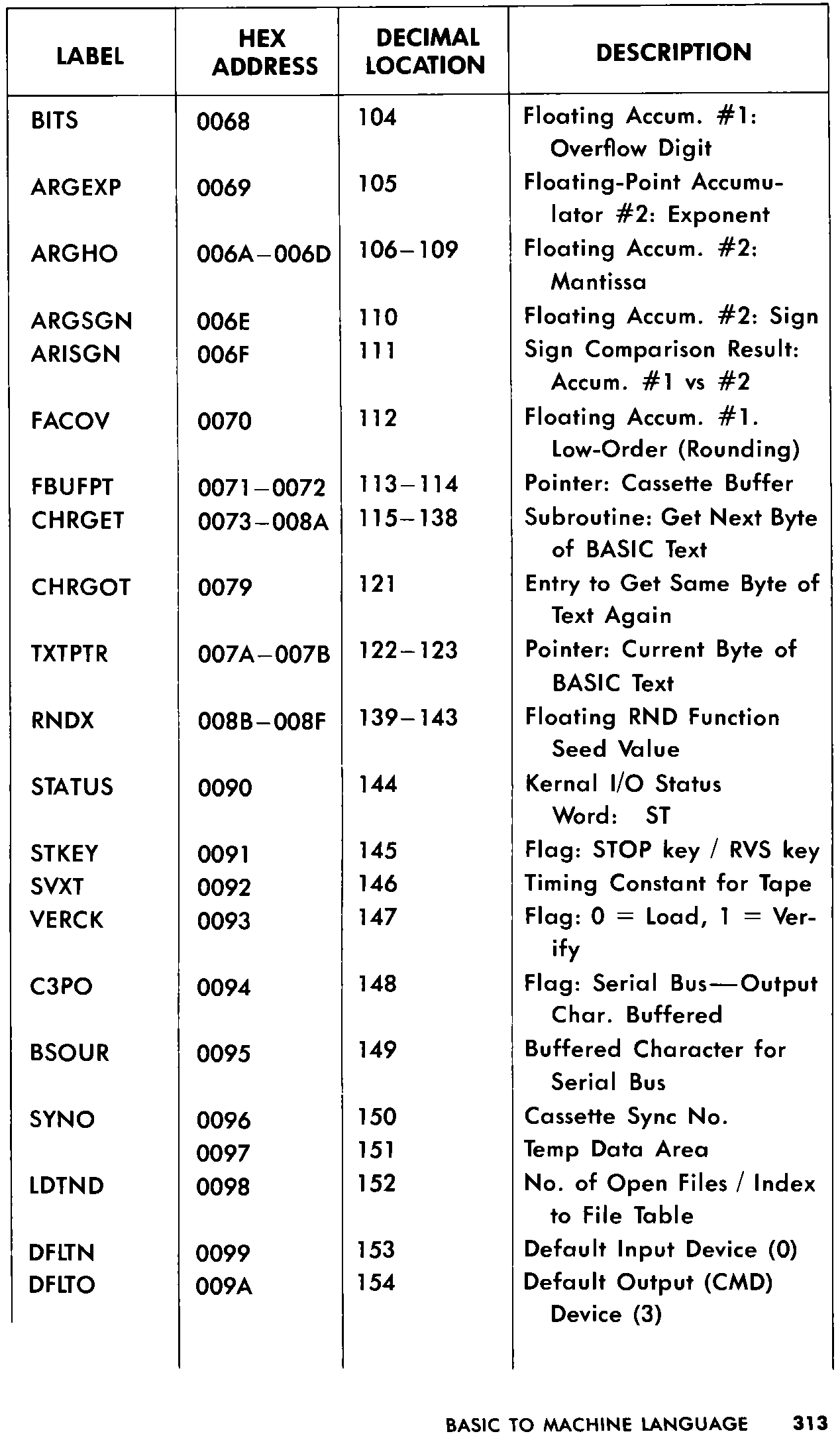
The Commodore 64 Programmer’s Reference Guide contains a memory map with a complete description of the zeropage and system variables used by KERNAL and BASIC, but now that we have the original source, we know there are three typos in this table.
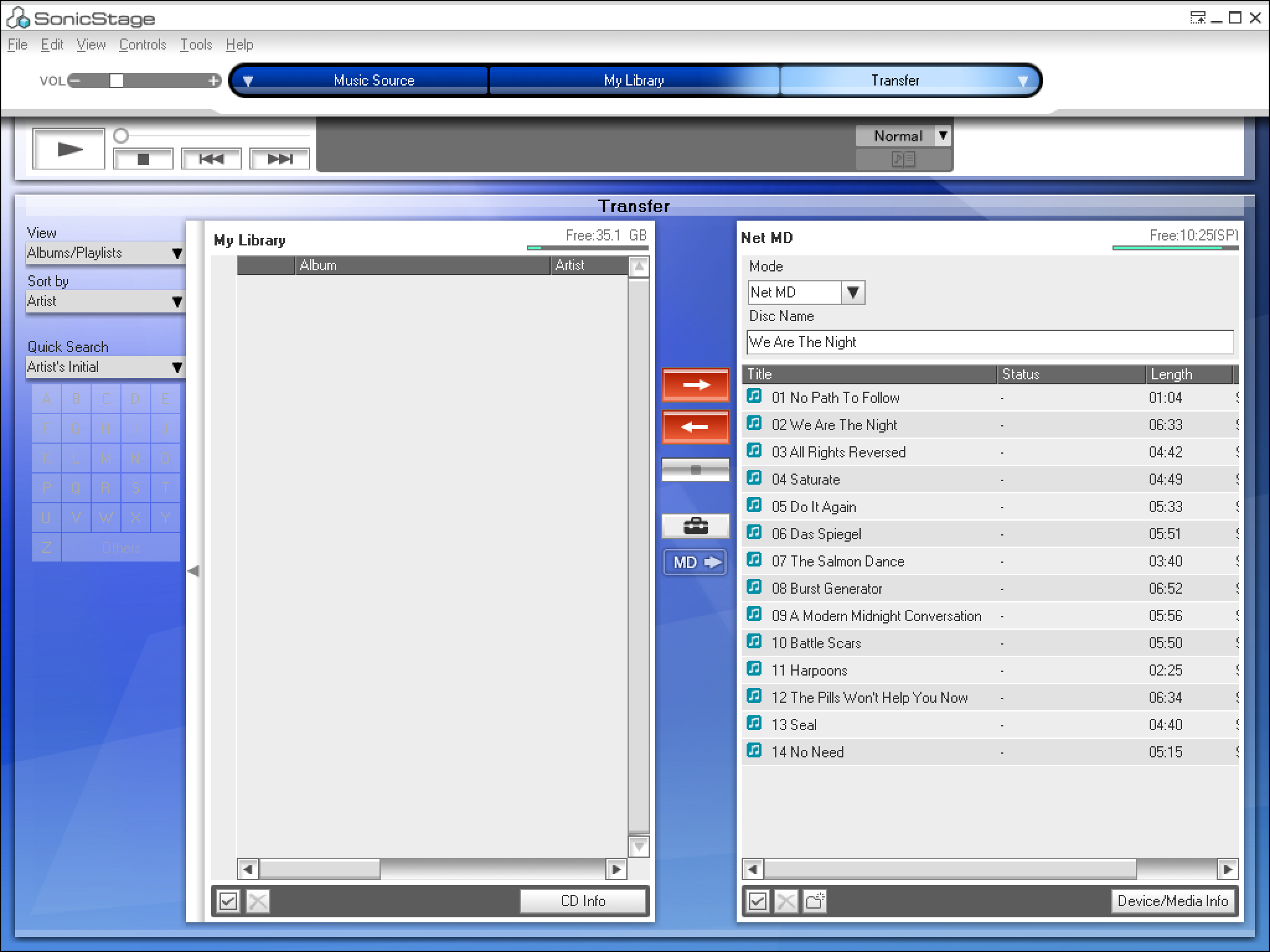
Update 2022: Web MiniDisc Pro can access NetMD devices through the browser and can also download protected files!
Matt Evans presented “The Ultimate Acorn Archimedes Talk”, the 8th talk in the “Ultimate Talk” series, at the 36th Chaos Communication Congress (36C3).
I re-did an updated version of my part of the Ultimate Apollo Guidance Computer Talk at VCF West 2019.

We have previously visualized the physical layout of C64/1541 disks. In order to understand the encoding and potential read errors, it is more useful to visualize the disks sector-by-sector.
There have been a few new interesting additions to the Commodore Source Code repository, including: